
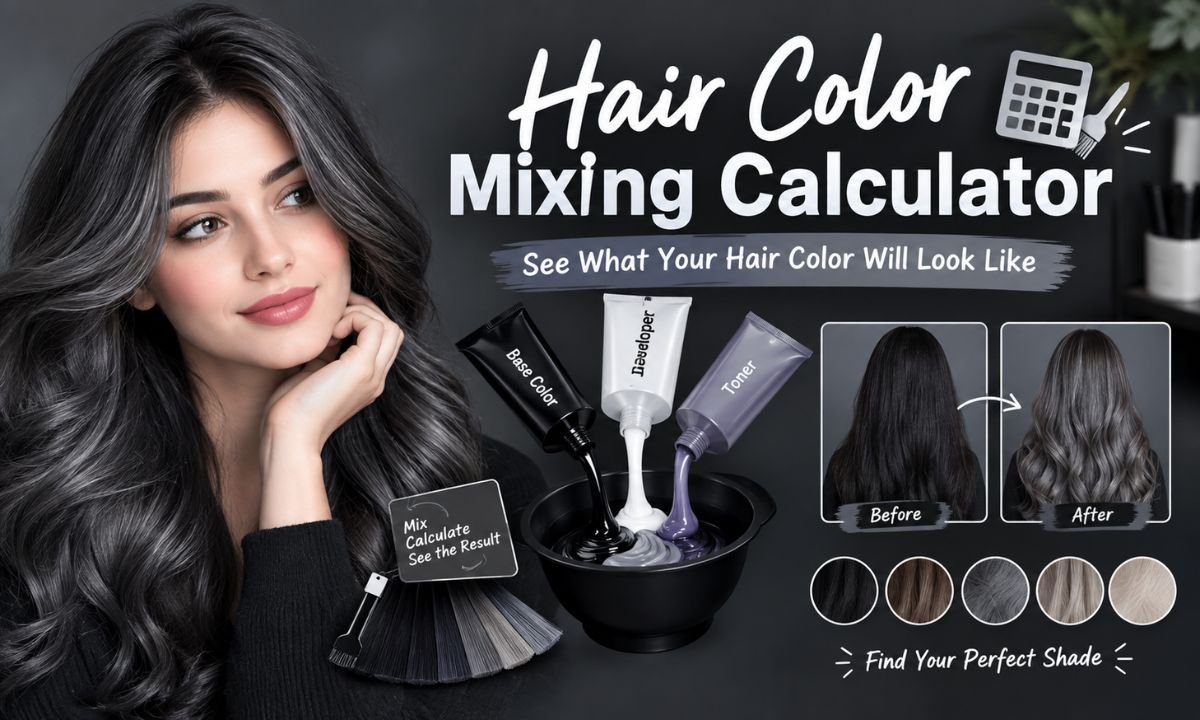
Mixing two hair dye shades without knowing the outcome is one of the fastest ways to end up with a color disaster. A hair color mixing calculator takes the guesswork out of blending shades by predicting the resulting level and tone before you ever pick up a bowl or brush. It removes the trial and error approach that so many people rely on when they experiment at home.
Whether you’re a professional colorist testing a custom formula or someone coloring at home, knowing what your hair color will look like before you mix saves time, product, and a lot of stress. It also protects your hair from unnecessary damage caused by repeated correction attempts.
This guide walks you through how a hair color mixing calculator works, the science behind level and tone mixing, and the golden rules colorists swear by. It also includes a full FAQ section to answer the questions people ask most often.
By the end of this guide, you should feel confident enough to plan a mix, understand why certain combinations behave the way they do, and know exactly what to check before committing to a full application.
Select Two Shades
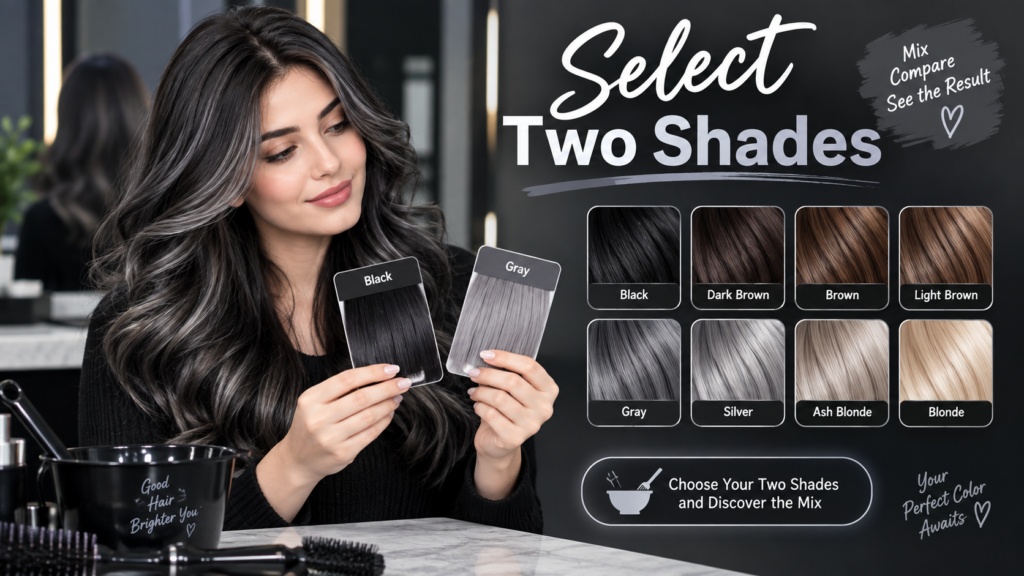
Every mix starts with two components, and understanding the role each one plays is the first step toward predicting an accurate result.
Shade A: usually your base or main color
Shade B: the secondary shade, toner, or corrective color you’re blending in
The calculator reads the level (how light or dark) and tone (the underlying pigment, like ash, gold, red, or violet) of each shade. This is the same logic professional colorists use when reading the numbers on a color tube, such as 7.1 (level 7, ash tone) or 6.66 (level 6, intense red).
Once both shades are entered, the tool treats them as data points rather than guesses. It compares their numerical values side by side instead of relying on how the colors look printed on a box.
Shade A
Shade A is typically the color you’re using in the larger quantity, or the one you consider your “true” target shade. Its level and tone carry more weight in the final prediction, especially in uneven mixing ratios.
Think of Shade A as the foundation of the formula. Everything else is built around it, so any error in identifying its level or tone will affect the entire prediction.
Shade B
Shade B is blended in to shift the tone, correct unwanted brassiness, add dimension, or adjust the level slightly. Even a small amount of Shade B can noticeably change the outcome, particularly if it sits opposite Shade A on the color wheel.
In professional settings, Shade B often plays a corrective role rather than a dominant one. A colorist might add it purely to cancel out warmth rather than to change the overall depth of the color.
Read More: Trandhairverse.com
Choose the Mixing Ratio
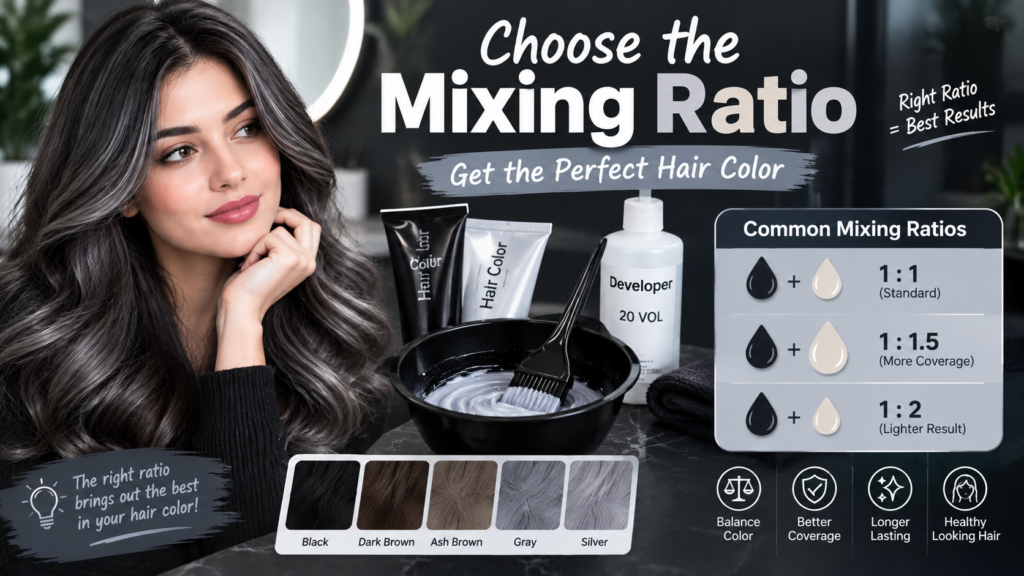
The ratio between Shade A and Shade B determines how strongly each one influences the final result. Choosing the right ratio is just as important as choosing the right shades.
Common ratios include:
| Ratio | Use Case |
| 1:1 | Equal blend, balanced tone shift |
| 2:1 | Shade A dominant, subtle correction |
| 1:2 | Shade B dominant, strong tone shift |
| 3:1 | Minimal correction, slight tonal tweak |
A higher proportion of one shade pulls the predicted result closer to that shade’s level and tone. This is why professional colorists rarely eyeball ratios: a 10% shift in proportion can visibly change the outcome.
Small ratio adjustments matter more than most people expect. Two formulas that look nearly identical on paper can produce noticeably different finished colors once processed.
Predicted Result

Once you select your shades and ratio, the calculator generates a predicted result: an estimated level and tone that shows what your hair color will likely look like after processing.
This isn’t a guarantee, since hair porosity, underlying pigment, and processing time all play a role. Even so, it’s a highly reliable starting point based on standard colorimetry principles used across the industry.
The predicted result works best as a planning tool rather than a final answer. It narrows down the range of realistic outcomes so you aren’t starting from zero.
How It Works

The calculator works by averaging the numerical level and tone values of both shades, weighted according to your chosen ratio. Here’s the simplified logic:
- Each shade is assigned a level number (1–10) and a tone code (ash, gold, red, violet, etc.)
- The ratio determines how much weight each shade’s numbers carry
- Opposing tones are calculated using color wheel neutralization rules
- The tool outputs a predicted level and tone combination
- That result is matched to the closest real-world shade in professional color catalogs
Each of these steps mirrors the mental math an experienced colorist does automatically. The calculator simply removes the need to memorize every neutralization rule by heart.
Warnings
A predicted result is a guide, not a guarantee. Keep these limitations in mind before applying any formula to your full head of hair.
- Porosity affects absorption. Damaged or highly porous hair processes color faster and can shift outcomes.
- Underlying pigment matters. Previously colored or naturally dark hair may reveal unexpected warmth once lifted.
- Developer volume changes lift. A higher volume developer lightens more, which can alter the final tone.
- Always strand test. Before applying any custom mix to full hair, test on a small section first.
These variables exist because hair is a living material, not a fixed surface. Two heads of hair with the same starting level can still react differently to the same formula.
Closest Catalog Matches

Once the calculator predicts a level and tone, it cross-references major professional color lines to show you the nearest real shade equivalents. This is especially useful if you want to purchase a ready-made formula instead of mixing your own.
Brands commonly referenced include Wella Koleston Perfect, L’Oréal Majirel, Schwarzkopf Igora Royal, Matrix SoColor, and Redken Shades EQ.
Matching to a known catalog shade also gives you a reference point for future touch-ups. Instead of remembering a custom ratio, you can simply repurchase the closest matching tube.
Came Out Brassy Anyway? Send a Photo. Get the Fix.
Predictions are based on color theory, but real hair has real variables. If your result turned out warmer or brassier than expected, the fastest fix is a visual diagnosis.
Upload or send a clear, well-lit photo of the current color so a colorist can identify the underlying tone and recommend a corrective formula. This is usually an ash, blue, or violet-based toner to neutralize the unwanted warmth.
A photo often reveals details that a written description cannot, such as uneven banding or patches of leftover warmth. Good lighting makes a significant difference in how accurately the tone can be assessed.
Hair Color Mixing Chart: Level + Tone Rules
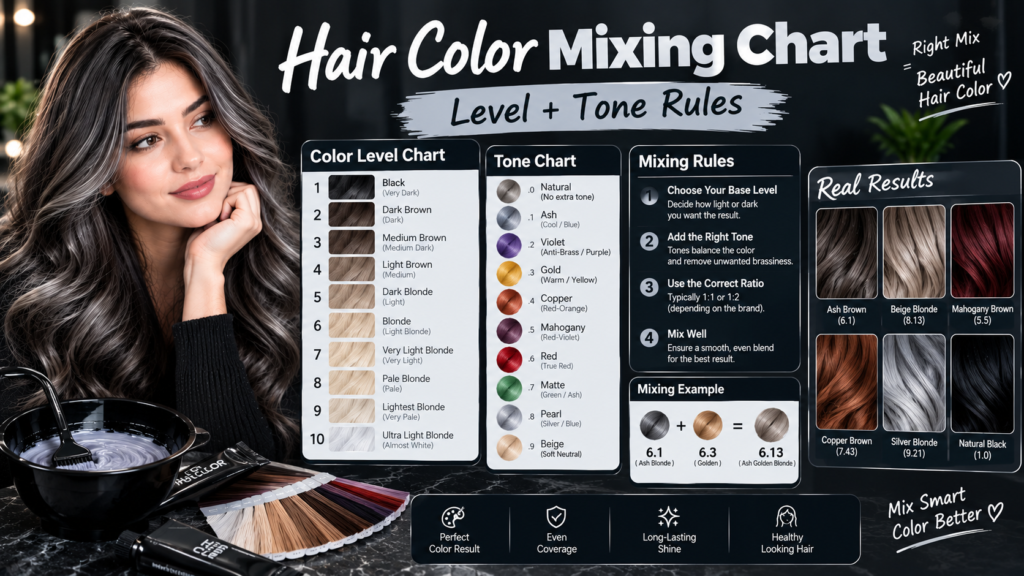
Understanding levels and tones is the foundation of every successful mix. Once you’re comfortable reading this chart, most mixing decisions become far more intuitive.
| Level | Description | Common Underlying Pigment |
| 1–2 | Black | Blue/Black |
| 3–4 | Dark Brown | Red |
| 5–6 | Medium/Light Brown | Red-Orange |
| 7–8 | Blonde | Orange-Yellow |
| 9–10 | Light-Lightest Blonde | Yellow-Pale Yellow |
As hair is lifted to a higher level, the underlying pigment shifts predictably from red tones toward yellow tones. Knowing this pattern helps you anticipate warmth before it appears.
Tone rules to remember:
- Ash (.1) neutralizes orange
- Violet (.2) neutralizes yellow
- Gold (.3) adds warmth, useful for covering gray
- Red (.6) adds vibrancy but can turn brassy if overused
- Copper (.4) sits between gold and red, adding warmth with a metallic sheen
Memorizing these five tone codes covers the vast majority of everyday corrective decisions. Once they become second nature, reading any color tube’s numbers becomes much easier.
Golden Rules for Mixing Hair Colors

- Never mix more than two levels apart: without expecting a muddy or unpredictable result.
- Same brand, same line mixes most predictably: Cross-brand mixing can behave differently even at the same numbers.
- Warm neutralizes cool, and cool neutralizes warm: this is the entire basis of color correction.
- Always account for gray hair: Gray resists color differently and often needs added warmth (gold or copper) for full coverage.
- Write down every formula: Consistency for repeat clients depends on documented ratios.
These five rules form the backbone of nearly every professional formula sheet. Following them consistently prevents the majority of common mixing mistakes.
What Happens When You Mix Opposite Tones?
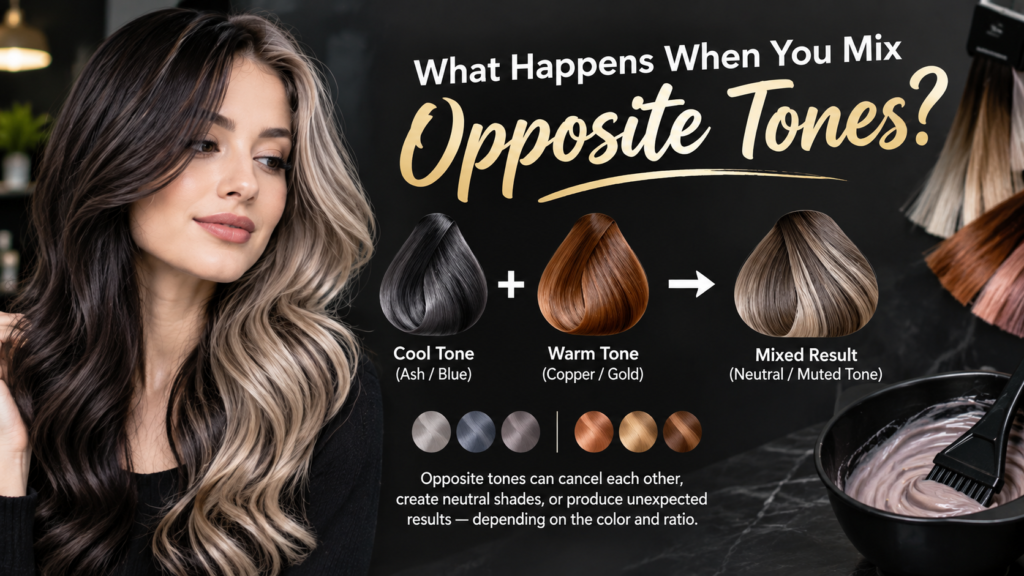
Mixing tones that sit opposite each other on the color wheel causes neutralization rather than blending toward a new vivid shade. This principle is central to understanding why certain corrective mixes work at all.
For example:
- Orange + Blue = Neutral/Muted brown tone
- Red + Green = Neutral/Ashy tone
- Yellow + Violet = Neutral/Soft beige tone
This is exactly why colorists use ash- or violet-based toners on brassy, orange-toned hair. The opposing pigment cancels out the unwanted warmth instead of adding more color on top of it.
Understanding neutralization also explains why over-toning can sometimes push hair too far in the opposite direction. A little goes a long way when two opposing pigments meet.
Hair Color Mixing Formulas: Ratio Guide by Product Type
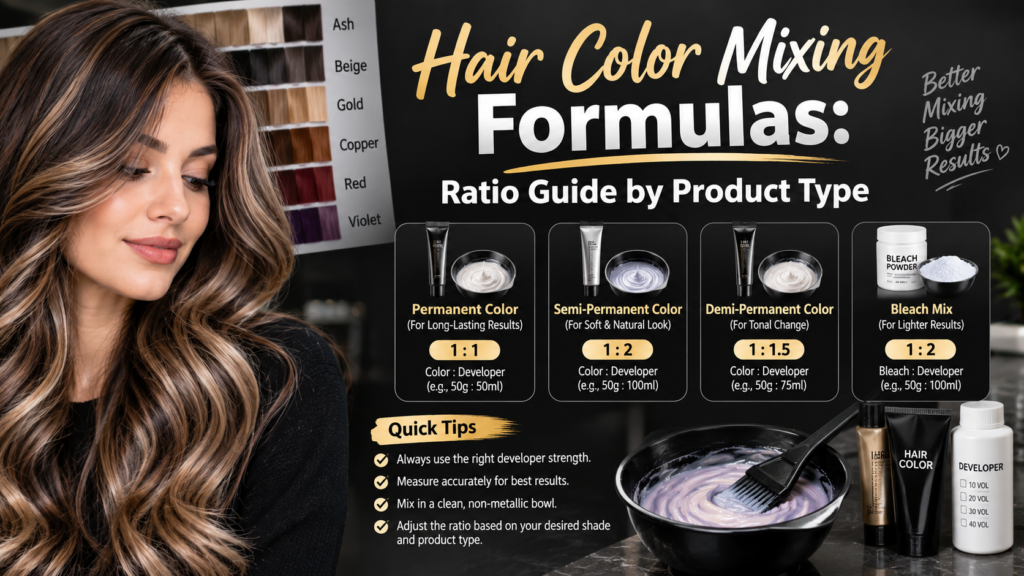
Different product types require different mixing ratios for optimal results. Using the wrong ratio for a given product type is one of the most common beginner mistakes.
| Product Type | Typical Ratio | Notes |
| Permanent color | 1:1 | Standard lift and full gray coverage |
| Demi-permanent/toner | 1:1.5 or 1:2 | Gentler processing, less lift |
| High-lift blonde | 1:2 | Requires more developer for maximum lift |
| Semi-permanent | No developer | Deposits only, no mixing ratio needed |
As a general rule, a full 60ml tube of color mixed at 1:1 needs 60ml of developer, while a 1:1.5 mix needs 90ml of developer for the same amount of color.
Getting the developer ratio right affects processing time as much as it affects lift. Too little developer can leave a formula under processed, while too much can cause excessive lightening.
Classic Color Mixes Every Colorist Should Know
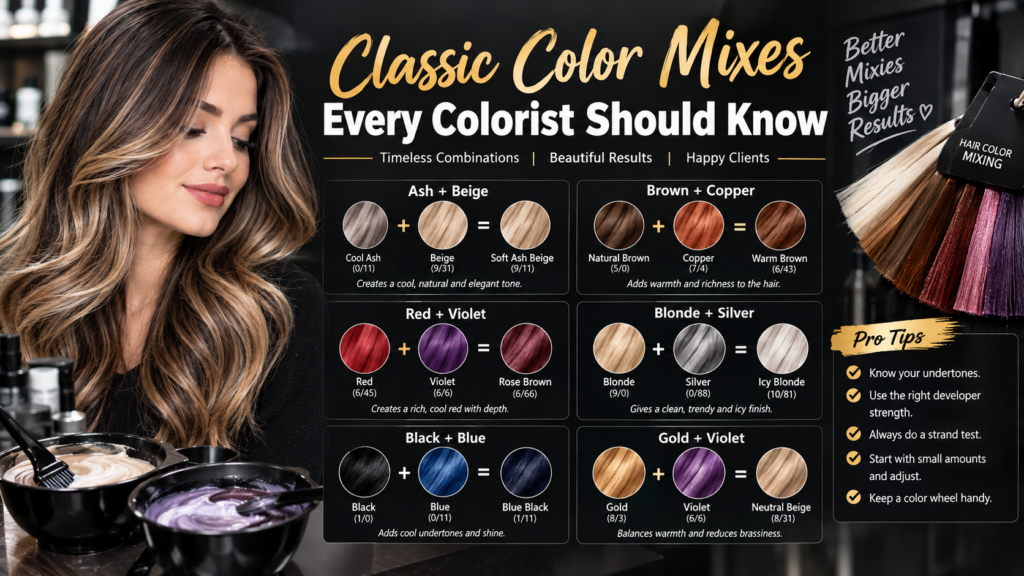
- Ash Blonde + Natural Blonde (1:1): Softens gold undertones for a cooler, more neutral blonde.
- Copper + Natural Brown (1:2): Adds warmth and dimension without going full red.
- Violet Toner + Pale Yellow Blonde (light coat): Cancels yellow brassiness for a clean, bright blonde.
- Red + Natural Level 6 (2:1): Boosts vibrancy while keeping some natural depth.
- Beige + Ash (1:1): A popular combination for a soft, cool-toned neutral shade.
These five combinations cover most everyday client requests, from correcting brassiness to adding subtle dimensions. Learning them by heart speeds up formulation significantly.
Recommended Products
While formulas vary by brand, these professional lines are widely used for custom mixing. Each has its own strengths depending on the look you’re trying to achieve.
- Wella Koleston Perfect
- L’Oréal Majirel and INOA
- Schwarzkopf Igora Royal and Igora Vibrance
- Matrix SoColor
- Redken Shades EQ
- Pravana ChromaSilk
Sticking to one line for your custom mixes tends to produce the most consistent, repeatable results over time.
Frequently Asked Questions
Is a hair color mixing calculator accurate for at-home use?
Yes, it gives a reliable prediction based on standard colorimetry, though real results can vary slightly depending on your hair’s condition and history.
Can I mix two different brands of hair color together?
You can, but results are less predictable since formulas and pigment concentrations differ between brands.
What ratio should I use for gray coverage?
A 1:1 ratio with a warm-based natural shade typically gives the best gray coverage and longevity.
Why did my hair color turn out brassier than predicted?
Underlying pigment, developer volume, or hair porosity likely caused extra warmth to surface during processing.
Can I mix three hair colors together?
Yes, though it’s less common. Mix two shades first, then treat that blended result as a new “Shade A” to mix with the third color.
How long can I store a mixed hair color?
Mixed hair color should not be stored; the chemical reaction with the developer becomes ineffective and unsafe to use after a short window.
What’s the difference between a mixing calculator and a brand converter?
A mixing calculator predicts the result of blending two shades, while a brand converter finds the equivalent shade of one product in a different brand.
Conclusion
A hair color mixing calculator turns an unpredictable process into a guided, science-backed one. By understanding levels, tones, and mixing ratios, you gain a clear framework for predicting outcomes before you ever open a bottle.
This knowledge helps you confidently avoid costly mistakes, whether you’re neutralizing brassiness, boosting vibrancy, or covering gray for the first time. It also builds a foundation you can rely on for every future formula.
Always test before a full application, and when in doubt, consult a professional colorist for a personalized formula. A little preparation goes a long way toward protecting your hair and your final result.