
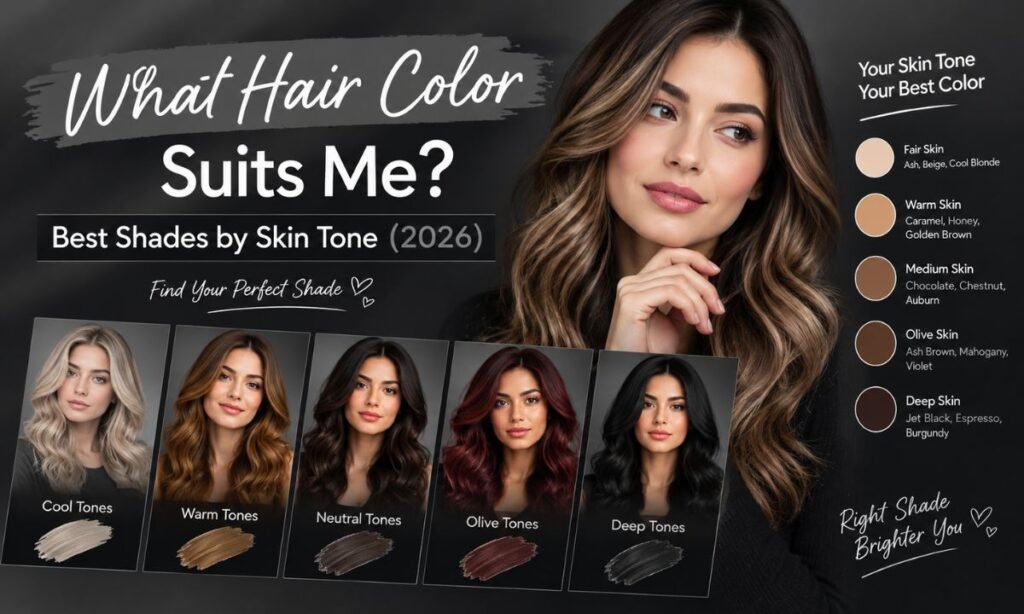
You scroll through a hundred photos. You save five. Then you stand in front of the mirror and think, “Will any of these actually look good on me?”
It is a fair worry. The same honey blonde that glows on your friend can look yellow on you. A gorgeous espresso brown can turn harsh on one face and rich on another. The shade is rarely the problem. The match is.
This guide shows you how to find what hair color suits you in a simple, step-by-step way. You will learn the three factors stylists check first, how to test your undertone at home, and which shades work best for fair, medium, tan, olive and dark skin. You will also see the mistakes that lead to color regret, and how to preview a shade before you commit.
Quick answer: Warm undertones usually suit golden, honey, caramel and copper shades. Cool undertones usually suit ash, beige, platinum and cool espresso shades. Neutral undertones can wear almost anything, so depth and contrast matter more.
What are the 3 factors that determine what hair color suits you?
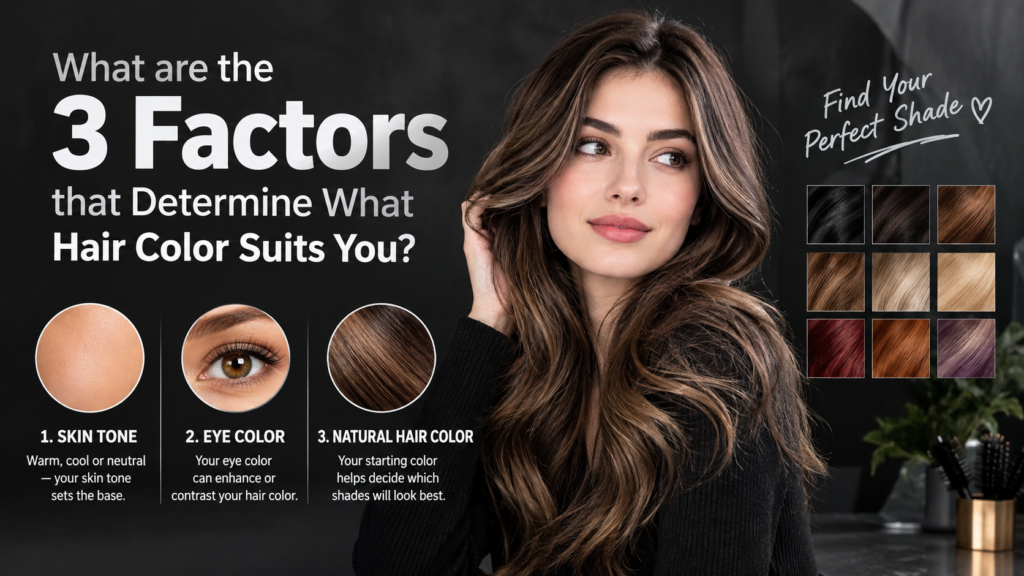
Most people only think about skin color. Professional colorists look at three things together. If you get all three right, your result looks natural, even when the shade is bold.
| Factor | What it means | Why it matters |
| Skin undertone | The subtle warm, cool or neutral hue under your skin | Decides which tones (gold, ash, copper) flatter you |
| Natural contrast | The difference in brightness between your skin, hair and eyes | Decides how bold or soft your color should be |
| Natural hair level | How light or dark your hair is now, on a scale of 1 to 10 | Decides what is realistic and how much damage to expect |
1. Skin undertone
Undertone is the soft color that sits beneath your skin’s surface. It does not change when you tan or flush. It stays the same all year.
There are three types:
- Warm: golden, peachy or yellow cast
- Cool: pink, red or bluish cast
- Neutral: a balanced mix, with no clear lean
Here is the part many people miss. Undertone is not the same as skin depth. Someone with very pale skin can have a warm undertone. Someone with deep skin can have a cool one. So you cannot guess it from how light or dark you are.
Undertone also explains a common frustration. If a shade “looks off” on you and you cannot say why, the tone is usually fighting your skin. A cool ash blonde on warm skin can make you look tired. A golden blonde on cool skin can bring out redness.
2. Natural contrast
Contrast is how much your skin, hair and eyes differ in lightness. Look at a black-and-white version of a selfie to see it clearly.
- High contrast: very light skin with dark hair, or deep skin with bright eyes and light features. These looks carry strong, rich or dramatic colors well.
- Medium contrast: a moderate gap between skin and hair. You can go slightly lighter or darker than your natural shade without a problem.
- Low contrast: skin, hair and eyes sit close together in depth. Soft, blended colors such as balayage, honey tones and gentle highlights look most natural.
Going against your natural contrast is not forbidden. It just creates a bolder statement. Platinum on someone with low contrast can look stark. On the right, it looks striking.
3. Natural hair level
Hair level runs from 1 (black) to 10 (the lightest blonde). Your starting level decides how much work a color needs.
- Going darker is usually easy and low-risk.
- Going lighter means lifting pigment with bleach. The jump from level 2 to level 9 takes time, money and care.
A shade can suit your skin perfectly and still be a poor choice if your hair cannot get there safely. Always match your dream color to a realistic plan.
How to know what color hair suits you: a simple 4-step method
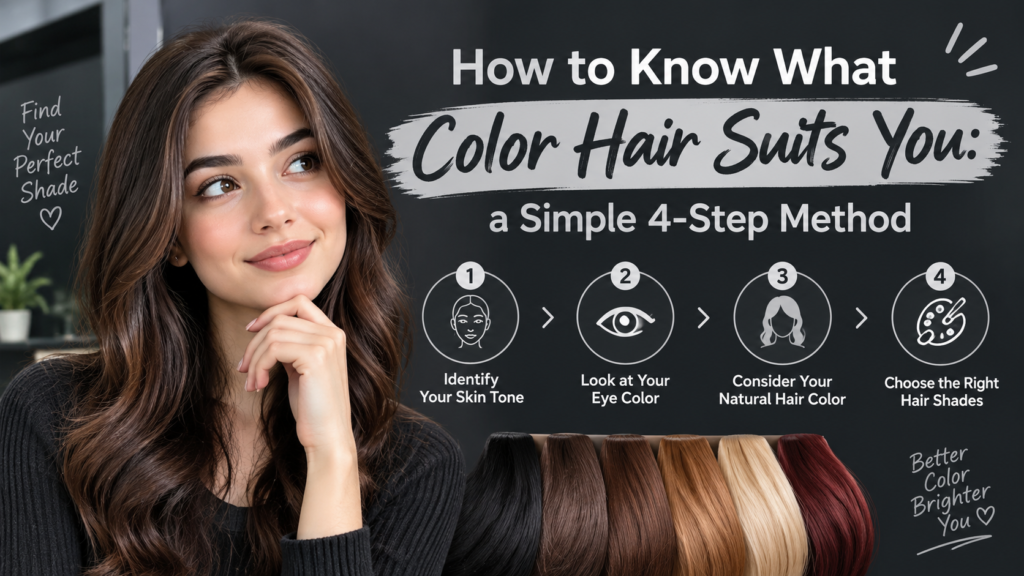
If you want a fast answer to “what hair color would suit me,” follow these four steps in order.
- Find your undertone using the tests below.
- Check your contrast with a black-and-white selfie.
- Note your current hair level (dark, medium or light).
- Pick a shade in your tone family, then choose how far from your natural color you want to go.
Most good results come from staying within two or three levels of your natural shade, in a tone that matches your undertone. That is the safest route to a color that looks like it grew out of your head.
What hair colors work best for each skin tone?
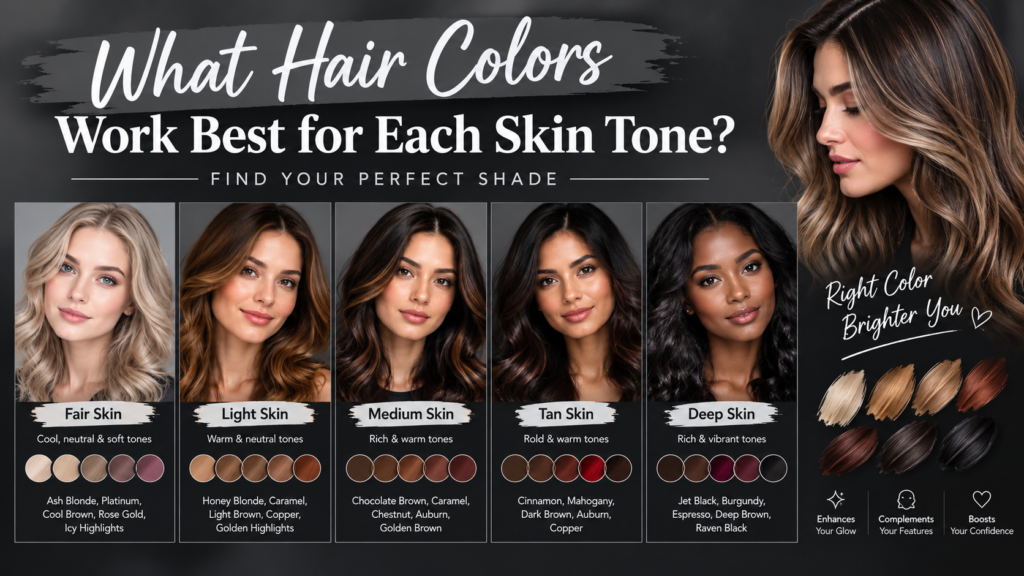
Now the part you came for. Use this table as a starting point, then read the sections below for detail.
| Skin tone | Best shades | Shades to approach with care |
| Fair + warm | Strawberry blonde, golden blonde, light copper, soft caramel | Very ashy platinum, blue-black |
| Fair + cool | Ash blonde, beige blonde, soft brown, cool auburn | Brassy gold, orange-red |
| Fair + neutral | Champagne blonde, light brown, soft chestnut | Extreme ends of any tone |
| Medium + warm | Honey brown, golden chestnut, caramel balayage, warm copper | Icy ash, grey-toned shades |
| Medium + cool | Cool chocolate, mocha, dark ash brown, burgundy | Yellow-gold blonde |
| Medium + neutral | Medium brown, chestnut, soft bronde | Few limits; mind contrast |
| Tan / olive | Rich chocolate, dark caramel, bronze, espresso, soft mushroom brown | Flat, ashy greens-leaning tones |
| Dark + warm | Deep mahogany, warm black, copper, honey highlights | Cool silver-ash on the whole head |
| Dark + cool | Jet black, blue-black, plum, deep burgundy | Brassy orange |
These are guides, not laws. Your eye color, face shape and style matter too. But this table will get you into the right neighborhood.
See More: Best Toner for Bleached Hair: Undertone, Ratio & Timing 2026
Skin tone: what hair colour suits me if I’m warm-toned?
Warm skin glows in shades that carry gold, red or amber. These colors echo the warmth in your face, so your skin looks lit from within.
Best picks for warm undertones:
- Honey blonde and golden blonde
- Strawberry blonde
- Caramel and toffee brown
- Golden chestnut
- Copper and auburn
- Warm black with a soft brown glint
What to avoid: icy platinum and strongly ashy shades can drain warm skin and make it look sallow.
What hair color suits cool skin tones?
Cool skin looks best with shades that have a blue, violet or neutral-ash base. These colors keep redness calm and make the complexion look clear.
Best picks for cool undertones:
- Ash blonde, platinum and beige blonde
- Cool-toned brunette such as mocha or espresso
- Dark ash brown
- Burgundy, plum and cherry
- Jet black and blue-black
What to avoid: bright gold, orange copper and yellow-based blonde can bring out pinkness in the face.
What hair color suits neutral skin tones?
Neutral undertones have the most freedom. Warm and cool shades both work, so you can choose by mood.
Best picks for neutral undertones:
- Champagne blonde
- Soft chestnut
- Medium brown with a light gloss
- Bronde (a brown-blonde blend)
- Rose gold or soft copper
Tip: with neutral skin, the question shifts from “which tone?” to “how deep and how bold?” Pay attention to contrast and maintenance.
What hair color looks best on fair skin?
Fair skin shows contrast very quickly. A shade that is far too dark can look heavy, and a shade that is far too light can look washed out.
- Fair and warm: strawberry blonde, golden blonde, light copper and soft caramel.
- Fair and cool: ash blonde, beige blonde, soft brown and cool auburn.
- Fair and neutral: champagne blonde, light brown and soft chestnut.
If you love dark hair on fair skin, go for it. Just soften the look with a slightly warmer or cooler brown instead of pure black, which can look harsh near the face.
What hair color looks best on medium or tan skin?
Medium and tan skin is flexible. It holds both rich and sun-kissed tones well.
- Warm tan: caramel, honey brown, golden chestnut, bronze and warm copper.
- Cool tan: chocolate, mocha, dark ash brown, burgundy and plum.
- Olive: olive skin has a mix of green and gold in the undertone. Rich chocolate, dark caramel, warm espresso and soft mushroom brown work well. Very ashy shades can look flat, and very golden shades can look yellow, so aim for balance.
Balayage and face-framing highlights are especially pretty on this range, because they add light without a harsh line.
What hair color suits dark skin?
Deep skin tones pair beautifully with rich, saturated color.
- Warm undertone: deep mahogany, warm black, copper, auburn and honey or caramel highlights.
- Cool undertone: jet black, blue-black, plum, deep burgundy and espresso.
- Neutral undertone: rich brown, dark cherry, chestnut and soft cream-blonde accents.
Choose highlights with care. Lifting very dark hair to a pale blonde in one session is hard on strands. Many colorists suggest honey, caramel or copper highlights as a gentler way to add brightness.
How do you identify your skin undertone at home?
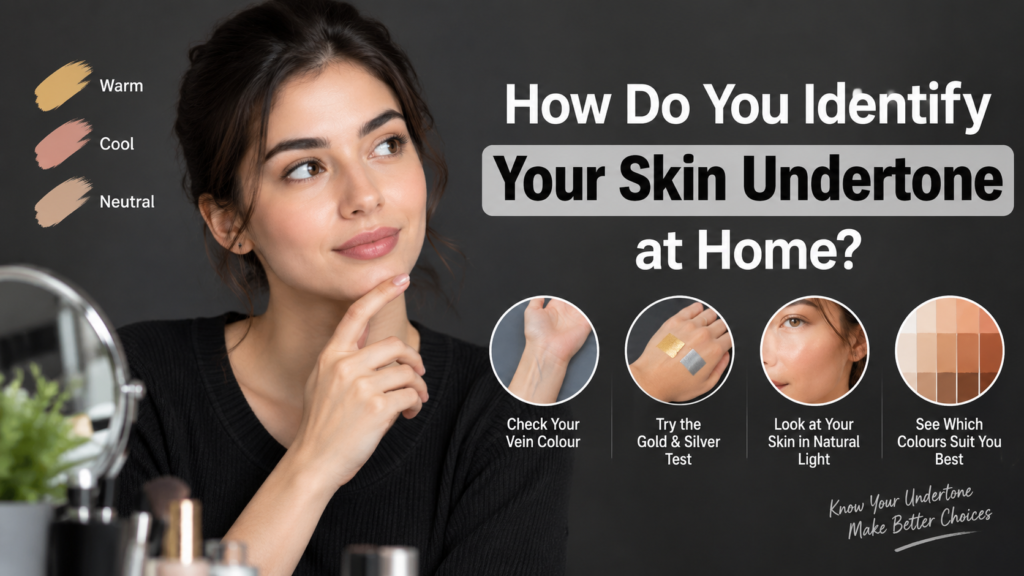
You do not need a salon to find your undertone. Try these three tests. Use natural daylight, ideally near a window, and bare skin with no makeup.
The vein method
Look at the inside of your wrist.
- Blue or purple veins: likely a cool undertone.
- Green veins: likely a warm undertone.
- A mix of both, or hard to tell: likely a neutral undertone.
This test is quick, but it can mislead if your skin is deep or your veins are hard to see. Use it as one clue, not the final answer.
The jewelry method
Hold a gold piece and a silver piece against your skin, or wear each for a minute.
- Gold looks better: warm.
- Silver looks better: cool.
- Both look fine: neutral.
Pay attention to how your face looks, not just the metal. The right metal makes skin look clear and bright. The wrong one makes it look dull or ruddy.
The sun reaction method
Think about how your skin behaves in the sun.
- Burns easily, turns pink or red, tans little: often cool.
- Tans easily, turns golden or bronze: often warm.
- Burns a little, then tans: often neutral.
This is a helpful hint, but it is not perfect. Medication, skin conditions and sun protection habits can change the result.
Bonus: the white fabric test
Hold a pure white cloth and a cream cloth under your chin. If the cream flatters you, you lean warm. If the stark white does, you lean cool. If both look good, you are likely neutral.
Which result should you trust?
Run at least two of these tests. If they agree, you have your answer. If they conflict, you may be neutral, and that is good news because it gives you more options.
Does eye color matter for choosing hair color?
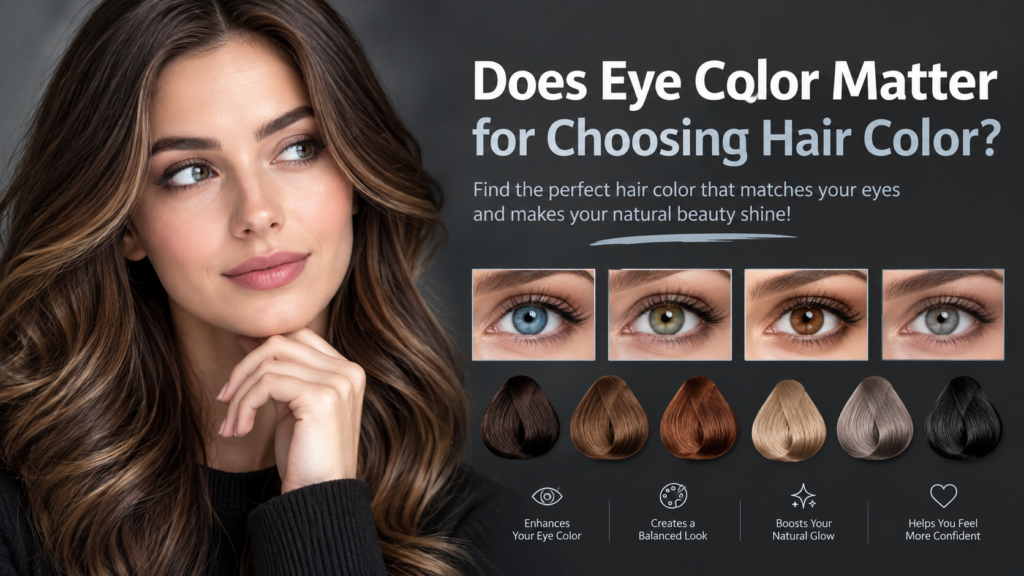
Skin comes first, but eyes can help you fine-tune.
| Eye color | Shades that make them stand out |
| Blue | Golden or ash blonde, auburn, rich brown |
| Green | Copper, auburn, chestnut, deep red tones |
| Hazel | Caramel, golden brown, warm bronze |
| Brown | Chocolate, honey, burgundy, deep copper |
| Dark brown / black | Almost any shade; deep tones feel natural |
Use this as a nudge, not a rule. If your skin says warm and your eyes say cool, trust the skin first.
What are the most common mistakes when choosing hair color?
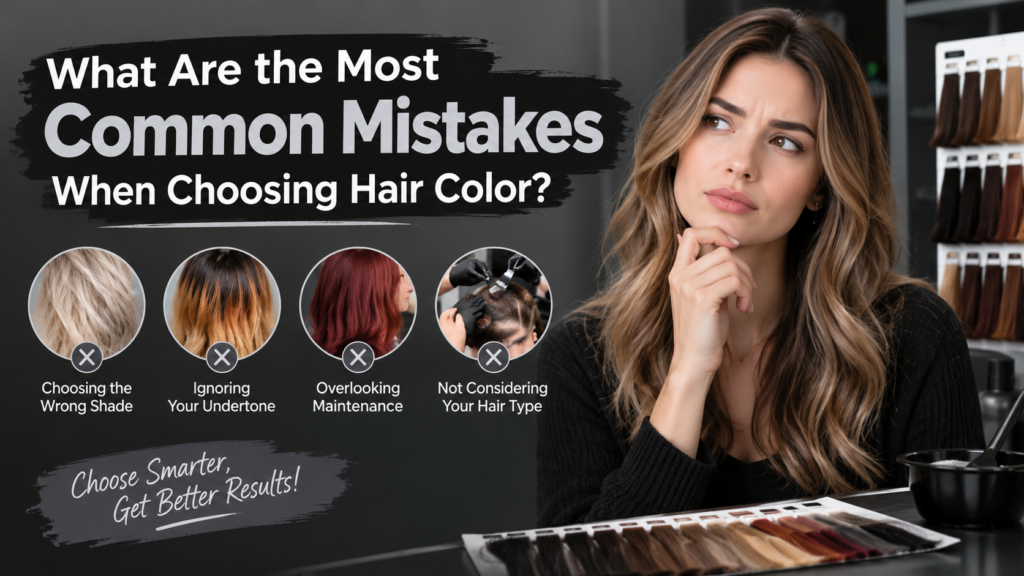
Even careful people slip up. These four mistakes cause most of the “I hate it” moments.
Mistake 1: Choosing by trend without considering undertone
A shade can go viral and still look wrong on you. Trends are about fashion. Undertone is about harmony.
Before you book, ask: “Is this shade warm or cool, and does that match my skin?” If the answer is no, ask your colorist to adjust the tone. Often, a small change in warmth turns a trend into a flattering look.
Mistake 2: Ignoring your starting level
Photos on social media rarely show the work behind the color. A pale ash blonde on dark hair may need several sessions, plus toner and bond care.
Be honest about your starting point. If your hair is dark and you want light, plan for a gradual change. If your hair is already lightened or colored, tell your colorist the full history, including box dye.
Mistake 3: Confusing “I love that color” with “that color suits me”
You can adore a shade on someone else and still look better in another one. Liking a color and wearing it well are two different things.
Try this: instead of copying the exact shade, borrow the feel. Love a rich copper? Maybe a deeper auburn works better. Love a bright platinum? Maybe a soft champagne fits your skin more kindly.
Mistake 4: Not previewing before a major change
Hair color is a commitment. Fixing a mistake costs time and can harm your hair.
Before a big change, preview it. Try a virtual try-on tool, a wig, or clip-in extensions. Ask your stylist to hold swatches near your face. You can also test with a temporary color or a gloss on a small section.
A few more slip-ups worth avoiding
- Skipping the strand test on sensitive or damaged hair
- Forgetting to plan for maintenance and root regrowth
- Using the wrong at-home shade because the box photo looked different
- Ignoring your eyebrows, which should look balanced with your new color
How do you pick a shade you can maintain?
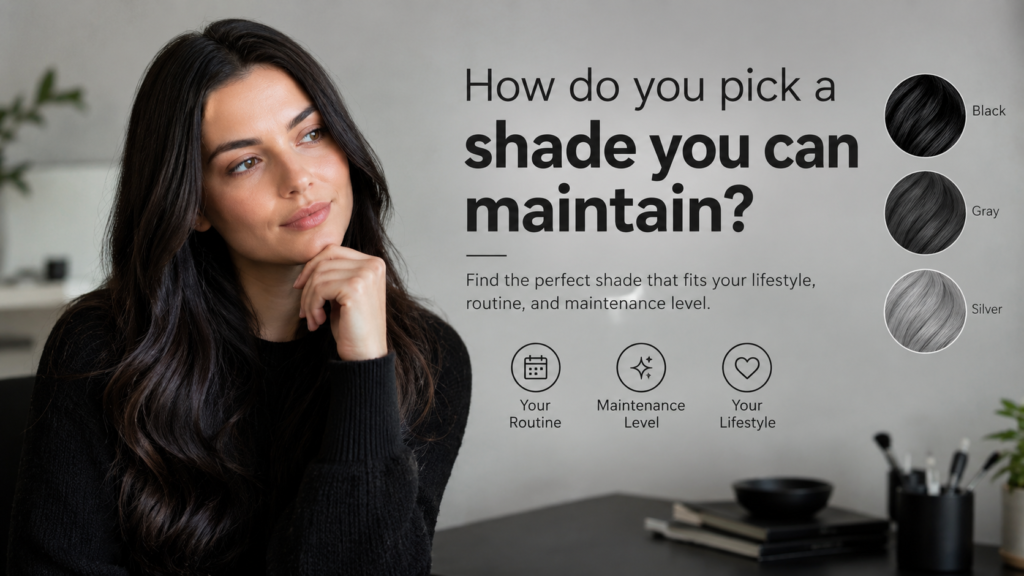
A color that suits you is only half the story. You also need to live with it.
| Shade type | Maintenance level | Typical touch-up |
| Natural-looking brunette | Low | Every 8 to 12 weeks |
| Balayage / ombre | Low to medium | Every 3 to 4 months |
| All-over blonde | High | Every 4 to 6 weeks |
| Platinum | Very high | Every 3 to 5 weeks, plus toning |
| Vivid red / copper | High (fades fast) | Gloss every few weeks |
| Fashion colors (blue, pink, violet) | Very high | Frequent refresh |
Simple aftercare tips:
- Use a sulfate-free shampoo made for color-treated hair.
- Wash with lukewarm water, not hot.
- Add a weekly mask or bond-repair treatment.
- Use a heat protectant before styling.
- Use a purple shampoo for cool blondes or a gloss for warm tones, only as needed.
- Protect your color from strong sun.
If you want low upkeep, choose a shade close to your natural level and use techniques that blend roots, such as balayage or a root smudge.
How can you find out exactly what hair color suits you?
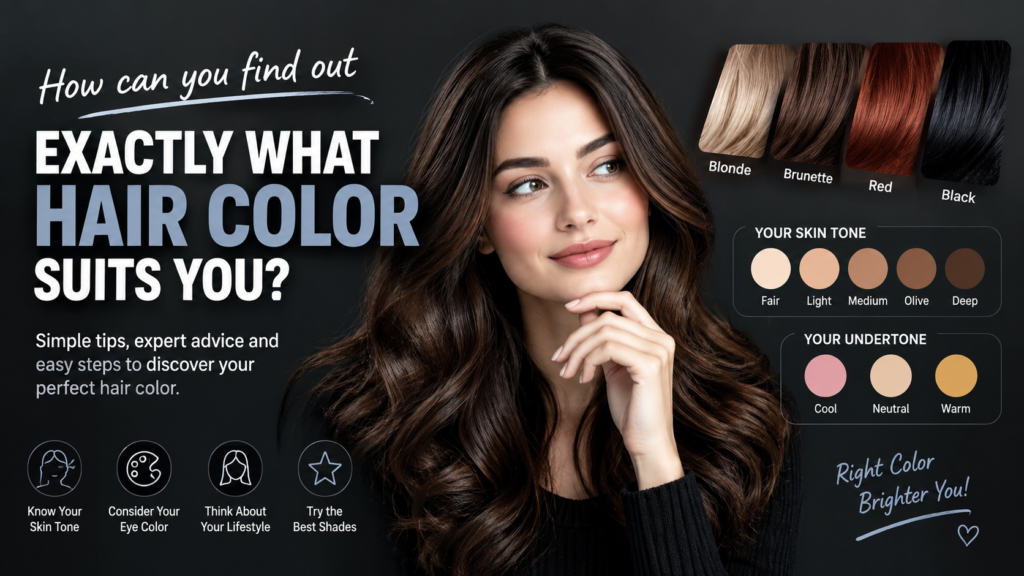
Guides and charts get you close. To get it exactly right, you need a look that is personal to your face.
You can combine three tools:
- A professional consultation. A good colorist reads undertone, contrast and hair condition in minutes.
- A virtual try-on. Upload a clear, front-facing photo in daylight and test several shades in seconds.
- A personal color analysis. This looks at your skin, hair and eyes together, then gives you a palette that works for hair, makeup and clothing.
Take the color analysis quiz →
A quiz takes only a few minutes. It gives you a short list of shades to bring to your stylist, which makes the appointment faster and the result more predictable.
Frequently Asked Questions
What hair color suits me best?
The best hair color is one that matches your skin undertone, respects your natural contrast and is realistic for your starting level. For most people, that means staying within a few shades of their natural color in a matching warm or cool tone.
What hair color is best for my skin tone?
Warm skin suits golden, honey and copper shades. Cool skin suits ash, beige and deep espresso, and neutral skin suits both.
How do I know what hair color suits my skin tone?
Find your undertone with the vein, jewelry and sun reaction tests, then pick a shade with the same tone. If you are unsure, a quick color analysis or a stylist consultation will confirm it.
What hair color suits warm skin tones?
Honey blonde, golden brown, caramel, strawberry blonde, copper and auburn. These shades echo the gold in warm skin.
What hair color suits cool skin tones?
Ash blonde, platinum, beige, mocha, dark ash brown, burgundy and blue-black. These tones keep cool skin looking clear and calm.
What hair color suits neutral skin tones?
Almost any shade, including champagne blonde, chestnut, bronde and soft copper. Focus on depth and contrast rather than tone.
What hair color looks best on fair skin?
Fair skin looks best in soft, balanced shades such as golden or ash blonde, strawberry blonde and light to medium brown. Choose a warm or cool version to match your undertone.
What hair color looks best on medium or tan skin?
Caramel, honey brown, chocolate, golden chestnut and bronze flatter medium and tan skin. Balayage adds a natural, sun-kissed glow.
What hair color suits dark skin?
Deep, rich shades such as warm black, mahogany, burgundy, copper and espresso suit dark skin. Add honey or caramel highlights for gentle brightness.
How do I choose the right hair color for my skin tone?
Identify your undertone, choose a shade in the matching warm, cool or neutral family, and stay close to your natural level. Preview the color before you commit.
Conclusion
Finding the hair color that suits you is not guesswork. Start with your undertone, then check your contrast and your natural level. Pick a shade in the right tone family, and be honest about what your hair can do and how much upkeep you want. Warm skin glows in gold, honey and copper. Cool skin shines in ash, beige and deep espresso.
Neutral skin can borrow from both. Whatever you choose, preview it first, and keep your hair healthy so the color looks as good in six weeks as it does on day one. The best shade is the one that makes your skin look fresh and makes you feel like yourself. Use the tests above, trust what you see in daylight, and book that appointment with confidence.





1 thought on “What Hair Color Suits Me? Best Shades by Skin Tone (2026)”