
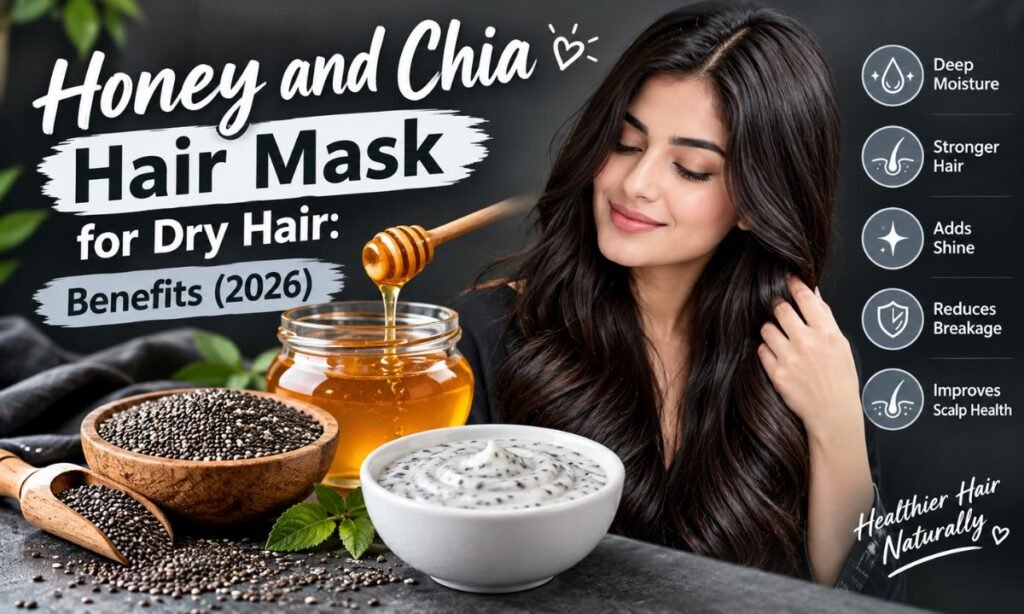
Honey and chia seeds sit in your kitchen, and more people are now putting them on their hair instead of in their breakfast bowl. Social media is full of honey chia hair masks, chia gel for curls, and “kitchen conditioners” that promise silky, shiny strands for pennies. But do they actually help dry hair, or is it just a pretty trend?
This guide gives you the honest answer. You will learn what honey and chia can realistically do, why they are used on hair, how to make simple recipes, how to match them to your hair type, and what mistakes to avoid. You will also learn when a kitchen remedy is not enough and a different step, or a professional, is the better move.
Quick Answer
Honey is a humectant, which means it attracts and holds water. That can make hair feel softer and more flexible for a short time. Chia seeds form a thick, slippery gel when soaked in water. That gel can add slip, help with detangling, and give light hold to curls. Used together in a mask or gel, they can make dry hair feel smoother and easier to handle.
There is an important limit, though. Neither ingredient repairs damaged hair, and very little research tests them on hair directly. Most benefits are cosmetic and temporary. They work best as part of a routine that also includes gentle washing, regular conditioning, less heat, and a good trim.
Why Is Dry Hair So Common?
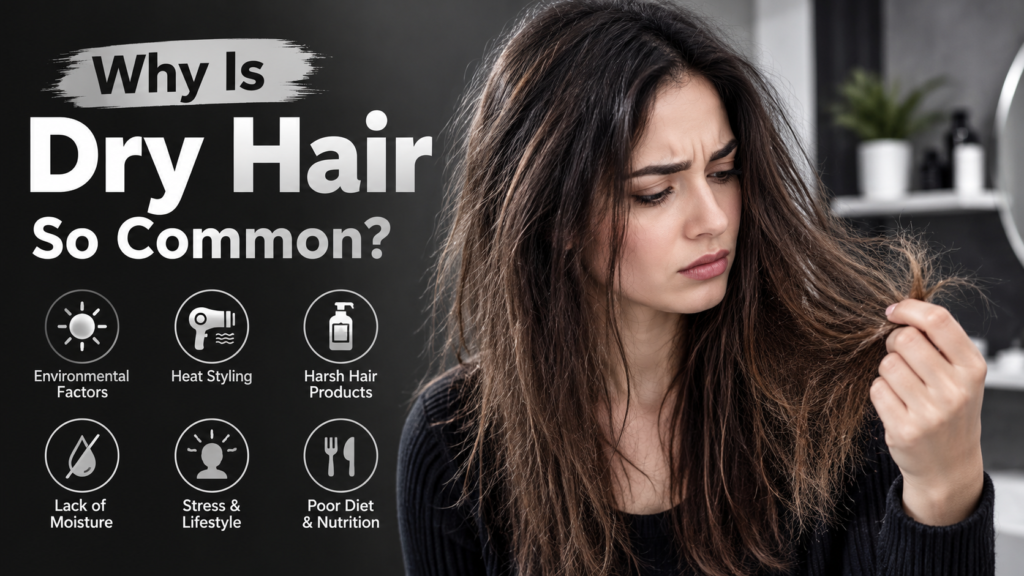
Before you reach for the honey jar, it helps to know what you are fixing. Hair gets dry when it loses moisture faster than it can hold it. The causes are usually a mix of things:
- Washing too often or using harsh shampoo
- Heat styling with flat irons, curling irons, and blow dryers
- Bleach, permanent color, relaxers, and other chemical treatments
- Hard water minerals that leave hair rough and stiff
- Cold, dry weather, sun, wind, and chlorine
- Naturally curly or coily texture, where scalp oil has a harder time traveling down the strand
- High porosity, where the outer layer of the hair (the cuticle) is raised and lets water escape quickly
- Product buildup that blocks moisture from getting in
A honey chia mask can help with the feel of dryness. It will not solve a problem like heavy buildup, ongoing heat damage, or a health issue behind sudden hair changes. Keep that in mind as you read, because it shapes how you should use these ingredients.
What Is Honey Good for in Hair Care?
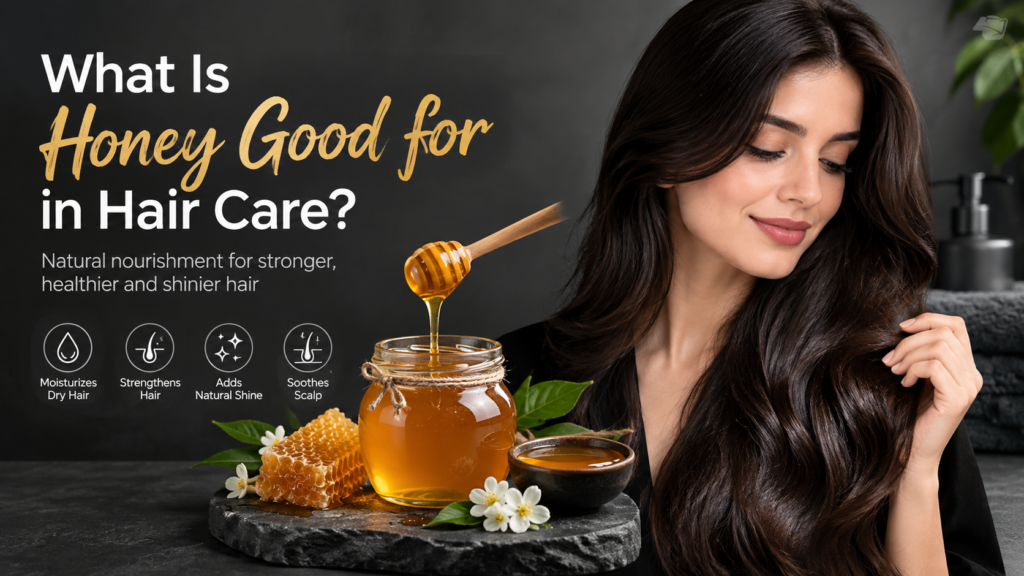
Honey has been used in skin and hair care for a very long time. In ingredient lists you may see it as “mel” or “honey extract.” Here is what it actually brings to the table.
It Attracts Water
Honey is a humectant. Humectants pull water toward themselves, either from the air or from the water already on your hair. This is the same idea behind glycerin, a common ingredient in conditioners and curl creams. When you apply honey to damp hair, it can help the strand hold on to some of that water, which makes hair feel softer and more pliable.
There is a catch. In very dry air, humectants can sometimes pull moisture out of the hair instead of into it. In very humid air, they can pull in too much and cause frizz. This is why many people find honey works well in mild weather and less well at the extremes.
It Adds Softness and Shine
Honey is thick and sticky, and it leaves a light coating on the strand. That coating can smooth the surface of the hair a little, which helps it reflect more light. The shine is mostly a surface effect, but it can be nice, especially for dull hair.
It May Be Gentle on the Scalp
Honey contains sugars and small amounts of other compounds. It has known antimicrobial properties in other settings, such as wound care with medical grade products. That does not mean a spoonful of kitchen honey will treat a scalp condition. If you have persistent flaking, redness, or itching, a dermatologist is the right person to ask.
What Honey Cannot Do
Honey will not rebuild broken protein bonds, repair split ends, or stop hair loss. It also will not grow hair faster. Be wary of any recipe that claims otherwise. Think of honey as a conditioning helper, not a treatment.
See More: Black Seed Oil for Hair Growth: Benefits & Uses (2026 Tips)
What Are Chia Seeds Good for in Hair Care?
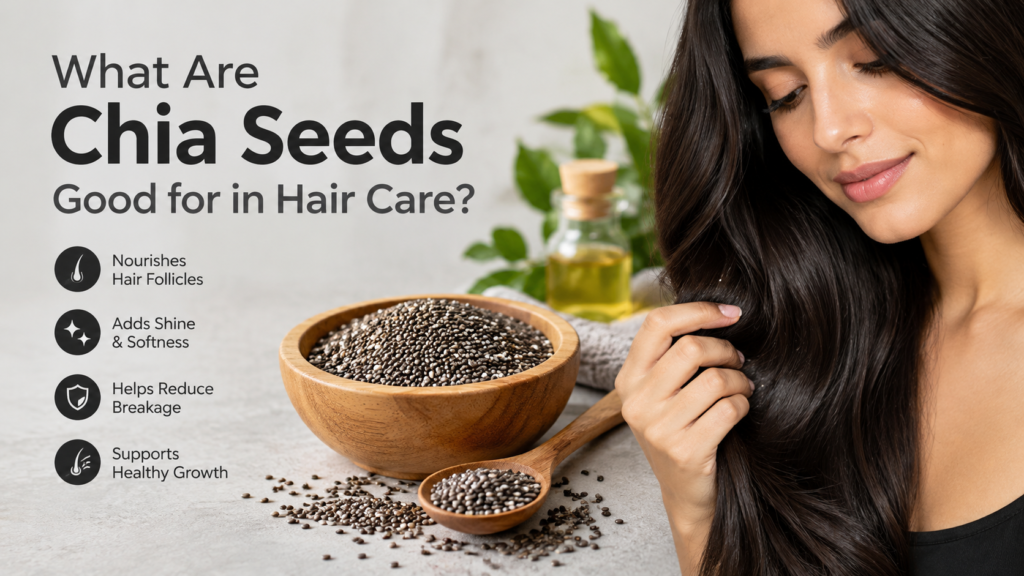
Chia seeds come from a plant in the mint family. They are tiny, but they hold a lot of mucilage, a gel-like substance that forms when the seeds touch water. Within about fifteen to thirty minutes, soaked chia seeds swell and turn into a thick, slippery gel.
Slip and Detangling
That gel feels a lot like the slip you get from a good conditioner. It can help your fingers or a wide tooth comb glide through tangles with less pulling. Less pulling means less breakage, which is especially helpful for curly and coily hair that tangles easily.
Light Hold for Curls
When chia gel dries on the hair, it forms a soft film. Many people with wavy and curly hair use it the way they would use flaxseed gel: to clump curls, reduce frizz, and keep definition without a very stiff feel. The hold is usually lighter than store bought gels, so it suits people who dislike crunchy hair.
Nutrients, Mostly on the Plate
Chia seeds contain protein, fiber, healthy fats (including omega-3 fatty acids), and minerals. Those nutrients matter for your body. Eating a balanced diet supports overall health, and hair quality can reflect that. But the benefits of eating chia are not the same as the benefits of putting it on your hair. Scientists have not shown that chia applied to the hair delivers meaningful nutrition to the strand. Hair above the scalp is not living tissue, so it cannot “absorb nutrients” the way a plant root does.
What Chia Cannot Do
Chia gel will not fix a damaged cuticle or reverse bleach damage. It also has one real downside: it can be hard to rinse out fully, and leftover bits may look like dandruff or flakes. The recipes below show you how to avoid that.
Why Combine Honey and Chia?
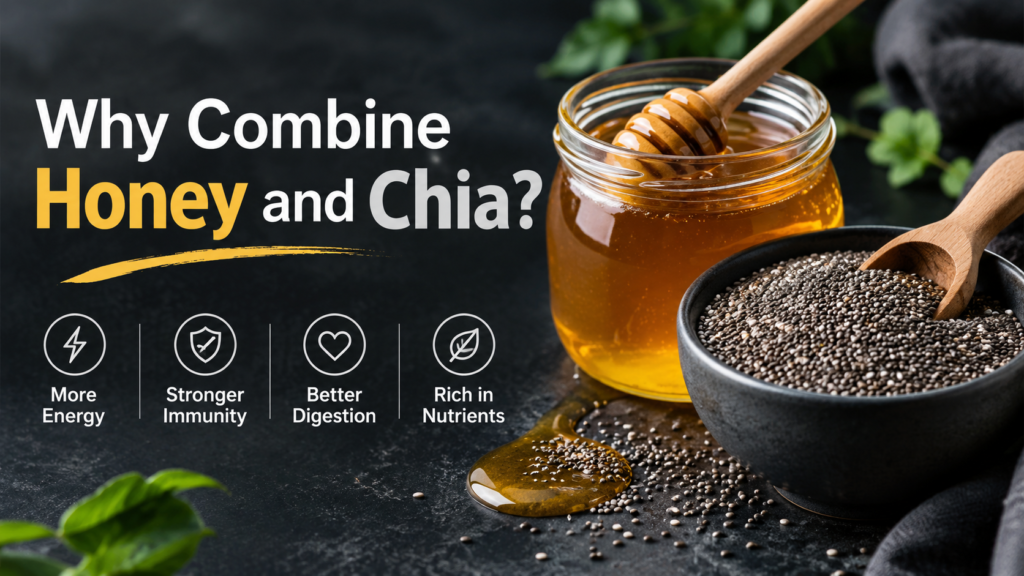
The two ingredients do different jobs, which is why they pair well.
| Ingredient | Main job | Feel on hair |
| Honey | Draws in and holds water, adds softness | Smooth, slightly tacky |
| Chia gel | Adds slip, helps detangle, gives light hold | Slippery when wet, light film when dry |
Honey softens and attracts moisture. Chia gel gives the mix body and slip so it spreads evenly and helps the hair clump instead of fluffing out. Together they make a thick, easy to apply mask that coats the strand and helps lock in water while you leave it on.
A fair expectation: your hair will probably feel softer, smoother, and easier to comb after rinsing. That is a real and useful result. It is a short term, cosmetic improvement, and it needs to be repeated to keep going.
Before You Start: Patch Test and Safety
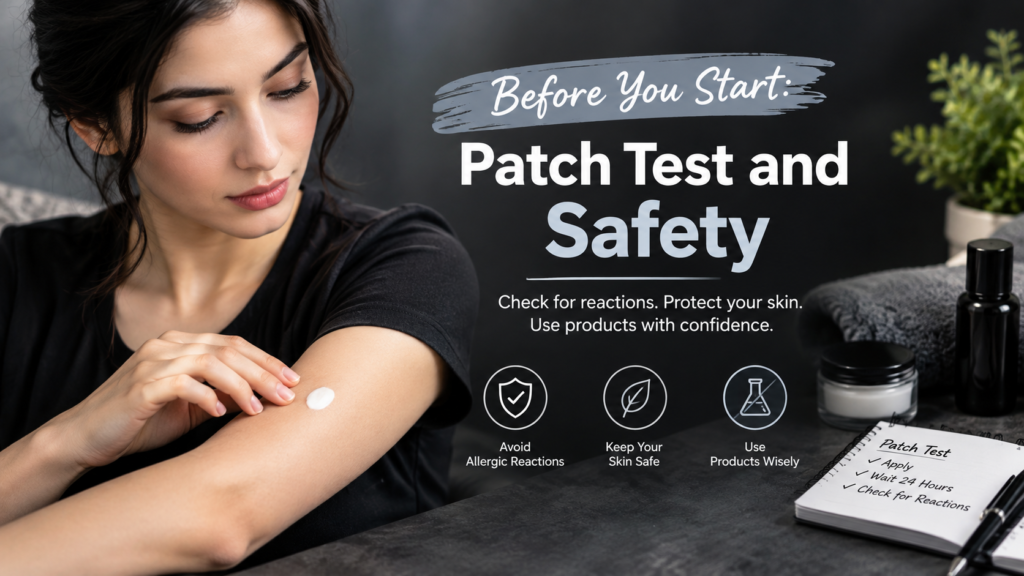
Natural does not mean risk free. Take these steps first.
- Patch test: Mix a tiny amount of your recipe and dab it on the inside of your elbow. Wait 24 hours. If you see redness, itching, swelling, or a rash, do not use it on your hair.
- Check for allergies: People with pollen or bee product allergies can react to honey. Chia seeds are a known allergen for a small number of people, especially those with sesame or mustard seed allergies. If you have any of these, talk to a doctor or allergist first.
- Avoid broken skin: Do not apply the mask to a cut, open sore, or a very irritated scalp.
- Keep it away from your eyes: Honey and seed gel in the eyes can sting. Rinse with clean water if it happens.
- Use plain honey: Raw or regular honey is fine. Avoid honey with added flavors or syrups.
- Never give honey to babies: Honey should not be given to children under one year old, and mixing hair masks near babies who might touch their mouths is best avoided.
How to Make Chia Gel (The Base for Every Recipe)
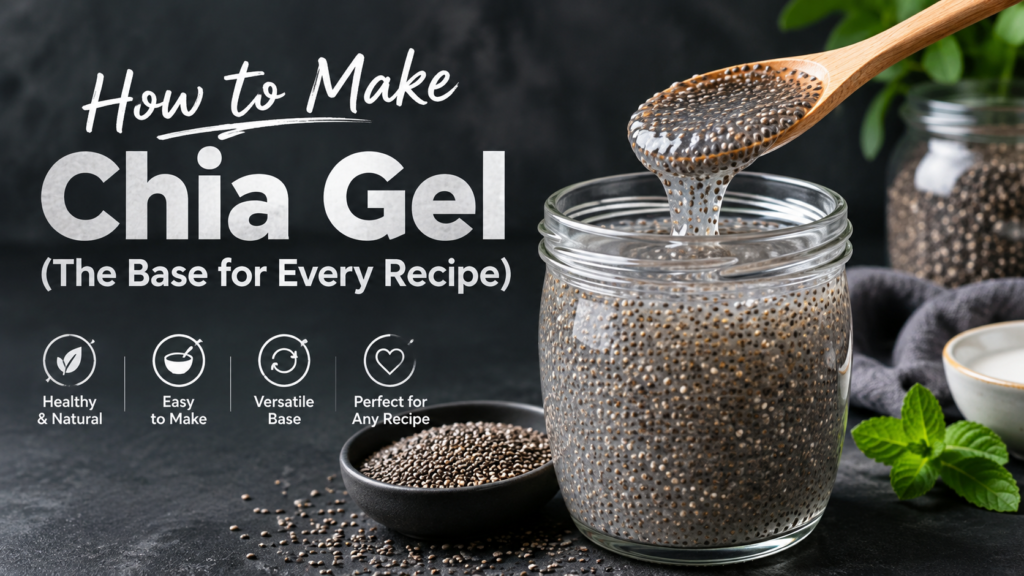
Most honey chia recipes start with chia gel. Making it well is the difference between a smooth mask and a lumpy mess.
What You Need
- 2 tablespoons of chia seeds
- 1 cup of water (filtered or bottled water is a nice choice if your tap water is hard)
- A small jar or bowl
- A fine mesh strainer
- A spoon or small whisk
Steps
- Add the seeds to the water: Pour the chia seeds into the water and stir right away. Seeds love to clump together, so stir well for the first minute.
- Wait and stir again: After five minutes, stir once more to break up any clumps.
- Let it sit. Leave the mixture for 20 to 30 minutes. It will thicken into a loose gel with seeds floating inside.
- Strain if you want a smooth gel: Press the gel through a fine mesh strainer to remove most of the whole seeds. This step helps a lot with rinsing. You can also blend the gel for a few seconds, then strain.
- Use it fresh: Chia gel has no preservatives. It spoils quickly. Keep it in a clean, closed jar in the fridge and use it within about five days. If it smells sour, looks cloudy or slimy in a new way, or shows mold, throw it out.
A good tip: if the gel feels too thick, add a splash of water. If it feels too thin, let it sit longer or add a few more seeds.
Honey Chia Hair Mask Recipes
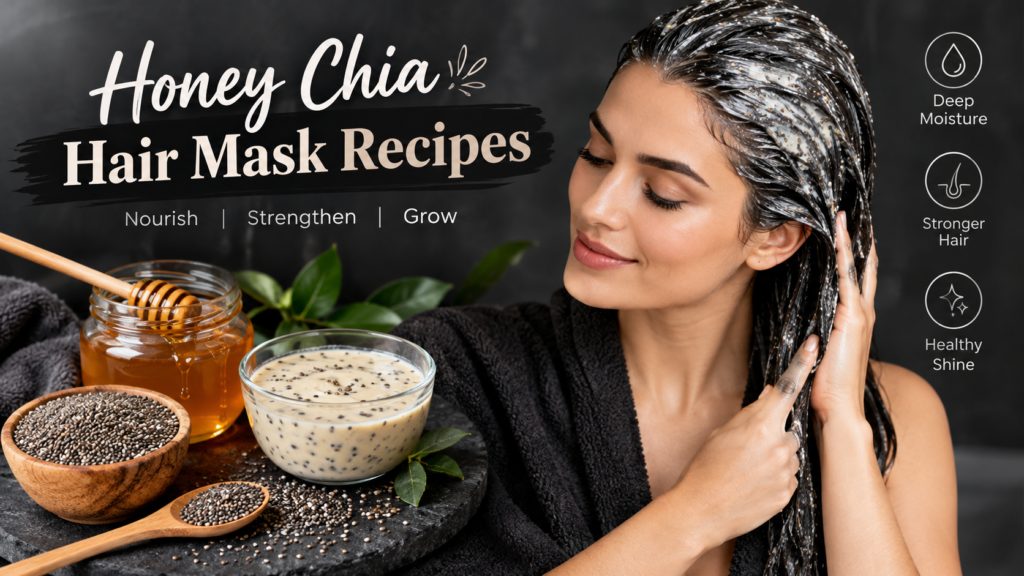
All recipes below make one application for shoulder length hair. Use less for short hair and more for long or thick hair. Apply to damp hair, work from the mid lengths to the ends, and keep it off the roots unless your scalp is dry.
Recipe 1: Basic Honey Chia Mask
Best for: Normal to dry hair, all textures.
You need:
- 3 tablespoons of strained chia gel
- 1 tablespoon of honey
- 1 tablespoon of your regular conditioner (optional but helpful)
How to make it:
- Warm the honey for a few seconds, either by placing the jar in a bowl of warm water or microwaving a spoonful for 5 to 10 seconds. It should be runny, not hot.
- Stir the honey into the chia gel until fully blended.
- Add the conditioner and mix until smooth.
How to use it:
- Wash your hair with a gentle shampoo and squeeze out extra water.
- Apply the mask from the mid lengths to the ends.
- Comb through with a wide tooth comb.
- Cover with a shower cap and leave it on for 20 to 30 minutes.
- Rinse well with lukewarm water, then follow with your usual conditioner on the ends if needed.
Recipe 2: Honey Chia and Aloe Mask
Best for: Dry hair with a tight, dry scalp, or fine hair that needs light moisture.
You need:
- 3 tablespoons of strained chia gel
- 1 tablespoon of honey
- 2 tablespoons of pure aloe vera gel
How to make it: Warm the honey, then stir all three ingredients together until smooth.
How to use it: Apply to damp hair and scalp using your fingertips. Leave on for 20 minutes, then rinse thoroughly. Aloe is lightweight, so this mask is less likely to weigh down fine hair.
Recipe 3: Honey Chia and Oil Mask for Very Dry Hair
Best for: Thick, coarse, coily, or high porosity hair that needs more sealing.
You need:
- 3 tablespoons of strained chia gel
- 1 tablespoon of honey
- 1 tablespoon of a nourishing oil (such as jojoba, argan, avocado, or olive)
- 1 tablespoon of rich conditioner
How to make it: Warm the honey, then whisk it with the chia gel. Add the oil and conditioner and mix until creamy.
How to use it: Apply in sections to damp hair, from the mid lengths to the ends. Cover with a shower cap and a warm towel for 30 minutes. Rinse well. You may need to shampoo gently once more if the oil leaves hair feeling heavy.
Recipe 4: Honey Chia Curl Gel (Leave-In Style)
Best for: Wavy and curly hair that wants light definition.
You need:
- 4 tablespoons of strained chia gel
- 1 teaspoon of honey
- 1 teaspoon of aloe vera gel (optional)
How to make it: Warm the honey, then mix everything until smooth. Keep the amount of honey small. Too much will make hair sticky and attract frizz in humid weather.
How to use it: After washing, apply to soaking wet hair while it is still dripping. Scrunch upward toward the scalp. Let it air dry or diffuse on low heat. Once your hair is fully dry, gently scrunch to break up the gel cast and reveal soft curls.
How to Apply a Honey Chia Mask the Right Way
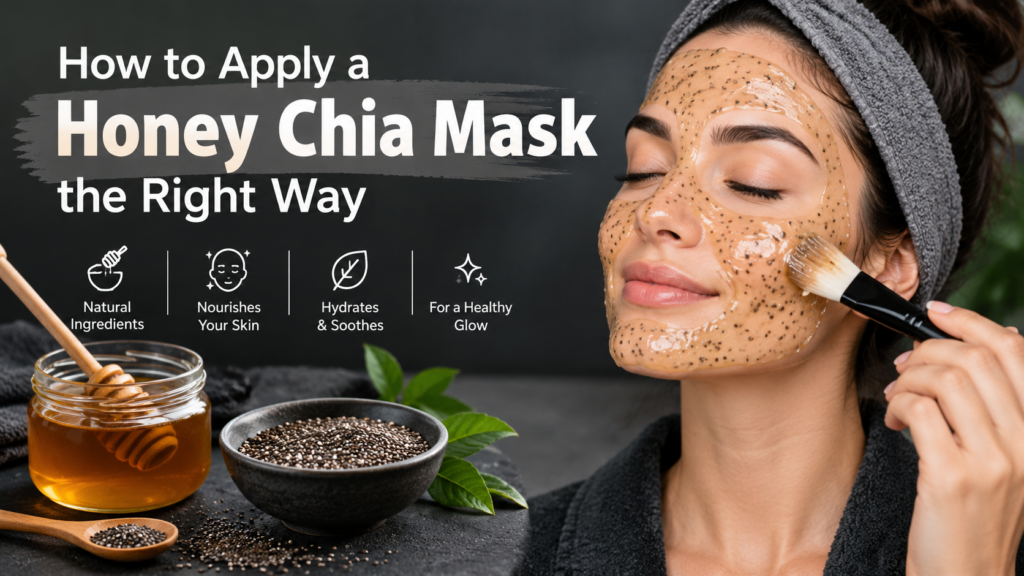
Good application matters as much as the recipe.
- Start with clean, damp hair: A mask works better when hair is free of buildup and still wet. Water helps the humectant do its job.
- Work in sections: Divide your hair into four parts so every strand gets coated.
- Focus on the dry parts: Mid lengths and ends are the oldest and driest. Roots rarely need extra conditioning.
- Detangle gently: Use your fingers or a wide tooth comb. Start at the ends and work upward.
- Cover your hair: A shower cap traps warmth and keeps the mask from drying out. Warmth can help ingredients spread and soften the hair.
- Set a timer: Twenty to thirty minutes is plenty. Longer does not mean better, and a mask that dries and hardens on your hair is harder to rinse out.
- Rinse thoroughly: This is the step that people skip. Rinse with lukewarm water for longer than you think you need. Run your fingers through your hair to loosen any bits of seed.
- Finish with a leave-in: Hair is often best protected after a mask when you add a light leave-in conditioner or a few drops of oil on the ends.
How Often Should You Use a Honey Chia Mask?
For most people, once a week is enough. Very dry or coily hair may enjoy it twice a week for a few weeks, then once a week to maintain. Fine or low density hair may only need it every two weeks.
Watch how your hair responds. If it starts to feel heavy, coated, or stiff, you are probably using it too often or leaving too much on. Clarify with a gentle clarifying shampoo, take a break, and then come back with a smaller amount.
Matching the Mask to Your Hair Type
Hair type changes how dryness shows up and how well a mask works.
Straight Hair
Straight hair often looks dull and flat when dry. Use a light mask, such as the aloe version, and keep the honey low. Apply from the ears down. Heavy oils can make straight hair look greasy.
Wavy Hair
Wavy hair can lose its pattern and turn frizzy when dry. The curl gel recipe or the basic mask works well. Apply a small amount of gel to wet hair to help waves clump without weighing them down.
Curly Hair
Curly hair tends to be drier because oil has a harder time traveling down the bends of the strand. The basic and oil-enriched masks are good choices. The gel can also give definition. Pay attention to how your curls feel, and add extra rinsing if your hair feels coated.
Coily Hair
Coily hair often feels stiff, tangles into knots, and shrinks more than other textures. The oil-enriched mask and a layered routine (water based leave-in, then cream, then a light oil) tend to work well. Chia gel can help with detangling while you work in sections.
Thick or Coarse Hair
Thick hair can take longer to soften. The oil-enriched mask suits it well. Leave it on under a shower cap for the full thirty minutes.
Color Treated or Bleached Hair
Lightened hair is more porous, so it dries quickly and loses moisture fast. A honey chia mask may add softness, but it will not repair the structural damage. Ask your stylist about bond building treatments and gentle routines. Sugary products can also feel sticky on very porous hair, so start with a small amount.
What Results Can You Expect?
It is worth being honest about this part. Here is a realistic picture.
After the first use, most people notice that their hair feels smoother and softer, detangles more easily, and has a bit more shine. These changes are mostly about how the hair feels while it is coated with the mask.
After a few weeks, regular use may help hair feel more manageable, especially when combined with other good habits like gentle washing and less heat. You may notice less frizz and fewer tangles.
What will not change: existing split ends will not seal back together. Heat or bleach damage will not reverse. Hair that is dry because of hard water or buildup may not improve until you deal with those causes.
If you do not see any improvement after six to eight weeks of a gentle routine, that is a sign to look deeper. Your hair may be dealing with something that a kitchen mask cannot solve.
Common Mistakes to Avoid

Using Too Much Honey
More honey does not mean more moisture. Too much can leave hair sticky, hard to rinse, and prone to attracting dust. In humid weather, it can make frizz worse. Stay close to the amounts in the recipes.
Skipping the Strainer
Whole chia seeds can cling to hair, especially curly hair, and look like flakes after drying. Straining the gel makes rinsing far easier.
Using Old Gel
Homemade chia gel can spoil quickly. A sour smell, cloudy look, or slimy texture means it is time to toss it. Using spoiled gel on your scalp can cause irritation.
Applying It to a Dirty Scalp or Roots Only
Masks work on the lengths. Putting heavy mixes on oily roots can cause greasy hair and make buildup worse.
Using Homemade Masks as the Only Step
A mask is one piece of a routine. If you keep using very hot tools, strong shampoos, and daily washing, a weekly mask will not be enough to keep up.
What Honey and Chia Cannot Fix
Some hair problems need a different solution.
- Product buildup: If your hair feels hard, coated, and thirsty, a clarifying shampoo is a better first step than a mask.
- Hard water minerals: Minerals can leave hair rough and stiff. A clarifying wash followed by a rinse with filtered water can help show whether minerals are involved. A shower filter helps some people, though results vary.
- Severe damage: If hair is broken, bleached many times, or heat damaged, trimming off the worst of it is often the only real fix.
- Scalp conditions: Flakes, redness, soreness, or scaling may be dandruff, psoriasis, or eczema, and each needs different care.
- Medical causes: Thyroid problems, hormonal changes, low iron, eating disorders, and some medications can change hair texture or cause shedding.
If your dryness comes with sudden changes in texture, patchy hair loss, fatigue, weight changes, or skin changes, talk to a healthcare provider rather than relying on home remedies.
A Simple Weekly Routine for Dry Hair
Here is an example routine you can adapt. It combines a honey chia mask with the basic habits that make the biggest difference.
Wash day (once or twice a week):
- Shampoo the scalp only with a gentle shampoo.
- Rinse with lukewarm water.
- Apply the honey chia mask to the mid lengths and ends.
- Leave on for 20 to 30 minutes under a shower cap.
- Rinse thoroughly.
- Apply a leave-in conditioner to damp hair.
- Seal the ends with a few drops of oil or a small amount of cream.
- Air dry when possible, or use low heat with a heat protectant.
Between washes:
- Refresh frizz with a light mist of water and a tiny bit of leave-in.
- Keep hair loosely tied or braided to reduce friction.
- Avoid very tight elastic bands.
At night:
- Sleep on a silk or satin pillowcase, or wear a satin bonnet or scarf.
- Make sure your hair is dry before bed.
- Add a small amount of leave-in or oil to the ends if they feel dry.
Every six to ten weeks:
- Trim split ends. Regular trims stop damage from traveling up the strand.
Give a new routine a few weeks before judging it. Change one thing at a time so you can tell what actually helps.
Frequently Asked Questions
Does honey really moisturize hair?
Honey is a humectant, so it can help hair hold on to water and feel softer. It does not add water by itself, which is why it works best on damp hair. The effect is temporary, and it does not repair damage.
Can I leave a honey chia mask on overnight?
It is not recommended. A wet, sticky mask can dry and harden, become hard to rinse, and spoil on your hair or pillow. Twenty to thirty minutes is enough for most people.
Will chia seeds make my hair grow faster?
There is no good evidence that putting chia seeds on your hair speeds up growth. Hair growth depends on genetics, health, hormones, and nutrition. If you are worried about shedding or thinning, speak with a healthcare provider or dermatologist.
How do I get chia seeds out of my hair?
Strain your gel before use, rinse for a long time with lukewarm water, and use a wide tooth comb in the shower. If bits remain after drying, comb them out gently or rinse again with water.
Can I use this mask on my scalp?
You can, if your scalp is not irritated and you have patch tested first. Use a small amount and rinse very well. If your scalp is itchy, red, painful, or flaky, see a dermatologist rather than trying home remedies.
How long does homemade chia gel last?
About five days in a clean, closed jar in the fridge. Throw it out if it smells sour, turns cloudy, or shows any mold.
Does it work on thin or fine hair?
It can, if you use a light version and keep the amounts small. Choose the aloe recipe, apply only to the ends, and rinse well.
How long before I see results?
You may notice softness after the first use. More lasting changes in manageability usually take a few weeks of regular care along with other healthy habits.
When to See a Professional
Most dry hair improves with better habits. But sometimes it helps to ask an expert. Get help if you notice:
- Hair that stays dry and brittle after six to eight weeks of a gentle routine
- Sudden changes in hair texture, thickness, or shedding
- Patchy hair loss or a thinning part
- An itchy, red, flaky, painful, or scaly scalp
- Dry hair along with fatigue, weight changes, cold sensitivity, or skin changes
- Damage after a salon service or a home color job that went wrong
A hairstylist can trim damaged ends, judge porosity and damage in person, and suggest treatments. A dermatologist can check scalp conditions and look into hair loss. A primary care provider can order blood tests if a thyroid problem, low iron, or another health issue is a possibility.
Come prepared. Write down when the dryness started, what products you use, how often you wash and heat style, and any recent illness, diet changes, or new medications. That makes it much easier to find the cause.
Conclusion
Honey and chia seeds are cheap, simple, and pleasant to use. Honey draws in water and softens. Chia gel adds slip and light hold. Together they make a mask that can leave dry hair feeling smoother, shinier, and easier to detangle. That is a real benefit, and for many people it is enough to make the routine worth keeping.
Just keep your expectations grounded. These ingredients are not a cure for damaged hair, and they do not replace the basics: gentle washing, regular conditioning, less heat, protection at night, and regular trims. Patch test first, make small fresh batches, rinse well, and give your routine a few weeks before judging it.
If your hair stays dry, changes suddenly, or comes with scalp or health symptoms, a stylist, dermatologist, or healthcare provider can give you personal guidance that no kitchen recipe can.





1 thought on “Honey and Chia Hair Mask for Dry Hair: Benefits (2026) ”