

Rosemary and mint for hair is one of the most talked-about natural haircare pairings right now. You see it in oils, shampoos, and scalp serums. But does it actually do anything? The short version is yes, it can help your scalp feel fresh and healthy, and early research on each herb looks interesting. It is not magic, though. This guide explains what each ingredient does, how to use them safely, and what results are realistic for your hair type.
Quick answer: Yes, rosemary and mint can be good for hair when used correctly. Rosemary may support scalp circulation and hair growth, while peppermint adds a cooling feel and helps the scalp feel clean. Research is still limited, and results vary. Always dilute the oils, patch test first, and give any routine at least three to six months before judging results.
Why Rosemary and Mint Are Popular in Haircare
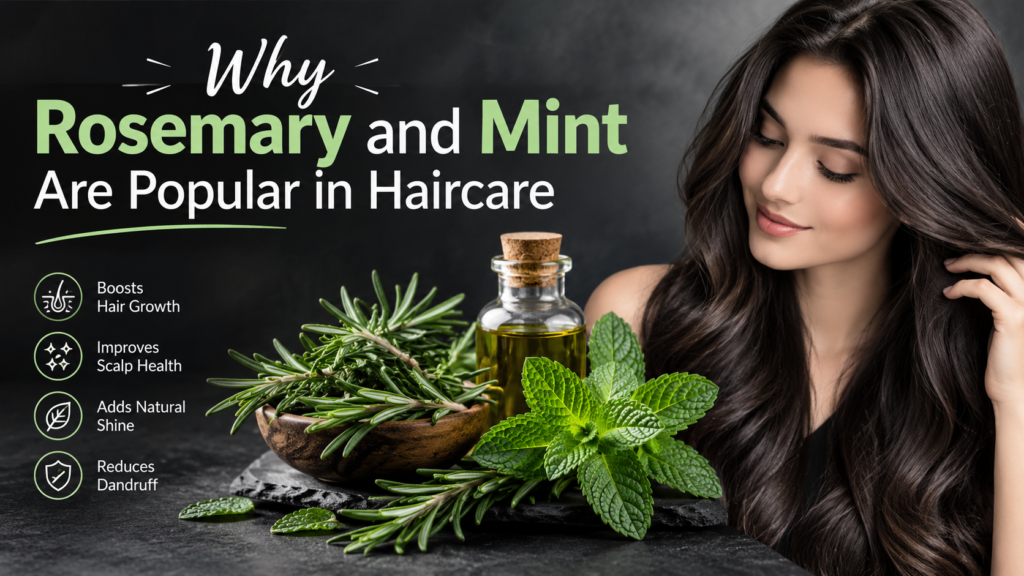
Walk through any US drugstore and you will find shampoos, oils, and scalp serums built around these two herbs. There are a few reasons for that.
Both have a long history in home beauty routines. Both smell fresh and clean. Both also give an instant tingle that makes a product feel like it is working.
Social media pushed the trend further. Scalp care is now its own category, and many people treat the scalp like facial skin. Rosemary oil also got attention after a small clinical trial compared it with minoxidil (more on that below).
One caution: a tingle is a sensation, not proof of growth. The sections below separate what research supports from what is mostly marketing.
Is Mint Good for Hair?
Mint in haircare usually means peppermint, and sometimes spearmint. Peppermint has the most hair-related research, so it is the focus here.
The most cited study used mice, not people. Researchers applied peppermint oil to mice and saw more follicles and a thicker skin layer than in the comparison groups. That is encouraging. Still, results in mice do not always carry over to humans.
For people, the mint benefits for hair are mostly about how the scalp feels. The menthol in peppermint activates cold-sensing nerves, so the scalp feels cool and awake. Many people also like the clean feeling it leaves behind.
So, is mint good for your hair? Yes, as a scalp-care ingredient and when diluted. No, if you expect it to regrow hair on its own. Strong menthol can sting or dry out sensitive skin, so start slowly.
Is Rosemary and Mint Good for Your Hair?
For most healthy scalps, yes. This pair can be a helpful addition to a routine, especially for scalp care. Rosemary has the strongest human evidence for hair growth. Mint adds a cooling, refreshing feel.
Think of the duo as support, not a cure. It will not override genetics, hormones, thyroid problems, low iron, or other medical causes of shedding. It also will not repair damaged ends.
Where it shines is in scalp massage oils, pre-wash treatments, and rinses. A routine that feels good is a routine you will stick with, and consistency matters more than any single ingredient.
Benefits of Rosemary for Hair
Rosemary is the herb with the most science behind it in this pair. Here is what it may do.
1) Supports Scalp Circulation
Rosemary has long been used as a stimulating herb, and many brands say it increases blood flow to the scalp. That idea is popular, but direct proof in human scalps is limited. What is certain is that the massage you do while applying it can make the scalp feel more relaxed and may support healthy skin.
2) Helps Maintain a Balanced Scalp
Lab studies show rosemary extracts have antioxidant and antimicrobial activity. They contain compounds such as carnosic acid and rosmarinic acid. That makes rosemary a reasonable fit for scalp products. It is not a proven treatment for dandruff or any skin condition.
3) Supports Stronger Hair Over Time
In a 2015 randomized trial, about 100 people with androgenetic alopecia used either rosemary oil or 2% minoxidil for six months. Both groups had more hair at the end, with no significant difference between them. The rosemary group also reported less scalp itching.
Keep the limits in mind. It was a small study of one type of hair loss. Rosemary is not a replacement for approved treatments. Also, a hair strand itself is not alive, so “stronger hair” really means a healthier scalp environment and less breakage from gentle handling.
Benefits of Mint (Peppermint) for Hair
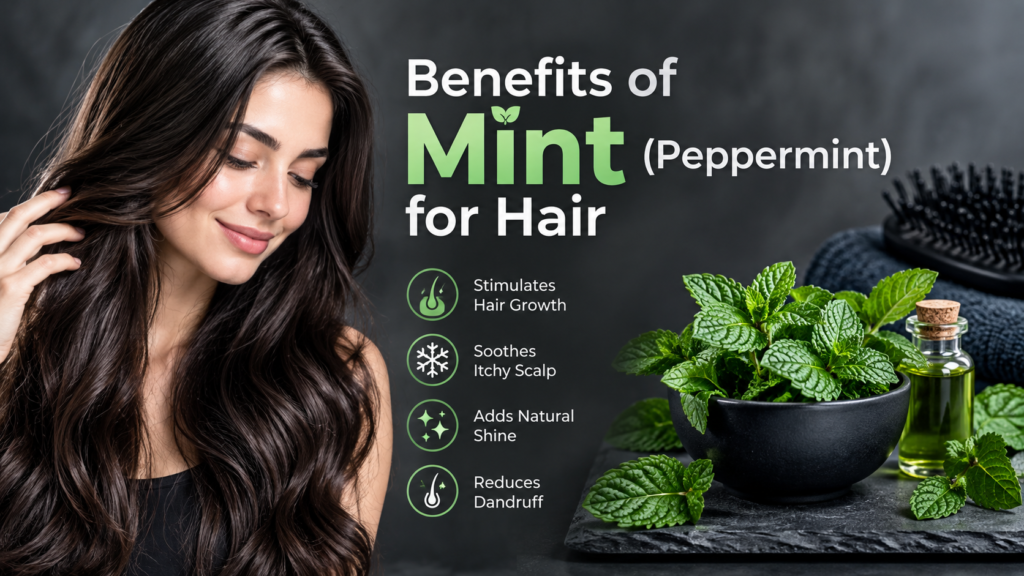
Peppermint plays a different role. It is less about growth claims and more about comfort and cleanliness.
1) Cooling and Scalp Stimulation
Menthol creates a cooling sensation that many people describe as invigorating. It can make a scalp massage feel more effective and encourage you to massage longer. That extra massage time may be one of the real benefits.
2) Helps Reduce Buildup and Oiliness
Peppermint is common in clarifying shampoos and scalp scrubs because it leaves the scalp feeling clean and fresh. Remember that the cleansing comes from the shampoo or exfoliant, not from mint oil itself. If your scalp gets greasy fast, a mint-based wash can be a pleasant option.
3) Supports Overall Scalp Comfort
A warm, itchy, or heavy-feeling scalp often feels better with a cooling product. This works best on non-irritated skin. If your scalp is red, broken, or very sensitive, menthol can make things worse, so skip it.
Do Rosemary and Mint Work Better Together?
As far as published research goes, there is no strong human study testing this exact pair for hair growth. So no one can honestly promise that the two work better together.
The combination does make practical sense. Rosemary brings the better-studied growth angle, and peppermint adds cooling comfort. Each plays a different role, so they complement each other instead of doing the same job twice.
There is a related trial worth knowing about. In a 1998 study on alopecia areata, people massaged a blend of essential oils, including rosemary, into the scalp daily. A higher share of that group improved than the group using only carrier oils. Mint was not part of that blend, and it was a small study.
More oils are not automatically better. Each extra essential oil raises the chance of irritation, so keep blends simple.
See More: Apple Cider Vinegar on Armpits: Benefits, Risks & Uses
How Rosemary and Mint Can Support Hair Growth
Hair grows in cycles. Each strand has a long growth phase that lasts years, then a resting phase, then it sheds. Losing roughly 50 to 100 hairs a day is normal. Genetics, hormones, nutrition, stress, and illness all influence this cycle far more than any herb.
What rosemary and mint can do is support the conditions around the follicle. A clean, calm, well-cared-for scalp is a better foundation for growth. Rosemary may add a modest biological benefit, based on the minoxidil comparison trial.
Massage helps too. A small Japanese study found that four minutes of standardized scalp massage daily for 24 weeks was linked to thicker hair in the men studied. Pairing a massage with a pleasant oil makes the habit easier to keep.
Patience is key. Because of the hair cycle, give any new routine three to six months before judging results. Do not expect visible change in a few weeks. Take a photo of your part line and hairline once a month in the same light. Photos show slow changes better than memory does.
How to Use Rosemary and Mint for Hair
You have three simple options. Pick the one that fits your hair type and schedule.
Option 1: Pre-Wash Scalp Oiling (Simple and Effective)
- Mix 1 ounce of a carrier oil (jojoba, grapeseed, or sweet almond work well) with 6 drops of rosemary essential oil and 2 drops of peppermint essential oil. That is roughly a 1% dilution.
- Part your hair in sections and apply to the scalp with your fingertips.
- Massage gently for about five minutes.
- Leave it on for 30 minutes to two hours.
- Shampoo thoroughly, twice if needed.
Use this two or three times a week at most.
Option 2: Use in Wash-Day Products
This is the lowest effort route. Look for shampoos, conditioners, and scalp serums that list rosemary and mint (or peppermint) in the ingredients. Lather on the scalp and let it sit for one to two minutes before rinsing so the ingredients have time to work. Check labels for fragrance sensitivities and avoid products that contain ingredients you already react to.
Keep in mind that rinse-off products stay on the scalp for a short time. They are more about scalp feel and cleanliness than deep treatment.
Option 3: DIY Rinse (Gentle, Low Oil)
- Steep a few fresh rosemary sprigs and a handful of mint leaves in hot water for 15 to 20 minutes.
- Let it cool and strain it.
- After shampooing, pour it over your scalp and hair.
- Rinse lightly or leave it in, depending on how your hair feels.
There is no essential oil here, so irritation risk is lower. Store leftovers in the fridge and use them within two to three days.
Who Benefits Most from Rosemary and Mint?
People who want a gentle, natural-feeling scalp routine tend to like this pair most. It also suits anyone who enjoys scalp massage. Your hair type changes how you should use it.
| Hair Type | Best Method | Tip |
| Fine or straight | Rinse or wash-day products | Heavy oils can weigh hair down and look greasy fast |
| Wavy | Light pre-wash oiling | Focus on the scalp, not the lengths |
| Curly or coily | Pre-wash oiling | Natural oils travel slowly down coils, so scalp oiling fits well |
| Thick or high density | Section hair, use more product | Make sure the oil reaches the scalp, not just the top layer |
| Oily scalp | Mint-based wash products | Keep oil treatments short and rinse well |
| Dry or sensitive scalp | Low-dose oil or rinse | Skip strong menthol or use less peppermint |
Length matters less since you apply the treatment to the scalp. Longer hair just needs more careful sectioning and a thorough shampoo afterward.
If you wear protective styles like braids, twists, or locs, apply the diluted oil directly to the exposed scalp between parts. Avoid heavy buildup at the base, since it can be hard to wash out. If you style with heat, remember that oils on the lengths can fry under a flat iron, so keep the product on the scalp.
Common Mistakes to Avoid
- Applying essential oils undiluted: This is the top cause of burning and irritation.
- Using too much peppermint: More menthol means more sting, not more growth.
- Skipping the patch test: Always test first.
- Leaving oil on too long: Heavy buildup can clog follicles and cause greasy, flaky scalps, especially for fine hair.
- Expecting overnight results: Hair cycles move slowly.
- Ignoring the basics: Diet, sleep, stress, and gentle styling matter as much as any oil.
- Using it as a replacement for medical care: when you have sudden or patchy hair loss.
Are Rosemary and Mint Safe for Hair?
For most people, rosemary and mint for hair is safe when properly diluted. Undiluted essential oils are the main risk. They can cause redness, itching, and contact dermatitis.
A few safety habits help:
- Patch test: Apply a small diluted amount to your inner forearm and wait 24 hours.
- Dilute: Stay around 1% to 2% in a carrier oil for scalp use.
- Protect your eyes: Peppermint oil near the eyes burns badly.
- Keep it away from young children and pets. Peppermint oil can be harmful to both.
- Ask a doctor first: if you are pregnant, nursing, or have epilepsy or another medical condition, since some essential oils are not recommended in these cases.
If you notice sudden, patchy, or fast hair loss, see a dermatologist. Natural remedies should not delay a proper diagnosis.
Frequently Asked Questions
Does Rosemary and Mint Oil Help Hair Growth?
It may. Rosemary has some human research behind it, while mint evidence is mostly from animal studies. Results vary.
Is Rosemary and Mint Good for Hair Loss and Thinning?
It can support scalp health, but it is not a proven fix. See a dermatologist to find the cause of ongoing thinning.
How Do You Use Rosemary and Mint Oil for Hair Growth?
Dilute it in a carrier oil, massage it into the scalp for about five minutes, then shampoo it out after 30 minutes to two hours.
How Often Should You Use Rosemary and Mint Oil on Your Hair?
Two to three times a week is plenty for most people. Use it less often if your scalp feels irritated or greasy.
Can Rosemary and Mint Oil Make Hair Grow Faster?
No proof shows it speeds up growth. It may support healthier growth conditions over time.
Does Rosemary and Mint Oil Help With Dandruff and Scalp Health?
It may help the scalp feel cleaner and calmer, but it is not a proven dandruff treatment. Persistent flaking needs a medicated shampoo or a doctor’s advice.
Can You Leave Rosemary and Mint Oil in Your Hair Overnight?
You can, but it is not necessary. Overnight use may clog follicles or irritate sensitive scalps, so start with a shorter time.
Should Rosemary and Mint Oil Be Diluted Before Applying?
Yes, always. Mix it into a carrier oil at about 1% to 2% before it touches your scalp.
Are There Any Side Effects of Rosemary and Mint Oil for Hair?
Possible side effects include redness, itching, burning, and allergic reactions. Stop using it if irritation appears.
How Long Does Rosemary and Mint Take to Show Hair Growth Results?
Plan on about three to six months of regular use. Hair grows slowly, and results differ from person to person.
Final Thoughts
Rosemary and mint for hair can be a smart, low-risk addition to your routine. Rosemary has the better research behind it, and mint adds a cooling scalp experience. Neither one guarantees growth, and neither replaces medical care for true hair loss. Dilute your oils, patch test, massage gently, and stay consistent for at least three to six months. If shedding is sudden, patchy, or worrying, see a dermatologist. A healthy scalp is the best foundation for healthy hair.





1 thought on “Is Rosemary & Mint Good for Hair? Benefits & Growth (2026)”