
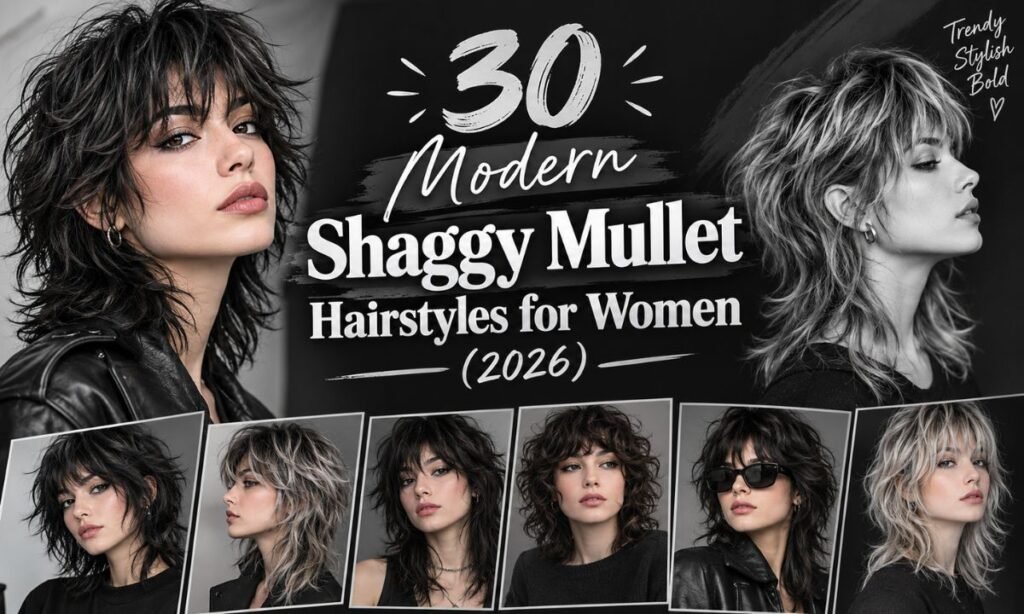
The shaggy mullet is no longer a joke haircut. It’s one of the most requested cuts in salons right now, and for good reason. It gives you layers, texture, movement and attitude in a single cut.
If you’ve been scrolling through photos and wondering whether a modern shaggy mullet could work on you, this guide will help you decide. You’ll find 30 distinct styles, with notes on who each one suits, how much work it takes, and how to style it at home.
We also cover face shapes, hair types, salon talk, daily styling, and the mistakes that make a mullet look dated. Let’s get into it.
Quick answer: A modern shaggy mullet for women is a layered haircut with shorter, textured lengths on top and around the face, and longer, wispy lengths at the back. It blends the softness of a shag with the contrast of a classic mullet.
Why the Modern Shaggy Mullet Is Trending
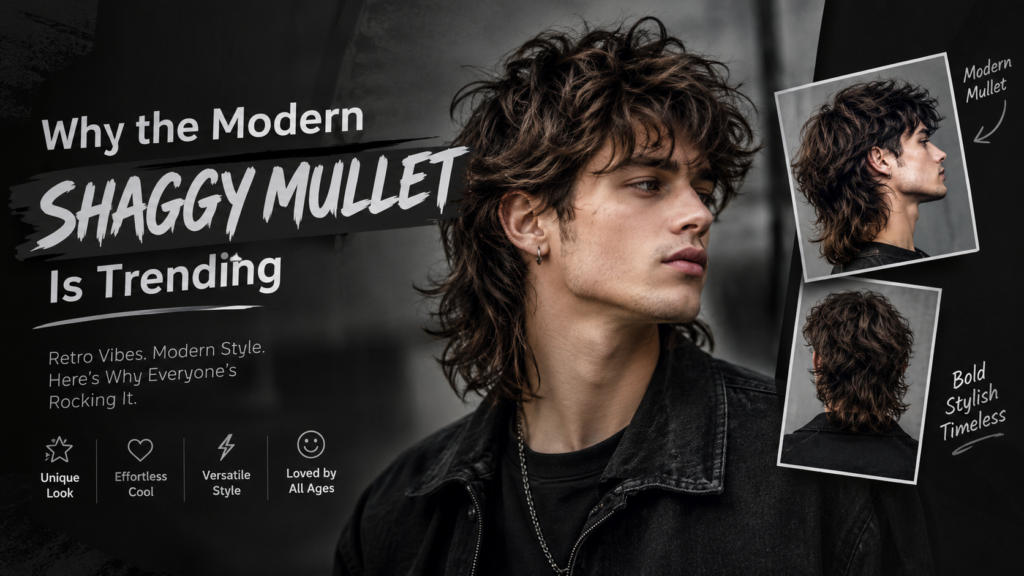
Hair trends tend to swing between polished and undone. Right now, the pendulum sits firmly on “undone.” People are tired of blowouts that take forty minutes and fall flat by lunchtime. They want a cut that looks good when it’s a little messy.
That’s where the shaggy mullet comes in. Here’s why it keeps climbing the charts.
- It looks lived-in: The layers are built to look tousled, so air-drying actually works in your favor.
- It adds movement to flat hair: Short crown layers lift the roots and create shape without heavy products.
- It removes bulk from thick hair: Strategic thinning around the sides and nape makes heavy hair lighter.
- It works across ages: Stylists report clients from their teens to their sixties asking for softer versions of the cut.
- It’s a low-commitment way to look bold: You can go subtle (a “mini” mullet) or full punk, and adjust over time.
- Social media loves it: Back views, side views and the “business in the front, party in the back” angle photograph extremely well.
There’s also a cultural pull. The 70s rock shag, the 80s mullet and the Y2K grunge look are all being remixed at once. The modern version keeps the shape but softens the edges, which is why it feels fresh rather than costume-like.
What Exactly Is a Shaggy Mullet for Women?
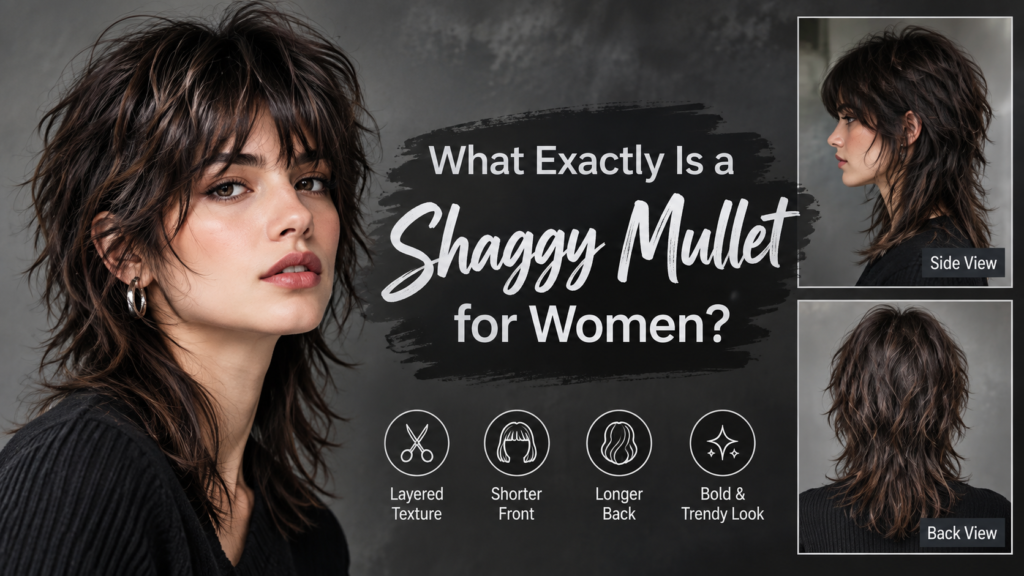
A shaggy mullet starts with a shag. That means lots of layers, choppy ends and a lot of texture. Then it adds the mullet’s signature contrast: shorter around the crown, face and sides, and noticeably longer at the nape.
The difference between a “mullet” and a “shaggy mullet” is the finish. A traditional mullet can look blunt and heavy. A shaggy mullet is feathered, wispy and light.
Key features to look for
- Short, layered crown that gives lift and volume
- Face-framing pieces around the cheeks and jaw
- Longer back section that ends below the nape or past the shoulders
- Visible texture from razor cutting, point cutting or thinning
- Optional fringe, from micro bangs to long curtain bangs
If your hair is the same length all over, you won’t get the effect. The magic is in the difference between the top and the back.
Shaggy Mullet vs. Wolf Cut vs. Classic Shag
These three cuts are cousins, and people confuse them all the time. Here’s a simple comparison so you can ask for exactly what you want.
| Feature | Classic Shag | Wolf Cut | Shaggy Mullet |
| Layer placement | Even layers throughout | Heavy layers on top, thinner ends | Short top and sides, long back |
| Contrast front to back | Low | Medium | High |
| Typical finish | Feathered, soft | Wild, voluminous | Choppy, edgy, wispy |
| Best for | Soft, retro looks | Thick or wavy hair | Bold, high-texture looks |
| Styling effort | Low to medium | Low | Low to medium |
| Fringe | Usually curtain or wispy | Often curtain | Any style, from micro to long |
In short: the wolf cut is wide and wild, the shag is balanced, and the shaggy mullet has the most dramatic front-to-back difference. Many modern cuts blur these lines, which is why photos are so useful when you talk to your stylist.
30 Modern Shaggy Mullet Hairstyles for Women
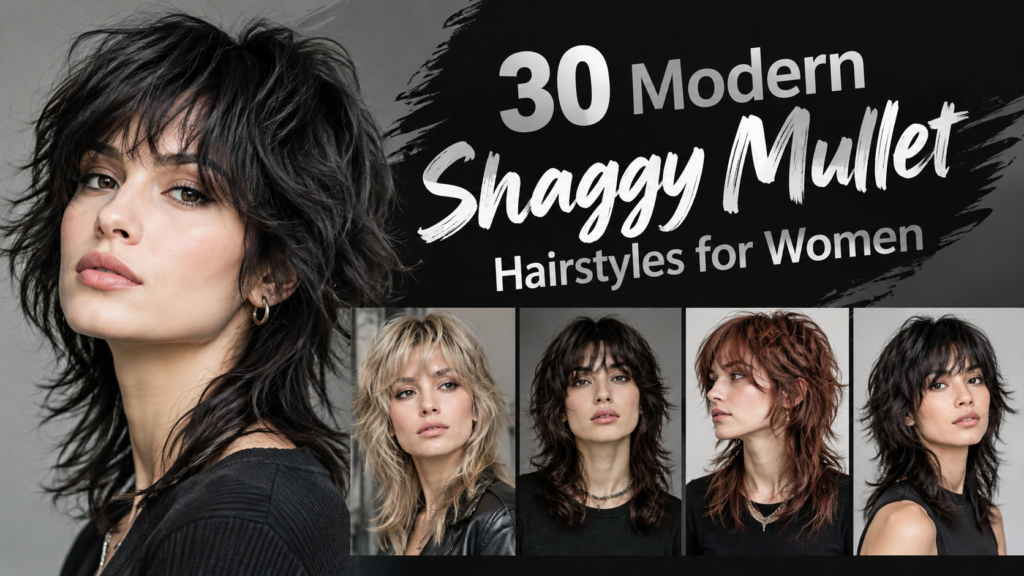
Each style below includes who it suits, how it looks, and a styling tip. Use the quick labels to scan for what fits your hair and lifestyle.
1. Soft Feathered Shaggy Mullet
This is the gentle entry point. The layers are blended and light, with feathered ends that curve away from the face. The back is longer but never heavy.
- Best for: Fine to medium hair, first-timers
- Length: Medium
- Maintenance: Low
- Styling tip: Blow-dry with a round brush at the crown only, then let the ends dry naturally.
2. Choppy Textured Shaggy Mullet
Here the ends are cut with a point-cutting technique so they look piece-y and uneven on purpose. It looks best when it’s slightly undone.
- Best for: Straight or slightly wavy hair
- Length: Short to medium
- Maintenance: Medium
- Styling tip: Rub a pea-sized amount of texture paste between your palms and twist small sections.
3. Curtain Bangs Shaggy Mullet
Long, center-parted bangs sweep to each side and melt into the cheek layers. The mullet shape stays in the back, so you get softness at the front and edge behind.
- Best for: Oval, heart and long face shapes
- Length: Medium to long
- Maintenance: Medium (bangs need trims)
- Styling tip: Dry the bangs first with a round brush, rolling them away from your face.
4. Short Shaggy Pixie Mullet
Think of a pixie that grew a tail. The top and sides are cropped close and feathery, while a small wisp stays long at the nape. It’s playful and very easy to wash and go.
- Best for: Small to medium features, fine hair
- Length: Short
- Maintenance: High (frequent trims)
- Styling tip: Use a light pomade on the crown pieces for definition without stiffness.
5. Long Flowing Shaggy Mullet
If you don’t want to lose length, this is your version. The layers are long and graduated, with the shortest pieces starting around the cheekbones. The back stays past the shoulders.
- Best for: Wavy or straight hair, boho styles
- Length: Long
- Maintenance: Low to medium
- Styling tip: Add loose waves with a one-inch iron, then break them up with your fingers.
6. Razor Cut Shaggy Mullet
A razor creates wispy, see-through ends that regular scissors can’t match. The result is airy, feathery and ideal for a rock-inspired look.
- Best for: Medium to thick, healthy hair
- Length: Short to long
- Maintenance: Medium
- Styling tip: Avoid heavy oils. They weigh down the razored ends and make them look stringy.
7. Wavy Shaggy Mullet
Natural waves are made for this cut. The layers stack with the wave pattern, so your hair looks full without a lot of effort.
- Best for: Type 2A to 2C waves
- Length: Medium
- Maintenance: Low
- Styling tip: Scrunch in a light mousse on damp hair and diffuse on low heat.
8. Curly Shaggy Mullet
Curls bring natural volume, and the layers keep them from forming a triangle shape. The stylist usually cuts curls dry so each spiral sits where it should.
- Best for: Type 3 and 4 curls
- Length: Short to medium
- Maintenance: Medium
- Styling tip: Refresh on day two with a spray bottle of water and a curl cream.
9. Micro Bangs Shaggy Mullet
Micro bangs hit above the brow and give the whole look a fashion-editor feel. Paired with a longer back, the contrast is striking.
- Best for: Strong features, high foreheads, confident wearers
- Length: Short to medium
- Maintenance: High (bangs grow out fast)
- Styling tip: Keep a small pair of safety scissors out of reach. Let your stylist do all fringe trims.
10. Layered Volume Shaggy Mullet
Built for people who want lift. The crown layers are short and stacked, so they push upward and make the whole shape feel fuller.
- Best for: Fine or flat hair
- Length: Medium
- Maintenance: Medium
- Styling tip: Spray root lift at the scalp, then flip your head upside down and dry.
11. Messy Natural Shaggy Mullet
This is the “I just woke up like this” cut. The shape is loose and the layers are uneven by design. It leans on your natural texture rather than fighting it.
- Best for: Anyone who hates daily styling
- Length: Medium
- Maintenance: Low
- Styling tip: Sea salt spray on damp hair, air dry, and you’re done.
12. Side-Swept Shaggy Mullet
A deep side part sends the fringe diagonally across the forehead. It softens strong jawlines and gives the style an asymmetrical twist.
- Best for: Square and round faces
- Length: Medium
- Maintenance: Medium
- Styling tip: Part your hair while it’s still wet so it dries in the right direction.
13. Blonde Highlight Shaggy Mullet
Highlights make layers easier to see. Light pieces at the crown and ends highlight every cut line, so the texture looks more dimensional.
- Best for: Brunettes and dark blondes
- Length: Any
- Maintenance: High (color upkeep)
- Styling tip: Use a purple shampoo once a week to keep brassiness away.
14. Undercut Shaggy Mullet
A hidden or visible undercut at the nape removes bulk and adds grit. Many women keep it underneath so they can hide or show it when they like.
- Best for: Very thick hair
- Length: Short to medium
- Maintenance: High (the undercut needs a buzz every 3 to 4 weeks)
- Styling tip: Start with a hidden undercut if you’re nervous. You can always go shorter.
15. Medium-Length Shaggy Mullet
This is the most wearable version for most people. The back ends around the collarbone and the layers do the rest of the work.
- Best for: Almost everyone
- Length: Medium
- Maintenance: Low to medium
- Styling tip: A 1.25-inch curling iron creates relaxed bends that match the cut’s shape.
16. Soft Feminine Shaggy Mullet
Here the mullet is toned down. Layers are rounded, bangs are wispy, and the nape section is only slightly longer. It reads polished rather than punk.
- Best for: Work-friendly styles, softer aesthetics
- Length: Medium
- Maintenance: Medium
- Styling tip: Finish with a flexible-hold hairspray so the shape holds without feeling crunchy.
17. Bold Punk Shaggy Mullet
This one is loud. The layers are sharply contrasted, the ends are jagged, and the color is often dramatic. It leans into grunge and rock culture.
- Best for: Anyone who loves a statement
- Length: Short to medium
- Maintenance: High
- Styling tip: Use a matte clay and tousle it in different directions for an intentionally messy finish.
18. Shaggy Wolf Cut Mullet
A hybrid of two trends. You get the volume of a wolf cut with the clear short-to-long shape of a mullet. It looks dramatic from the back and the side.
- Best for: Thick or wavy hair
- Length: Medium to long
- Maintenance: Medium
- Styling tip: Use a diffuser to boost volume without frizz.
19. Straight Sleek Shaggy Mullet
Yes, a shaggy mullet can look smooth. The layers are fine and sharply blended, and the hair is styled flat and glossy. The contrast between sleek texture and edgy shape feels modern.
- Best for: Straight, shiny hair
- Length: Medium
- Maintenance: Medium
- Styling tip: A smoothing serum and a flat iron on low heat will give you the glassy finish.
20. Face-Framing Shaggy Mullet
The shortest layers start around the cheekbones or jaw and spotlight your best features. The back stays long and soft.
- Best for: Oval, long and diamond faces
- Length: Medium to long
- Maintenance: Low to medium
- Styling tip: Curl the face pieces away from your cheeks for a more open look.
21. Shaggy Mullet with Fringe
A full, textured fringe sits above the brows and merges into the shorter side layers. It’s a bolder cousin to curtain bangs.
- Best for: Oval, round and heart faces
- Length: Short to medium
- Maintenance: Medium to high
- Styling tip: Dry shampoo on the fringe between washes prevents oil from flattening it.
22. Colored Shaggy Mullet
Think copper, burgundy, silver, pastel pink or even a split-dye. Layers catch color beautifully, so even a simple shade looks richer.
- Best for: Creative personalities
- Length: Any
- Maintenance: High
- Styling tip: Wash with cool water and use color-safe shampoo to slow fading.
23. Subtle Mini Shaggy Mullet
The “my boss won’t notice” mullet. The back is only a little longer than the front, and the shaggy layers do most of the talking. It’s a quiet way to try the trend.
- Best for: Beginners, office settings
- Length: Short to medium
- Maintenance: Low
- Styling tip: Tuck one side behind your ear for a slightly cooler silhouette.
24. Edgy Disconnected Shaggy Mullet
The layers are intentionally disconnected, meaning there’s a clear break between the short top and the long back rather than a smooth gradient. It has a stronger graphic shape.
- Best for: Straight or slightly wavy hair, fashion-forward clients
- Length: Short top, long back
- Maintenance: Medium to high
- Styling tip: Show your stylist back-view photos so you both agree on where the break happens.
25. Thick Hair Shaggy Mullet
Thick hair can feel like a helmet. This cut removes weight with internal layering and tapering, so the hair moves instead of sitting.
- Best for: Dense, coarse hair
- Length: Medium to long
- Maintenance: Medium
- Styling tip: Use a lightweight leave-in conditioner so you don’t add extra heaviness.
26. Fine Hair Shaggy Mullet
Fine hair needs shorter layers in the right places. Too many can make the ends look sparse, so the stylist concentrates texture at the crown and keeps the back fuller.
- Best for: Fine, straight hair
- Length: Short to medium
- Maintenance: Medium
- Styling tip: Use a volumizing mousse at the roots and skip thick creams.
27. Tapered Ends Shaggy Mullet
The ends are cut to taper into soft points instead of a straight line. This makes the back look wispy and avoids the “heavy tail” effect.
- Best for: Medium density hair
- Length: Medium to long
- Maintenance: Low to medium
- Styling tip: Avoid blunt trims. Ask your stylist to maintain the taper at each visit.
28. Retro-Inspired Shaggy Mullet
Draws from 70s rock shag with a modern update. Expect feathered layers, a long fringe, and a mild flip at the ends. It feels vintage, not costume.
- Best for: Medium hair, vintage fans
- Length: Medium
- Maintenance: Medium
- Styling tip: Use hot rollers for ten minutes to get the flicked ends.
29. Voluminous Blowout Shaggy Mullet
Big, bouncy and glamorous. The mullet shape is still there, but the finish is a full blowout with lift at the crown and curve at the ends.
- Best for: Special occasions, anyone who loves a salon finish
- Length: Medium to long
- Maintenance: High (styling time)
- Styling tip: Blow-dry in sections with a large round brush, then set with cool air.
30. Wet Look Shaggy Mullet
The wet look is sleek, editorial and slightly dramatic. Layers stay defined and a glossy gel finish shows off the shape, especially from behind.
- Best for: Evenings, photoshoots, bold fashion moments
- Length: Short to medium
- Maintenance: Medium (product build-up)
- Styling tip: Use a water-based gel and rinse well afterward so residue doesn’t dull your hair.
Quick Comparison: Which Shaggy Mullet Fits Your Lifestyle?
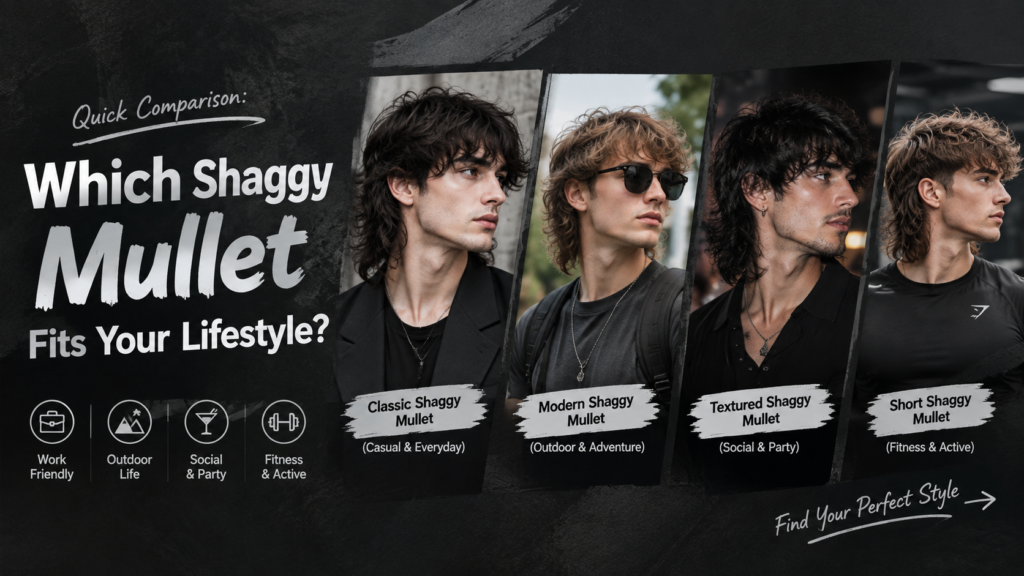
Not sure where to start? This table groups the styles by effort and personality.
| Goal | Best Styles from the List |
| Lowest maintenance | #7 Wavy, #11 Messy Natural, #15 Medium-Length, #23 Subtle Mini |
| Most dramatic | #9 Micro Bangs, #17 Punk, #22 Colored, #24 Disconnected |
| Best for fine hair | #1 Soft Feathered, #10 Layered Volume, #26 Fine Hair |
| Best for thick hair | #14 Undercut, #18 Wolf Cut Mullet, #25 Thick Hair |
| Best for curls | #8 Curly, #7 Wavy, #18 Wolf Cut Mullet |
| Most polished | #16 Soft Feminine, #19 Sleek, #29 Blowout |
| Best for growing out slowly | #5 Long Flowing, #20 Face-Framing, #27 Tapered Ends |
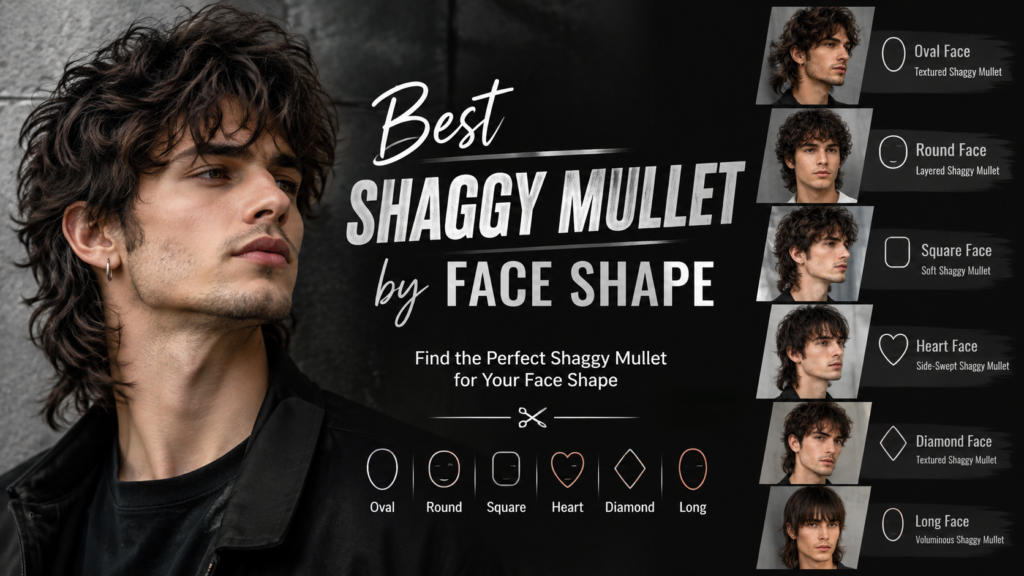
Best Shaggy Mullet by Face Shape
A mullet should balance your face, not compete with it. Here’s how to choose.
| Face Shape | What to Ask For | Why It Works |
| Oval | Almost anything, including curtain bangs or micro bangs | Balanced proportions handle most variations |
| Round | Side-swept fringe, longer face-framing layers | Adds length and angles |
| Square | Soft feathered layers, wispy curtain bangs | Softens a strong jaw |
| Heart | Curtain bangs, chin-length layers | Adds width near the jawline |
| Long | Full fringe, volume at the sides | Shortens the look of the face |
| Diamond | Face-framing layers below the cheekbones, soft fringe | Balances wide cheekbones |
Tip: Bring photos of people with a face shape similar to yours. It’s easier for your stylist to visualize than a long verbal description.
See More: What Hair Color Suits Me? Best Shades by Skin Tone (2026)
Best Shaggy Mullet by Hair Type
Hair texture changes how the layers behave. Here’s what to expect with each type.
Straight Hair
Straight hair shows every cut line, which is great for defined shapes like the disconnected or razor styles. It can fall flat, so ask for slightly shorter layers at the crown and use a texture spray to get movement.
Wavy Hair
Waves are the easiest to work with. The layers stack naturally and the shape looks effortlessly messy. A light mousse and air drying often do the job.
Curly and Coily Hair
Curls need a stylist who cuts dry or understands curl patterns. Shorter layers can pop up, so the goal is to shape the cut around the curl, not fight it. Define with cream and avoid brushing when dry.
Fine Hair
Layers create the look of density. The risk is over-thinning, so ask for blunt-ish ends at the back with the texture concentrated on top.
Thick Hair
You’ll benefit most from internal layers and tapering. Removing weight from the mid-lengths helps the cut move and reduces drying time.
How to Ask Your Stylist for a Shaggy Mullet
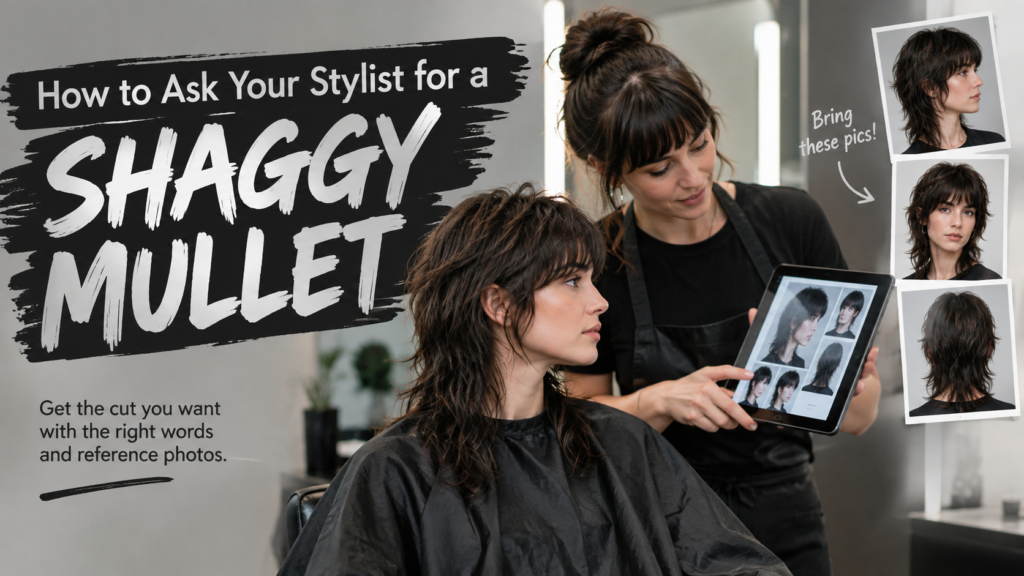
Good communication saves a lot of regret. Here’s a simple checklist to take with you.
- Bring three to five photos: including at least one back view.
- Say how short you’re willing to go: on the top, sides and back.
- Mention your daily routine: If you only have five minutes in the morning, say so.
- Discuss the fringe: Micro, curtain, side-swept or none?
- Ask about the cutting technique: Razor, point cutting and thinning all give different finishes.
- Check the nape length: Ask them to leave it a bit longer on the first cut. You can always remove more.
- Ask how to maintain the shape: A good stylist will give a trim schedule.
Words that help
- “Disconnected layers” if you want a stronger contrast
- “Blended” if you want a softer transition
- “Internal layering” for thick hair
- “Tapered ends” for a wispy back
- “Face-framing” for pieces around the cheeks
How to Style a Shaggy Mullet at Home
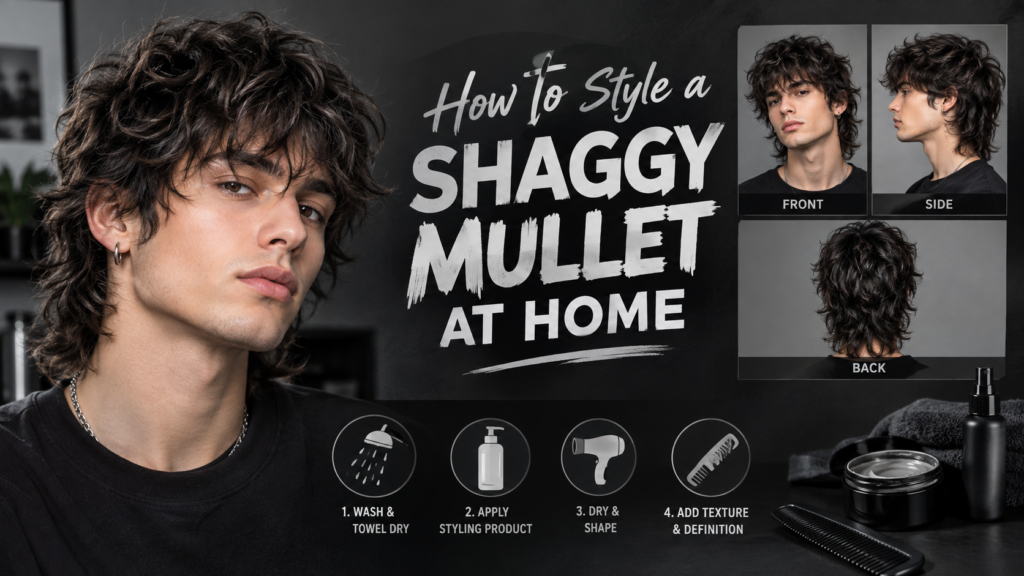
You don’t need a long routine. Most versions work with a simple five-step process.
- Wash and condition: Use a lightweight shampoo and conditioner so layers stay bouncy.
- Apply product to damp hair: Mousse or sea salt spray gives grip and texture.
- Dry strategically: Blow-dry the crown and fringe for lift. Let the lengths of air dry or diffuse.
- Add shape: Use a curling iron or wand on a few face-framing pieces and the ends.
- Finish: A texture spray or light clay breaks everything up and adds that lived-in feel.
Products worth having
| Product | What It Does | Best For |
| Sea salt spray | Adds grit and beachy texture | Wavy and straight hair |
| Texture paste or clay | Defines and separates layers | Short and choppy cuts |
| Volumizing mousse | Lifts roots | Fine hair |
| Curl cream | Defines curls, reduces frizz | Curly mullets |
| Dry shampoo | Refreshes oily roots, adds volume | All types |
| Heat protectant | Protects against styling damage | Anyone using hot tools |
| Lightweight oil | Smooths ends | Thick or dry hair (use sparingly) |
Three quick looks from one cut
- Everyday: Air dry with sea salt spray, scrunch, go.
- Office: Smooth the top, tuck the sides behind your ears, add a bit of serum.
- Night out: Add waves, tousle with fingers, finish with strong texture spray.
Maintenance and Growing It Out
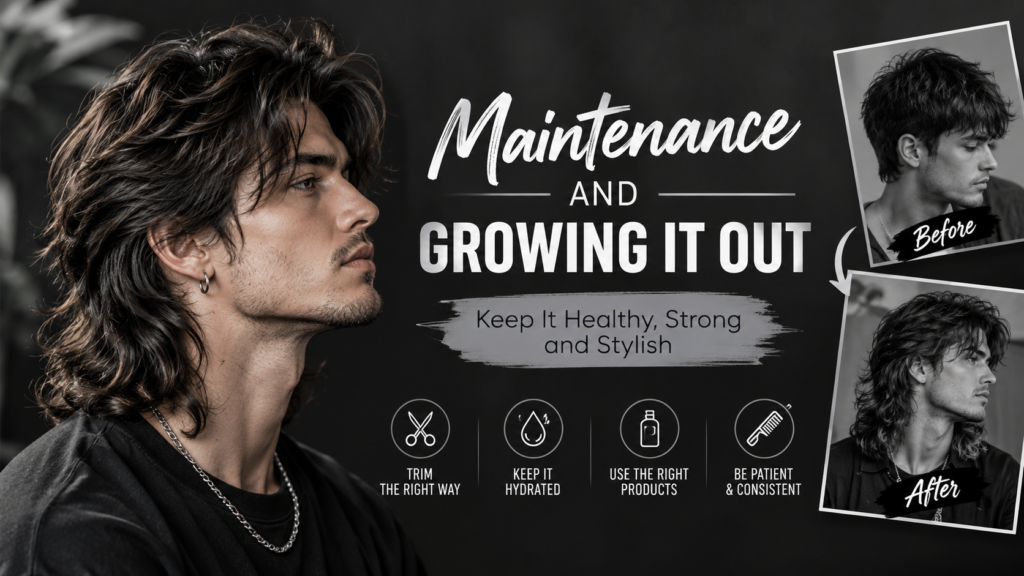
A shaggy mullet is low effort day to day, but it needs regular shaping.
- Trim every 6 to 8 weeks to keep layers crisp.
- Fringe trims every 3 to 4 weeks if you wear bangs.
- Deep condition weekly to protect the thinner ends.
- Use heat protectant every time you style with hot tools.
- Watch the nape. It tends to get fluffy quickly. A tidy-up keeps the shape clear.
Growing it out
If you decide to move on, the good news is that mullets grow out more easily than most cuts. The back is already long, so you only need to wait for the top.
- Book a “soften and blend” trim at around month two.
- Keep the face-framing layers so the transition looks intentional.
- Switch to a longer shag or a lob as the top catches up.
Most people reach a normal layered length in about six to nine months.
Common Mistakes to Avoid
Even a great cut can look off if a few things go wrong. Watch out for these.
- Choosing the wrong contrast: Too much difference between the top and back can look harsh on certain faces. Start subtle if unsure.
- Over-thinning fine hair: It can leave the ends looking stringy.
- Skipping texture products: Without them, layers can look flat rather than shaggy.
- Using heavy oils: They weigh down the wispy ends and ruin the movement.
- Ignoring the back view: Always check the mirror from behind before you leave.
- Cutting at home: Layered shapes depend on angles. Leave it to a professional.
- Not adjusting for hair growth patterns: Cowlicks at the nape or crown change the finish, so mention them.
Frequently Asked Questions
What is a shaggy mullet for women?
It’s a layered, textured haircut that is shorter on top and around the face and longer at the back. It mixes a shag’s softness with a mullet’s contrast.
Is the shaggy mullet still in style in 2026?
Yes. It continues to be a top-requested cut because it’s flexible, low-effort and easy to personalize.
Is a shaggy mullet the same as a wolf cut?
Not exactly. A wolf cut has heavy layers throughout, while a shaggy mullet has a clearer short-to-long difference between the top and back.
Who suits a shaggy mullet the most?
It suits most face shapes and hair types when the layers are adjusted. Wavy and thick hair are the easiest to style.
Can fine hair pull off a shaggy mullet?
Yes. Ask for shorter crown layers, a fuller back and light texture to avoid a thin look.
Can I get a shaggy mullet with curly hair?
Absolutely. Curls add natural volume, and a stylist who cuts curls dry will shape the layers properly.
How long does hair need to be for a shaggy mullet?
Around chin length or longer gives you the most options. Shorter hair can still work as a pixie or baby mullet.
How often should I trim a shaggy mullet?
Every 6 to 8 weeks keeps the layers sharp. Bangs may need a trim every 3 to 4 weeks.
Is a shaggy mullet high maintenance?
Not usually. Most versions work with air drying and a bit of texture spray, though short and punk styles need more frequent trims.
What products are best for styling a shaggy mullet?
Sea salt spray, texture paste, mousse and dry shampoo cover most needs. Pick based on your hair type.
Can women over 40 or 60 wear a shaggy mullet?
Yes. Softer versions with face-framing layers and gentle texture are popular at any age.
Does a shaggy mullet work with bangs?
Yes. Curtain bangs, micro bangs, side-swept fringe and full fringe all look good, depending on your face shape.
How long does it take to grow out a shaggy mullet?
Usually six to nine months. Regular blending trims make the transition smoother.
Conclusion
The modern shaggy mullet is popular because it’s flexible. You can choose a barely-there mini version or a full punk statement. You can wear it wavy, curly, straight or sleek. You can keep it natural or add color.
The best way to get it right is to match the cut to your face shape, hair type and routine. Bring good reference photos, include a back view, and talk honestly with your stylist about how much effort you want to put in each morning.
If you’re still unsure, start with a softer version like the feathered, medium-length or subtle mini mullet. You can always go bolder at your next appointment.
Which style from this list would you try first? Save your favorites, show them to your stylist, and enjoy a cut that feels like you.





1 thought on “30 Modern Shaggy Mullet Hairstyles for Women (2026)”