
You flip over your favorite shampoo bottle and spot the word “alcohol” in the ingredient list. Your first thought is probably, “Is this going to dry out my hair?”
It’s a fair worry. But the answer depends on which alcohol you’re looking at.
Is benzyl alcohol bad for hair? For most people, no. Benzyl alcohol is a mild aromatic alcohol used in small amounts as a preservative, solvent and fragrance ingredient. It does not behave like the harsh, fast-evaporating alcohols that strip moisture. The real risks are scalp sensitivity in some people and the occasional product that is poorly balanced overall.
This guide explains what benzyl alcohol is, what it does in shampoo and conditioner, how it compares with other alcohols, and when you might want to skip it. You’ll also find better ingredients for dry or frizzy hair and a quick way to check if a product is drying you out.
What Is Benzyl Alcohol in Hair Products?
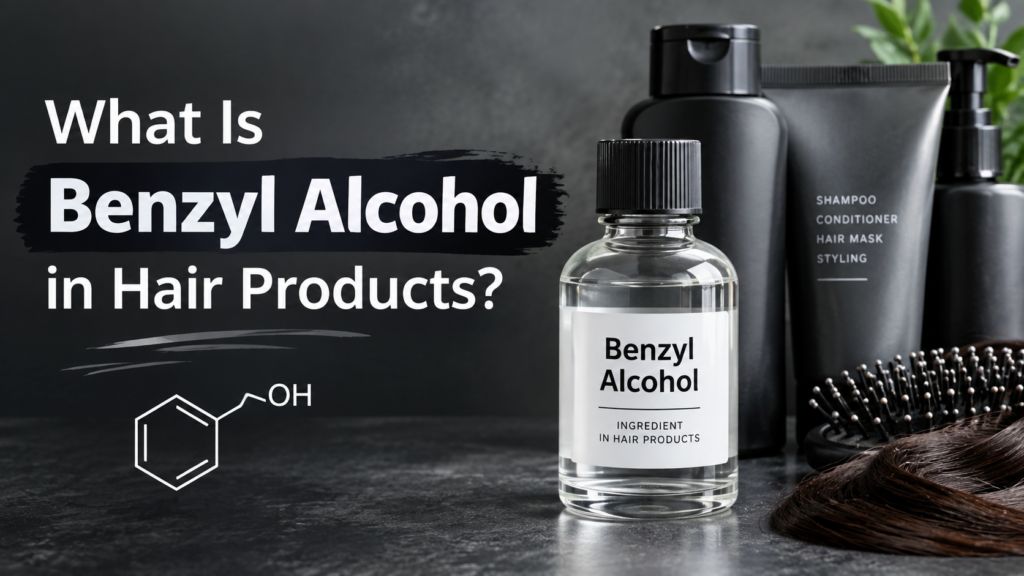
Benzyl alcohol is a clear, colorless liquid with a faint, sweet, slightly floral smell. It occurs naturally in some plants and essential oils, including jasmine and ylang-ylang, and in certain fruits. The version used in cosmetics is usually made in a lab for purity and consistency.
Chemically, it belongs to the group of aromatic alcohols. That matters because aromatic alcohols act very differently from the simple, short-chain alcohols people usually warn you about.
In hair care, benzyl alcohol does three main jobs:
- Preservative: It helps stop bacteria, yeast and mold from growing inside the bottle.
- Solvent: It helps dissolve other ingredients so the formula stays smooth and stable.
- Fragrance component: It adds a soft scent or helps carry other fragrances.
Because it does several things at once, it shows up in a huge range of products, including shampoos, conditioners, leave-in treatments, styling creams, hair color and bleach kits.
Where You’ll Usually Find It
| Product type | Why benzyl alcohol is used |
| Shampoo | Preserves the formula and helps dissolve other ingredients |
| Conditioner | Keeps water-based creams fresh and stable |
| Leave-in creams and sprays | Prevents microbial growth in products that stay on hair |
| Hair color and bleach | Works as a solvent that helps the formula spread |
| Styling gels and mousses | Preserves the product and supports texture |
| Scalp treatments | Keeps active ingredients evenly mixed |
On an ingredient label, you may also see it listed as benzenemethanol or phenylmethanol.
Is Benzyl Alcohol Bad for Hair?
Short answer: No, not at normal cosmetic levels.
Regulators and safety panels have looked at benzyl alcohol for decades. The Cosmetic Ingredient Review (CIR) concluded that it is safe in cosmetic products at concentrations up to 5%, and in hair dyes at higher levels. In practice, most shampoos and conditioners use far less, often between 0.5% and 1%.
In the European Union, benzyl alcohol is allowed as a preservative up to 1%. Health Canada has also been reviewing the ingredient and has moved toward tighter limits on its concentration in certain product types. These limits exist to keep exposure low, especially with repeated use.
So what does that mean for your hair?
- At low levels, benzyl alcohol is unlikely to strip moisture or damage the hair shaft.
- Rinse-off products (shampoo, conditioner) give it very little contact time.
- Leave-in products keep it on your hair longer, so sensitive people may notice more of an effect.
Some low-quality websites claim that benzyl alcohol “weakens hair” or “causes breakage.” That is not supported by solid evidence. Most of these claims are vague and don’t point to controlled studies. What is real is that any product can leave hair feeling dry if the overall formula is harsh, if you overwash, or if you skip conditioner.
The Bottom Line on Safety
| Question | Realistic answer |
| Does it damage hair at 0.5–1%? | Unlikely |
| Can it irritate a sensitive scalp? | Possible in some people |
| Is it a known fragrance allergen? | Yes, it must be labeled in the EU above certain levels |
| Is it banned in hair care? | No |
| Does it cause hair loss? | No solid evidence |
Why Do People Think Alcohol Is Bad for Hair?
The “alcohol is bad” idea didn’t come from nowhere. Some alcohols really can dry hair. The confusion starts because all of them share the same word on the label.
There are three groups worth knowing.
Drying Alcohols
These are small, light alcohols that evaporate quickly. As they dry, they can pull water and natural oils from your hair with them. Hair can feel rough, tangled and frizzy afterward.
Common examples:
- Ethanol
- Alcohol denat. (denatured alcohol)
- SD alcohol (such as SD alcohol 40)
- Isopropyl alcohol
- Propanol
You’ll mostly see them in hairsprays, mousses, gels and some quick-dry styling products. They are used because they help products dry fast and hold a style.
Fatty Alcohols
Despite the name, these are not drying. Fatty alcohols are waxy, long-chain alcohols that soften and smooth hair. They help conditioners feel thick and creamy and make detangling easier.
Common examples:
- Cetyl alcohol
- Stearyl alcohol
- Cetearyl alcohol
- Behenyl alcohol
If a product is full of these, it’s usually a good sign for dry hair, not a bad one.
Benzyl Alcohol
Benzyl alcohol doesn’t fit neatly into either camp. It is an aromatic alcohol. It’s not a quick-evaporating drying alcohol, and it’s not a fatty conditioning alcohol. It sits in the middle and works mostly behind the scenes as a preservative and solvent.
Because it’s used in tiny amounts and evaporates slowly, it doesn’t cause the “stripped” feeling that ethanol-heavy products can.
See More: 50+ Curly Mullet Hairstyles for Women – Trendy Ideas (2026)
Alcohol Types at a Glance
| Type | Examples | Effect on hair | Typical use |
| Drying alcohols | Ethanol, alcohol denat., isopropyl alcohol | Can dry and roughen hair | Hairsprays, gels, mousses |
| Fatty alcohols | Cetyl, stearyl, cetearyl alcohol | Soften and smooth | Conditioners, masks |
| Aromatic alcohol | Benzyl alcohol | Neutral to mild at low levels | Preservative, solvent, fragrance |
Can Benzyl Alcohol Dry Out Hair?
This is one of the most searched questions, so let’s be direct: benzyl alcohol is not a typical drying ingredient.
Here’s why it rarely dries hair on its own:
- It’s used in very small amounts. Often around 1% or less.
- It evaporates slowly. Unlike ethanol, it doesn’t flash off and drag moisture away.
- Most products balance it out. Formulas that contain it usually also include conditioning agents, humectants and emollients.
That said, dryness can still happen. The cause is usually something else in the bottle or in your routine.
Why Your Hair Might Feel Dry Even If You Blame Benzyl Alcohol
- The shampoo contains strong sulfates that remove too much oil.
- The product also has ethanol or alcohol denat. higher up on the list.
- You wash too often with hot water.
- You skip conditioner or use too little.
- Your hair is bleached, colored or heat-styled, so it’s already fragile.
- You have high-porosity or curly hair that loses moisture faster.
Does Hair Type Matter?
Yes. Hair that is curly, coily, color-treated or naturally dry has less protection against moisture loss. These hair types tend to notice drying more quickly, no matter which ingredient causes it.
If you have fine, oily hair, you probably won’t notice benzyl alcohol at all.
Is Benzyl Alcohol Bad for Your Scalp?
For most people, benzyl alcohol is gentle enough for the scalp. But it’s worth knowing that scalp reactions are more likely than hair damage.
Possible Scalp Reactions
- Itching
- Redness
- Burning or stinging
- Flaking that looks like dandruff
- Small bumps or a rash (contact dermatitis)
These reactions are not common, but they can happen, especially if you already have a sensitive scalp, eczema, psoriasis or seborrheic dermatitis.
Why Some People React
Benzyl alcohol is on the list of recognized fragrance allergens. That means a small number of people can develop an allergic reaction to it, particularly after repeated exposure. The risk goes up when products stay on the skin, like leave-in treatments and scalp serums.
A Simple Patch Test
If you’re worried, try this before using a new product:
- Apply a small amount behind your ear or on your inner forearm.
- Leave it for 24 hours without washing it off.
- Check for redness, itching or swelling.
- If anything shows up, don’t use the product on your scalp.
If irritation continues or gets worse, see a dermatologist.
Benzyl Alcohol Benefits for Hair
Benzyl alcohol doesn’t repair or grow hair. Its benefits are indirect, but they matter.
1. It Keeps Products Safe
Water-based hair products are a perfect place for microbes to grow. A good preservative protects you from contaminated shampoo, mold in conditioner and scalp infections caused by bacteria.
2. It Helps Formulas Stay Stable
As a solvent, it helps other ingredients mix properly. That means smoother texture, better spreading and more consistent results from the first use to the last.
3. It Offers a Paraben Alternative
Many brands use benzyl alcohol, often combined with other preservatives, in “paraben-free” products. If you’re avoiding parabens, you’ll likely see it more often.
4. It Supports Fragrance
It can add a light, sweet note and helps other scent molecules blend well, so products can smell pleasant without heavy perfume.
5. It Helps Color Products Work
In hair color and bleach formulas, it can act as a solvent that helps the product apply evenly.
Risks and Side Effects of Benzyl Alcohol
No ingredient is perfect for everyone. Here’s what to keep in mind.
| Risk | Who is most at risk | How likely |
| Scalp irritation | Sensitive or eczema-prone skin | Low to moderate |
| Allergic contact dermatitis | People with fragrance allergies | Low |
| Dryness or frizz | Dry, curly or treated hair using harsh formulas | Low (formula-dependent) |
| Eye irritation | Anyone if product gets in eyes | Occasional |
| Higher exposure concerns | People using many leave-on products daily | Being studied by regulators |
A few things to remember:
- Concentration matters: Most hair products stay well within safe limits.
- Cumulative use matters: Shampoo, conditioner, leave-in, styling cream and body products can all contain it. Together they add up.
- Babies and young children: have more delicate skin, so look for gentle, fragrance-free products designed for them.
Should You Avoid Benzyl Alcohol in Hair Products?
You don’t need to avoid it unless you have a reason. Here’s a simple way to decide.
You Can Probably Keep Using It If:
- Your scalp feels comfortable after washing.
- Your hair feels soft and manageable.
- You have no history of fragrance or preservative allergies.
- The product is a rinse-off shampoo or conditioner.
Consider Avoiding It If:
- You notice itching, redness or burning after using a product.
- You have a diagnosed fragrance allergy or very sensitive skin.
- You have eczema, psoriasis or a damaged scalp barrier.
- You use several leave-on products with it every day.
- You are pregnant or nursing and your doctor has advised limiting certain cosmetic ingredients.
Look for These Labels
- “Fragrance-free” (check the ingredients too, not just the front label)
- “For sensitive scalp”
- “Dermatologist-tested”
- Products that use other preservatives, such as phenoxyethanol or potassium sorbate (these can irritate some people too)
Remember, every preservative has trade-offs. Going “preservative-free” is not safer, since unpreserved water-based products can grow harmful bacteria.
Benzyl Alcohol vs Other Alcohols in Hair Care
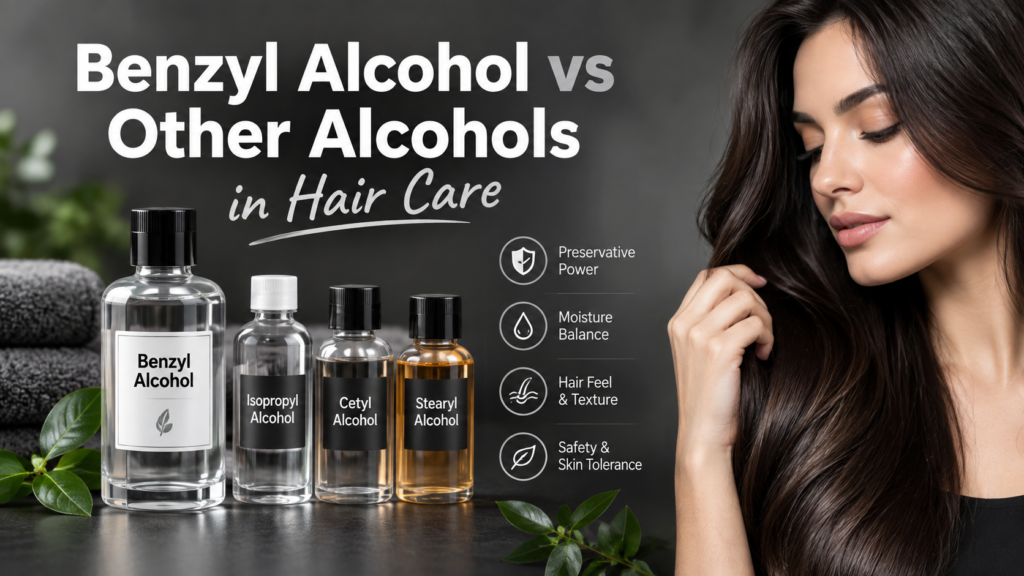
Here is a side-by-side look so you can read labels faster.
| Feature | Benzyl alcohol | Ethanol / alcohol denat. | Cetyl / stearyl alcohol | Isopropyl alcohol |
| Category | Aromatic alcohol | Short-chain alcohol | Fatty alcohol | Short-chain alcohol |
| Main job | Preservative, solvent | Quick drying, hold | Softening, thickening | Solvent, quick drying |
| Drying risk | Low | High | None | High |
| Feel on hair | Neutral | Rough, stiff | Smooth, soft | Rough |
| Typical amount | Under 1% | Can be high | Can be high | Varies |
| Scalp sensitivity | Possible | Possible | Rare | Possible |
Quick rule: If the alcohol ends in “-yl” and sounds waxy (cetyl, stearyl), it’s your friend. If it’s ethanol, denat. or isopropyl and sits near the top of the list, be careful. If it’s benzyl alcohol near the bottom of the list, it’s usually fine.
What Should You Use If Your Hair Feels Dry or Frizzy?
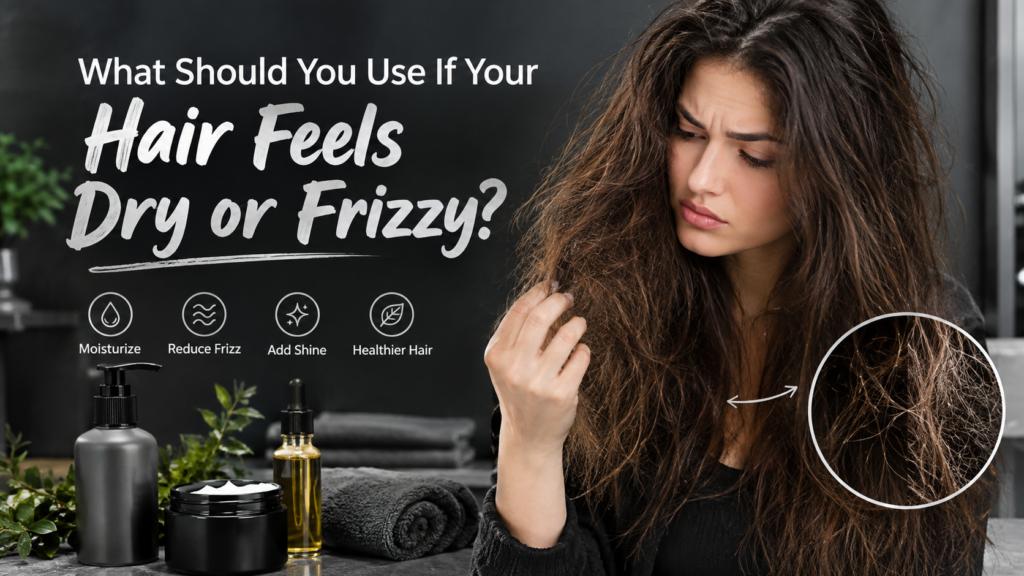
If your hair feels dry, the fix usually isn’t removing one ingredient. It’s rebuilding moisture and protecting the hair you have.
A Simple Dry Hair Routine
- Washing less often two to three times per week works for many people.
- Use lukewarm water Hot water strips natural oils.
- Choose a gentle, sulfate-free shampoo if your hair is dry or color-treated.
- Condition every wash focusing on mid-lengths and ends.
- Use a weekly deep conditioning mask.
- Add a lightweight leave-in or oil to seal in moisture.
- Protect from heat with a heat protectant before styling.
- Trim split ends every 8 to 12 weeks.
Helpful Ingredients to Look For
- Glycerin and panthenol (humectants that draw in moisture)
- Shea butter and cocoa butter (rich emollients)
- Hydrolyzed proteins (strengthen weakened strands, in moderation)
- Ceramides (support the hair surface)
- Fatty alcohols like cetearyl alcohol (soften and detangle)
Better Ingredients to Look for in Dry Hair Routines
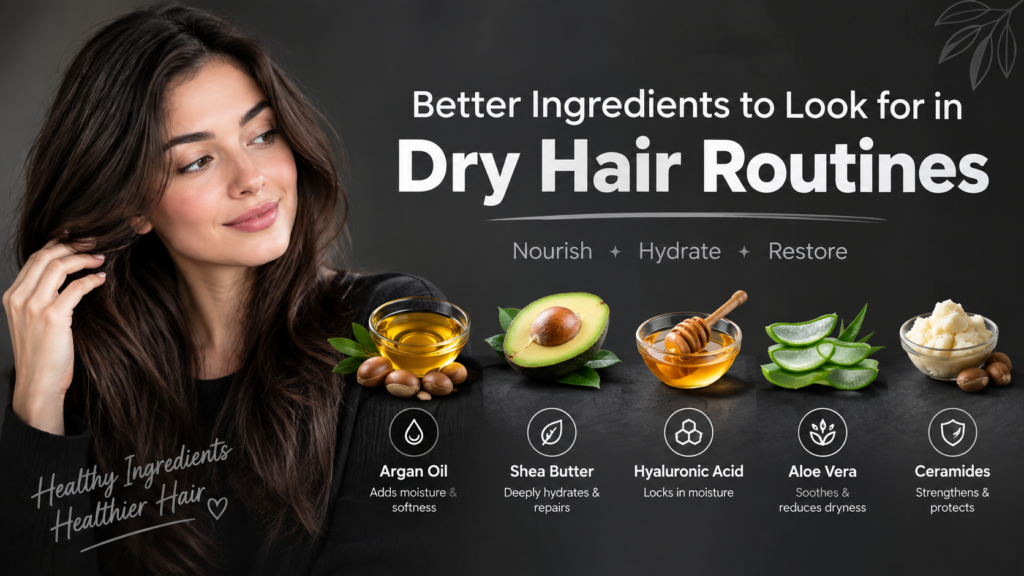
Natural oils can add shine, reduce frizz and seal in moisture. Here are five popular choices and what they can realistically do.
Jojoba Oil
Jojoba oil is technically a liquid wax whose structure is similar to the natural oil your scalp produces. It’s lightweight and works for most hair types. It’s a good choice if you want to shine without a greasy feel.
Argan Oil
Argan oil is rich in fatty acids and vitamin E. It smooths the hair surface, tames frizz and adds shine. A few drops on damp or dry ends go a long way. It’s especially helpful before heat styling.
Avocado Oil
Avocado oil is heavier and nourishing, which makes it a good match for thick, coarse or very dry hair. It’s often used in deep conditioning masks. Fine hair may find it too heavy.
Black Seed Oil
Black seed oil (from Nigella sativa) is popular for scalp care. Early research suggests it may support scalp health, but studies are small, and results vary. Use it sparingly and patch test first, since it can irritate some skin.
Rosemary Oil
Rosemary oil is often used to support scalp health and hair growth. One small study found it performed similarly to 2% minoxidil over six months in people with a common type of hair loss. More research is still needed. Always dilute essential oils in a carrier oil, like jojoba, before applying them to the scalp.
Oil Comparison Table
| Oil | Best for | Weight | Main benefit | Caution |
| Jojoba | All hair types | Light | Balances oil, adds shine | Rarely irritating |
| Argan | Frizzy, heat-styled hair | Light to medium | Smoothing, shine | Can be pricey |
| Avocado | Thick, coarse, very dry hair | Heavy | Deep moisture | May weigh down fine hair |
| Black seed | Scalp care | Medium | May soothe scalp | Patch test first |
| Rosemary | Scalp and thinning concerns | Essential oil (dilute) | May support growth | Always dilute |
How to Tell If a Hair Product Is Drying Your Hair Out
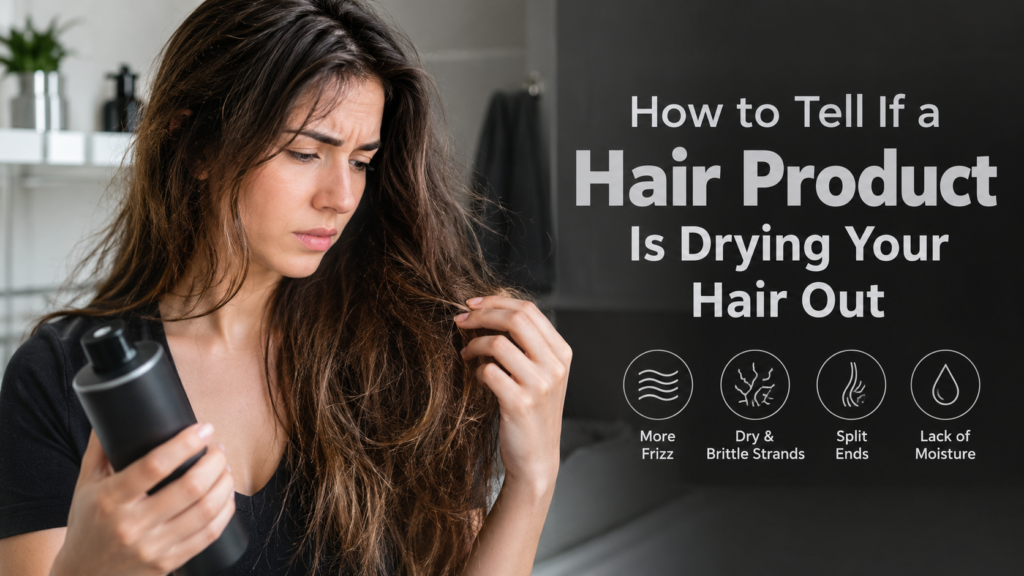
You don’t need a lab to find out. Pay attention to how your hair behaves over a week or two.
Signs a Product Is Too Drying
- Hair feels straw-like or rough after washing
- Increased frizz or static
- More tangles than usual
- Dull, lifeless look
- Flaky or tight scalp
- Curls lose their definition
- Hair breaks when you brush it
How to Check a Product
- Read the first five ingredients: Alcohol denat. or ethanol in the top five can mean extra drying.
- Look at the whole formula: A bit of benzyl alcohol near the end of the list is normal and usually harmless.
- Check for moisturizers.: Glycerin, oils, butters and fatty alcohols are good signs.
- Test one product at a time: Change one thing, then wait two weeks.
- Track the results: Note how your hair feels after washing and again the next day.
If your hair improves after switching, the problem was likely the full formula, not one single ingredient.
Frequently Asked Questions
Is Benzyl Alcohol Bad for Hair?
No, at the low levels used in hair products it is generally safe and does not damage hair. Sensitive scalps are the main exception.
Is Benzyl Alcohol Safe for Hair and Scalp?
Yes for most people, since regulators allow it at limited concentrations. A small number of people may react, so patch test new products.
What Does Benzyl Alcohol Do in Hair Products?
It works as a preservative, solvent and fragrance ingredient. It keeps products free from bacteria and helps the formula stay smooth.
Does Benzyl Alcohol Dry Out or Damage Hair?
Not usually, because it is gentle, slow-evaporating and used in small amounts. Dryness typically comes from harsh sulfates, ethanol or overwashing.
What Are the Benefits of Benzyl Alcohol for Hair?
It keeps products fresh, helps ingredients blend and gives a light scent. It doesn’t treat or grow hair directly.
Can Benzyl Alcohol Cause Hair Loss or Breakage?
There is no solid evidence that it does at cosmetic levels. Breakage is far more often caused by heat, bleach, tight styles or dry formulas.
Is Benzyl Alcohol Safe for Curly or Dry Hair?
Generally yes, as long as the product also contains moisturizing ingredients. Pick formulas with glycerin, oils or fatty alcohols for extra softness.
Can Benzyl Alcohol Irritate the Scalp?
Yes, in some people, especially those with allergies, eczema or a sensitive scalp. Stop using the product if you notice itching or redness.
Why Is Benzyl Alcohol Used in Shampoo and Conditioner?
It prevents microbes from growing in water-based formulas and helps other ingredients dissolve. This keeps products safe and stable.
Should You Avoid Benzyl Alcohol in Hair Products?
Only if you are sensitive or allergic to it. Otherwise it is fine in normal use.
Final Thoughts
Benzyl alcohol has an unfair reputation because of its name. At the small amounts used in shampoo, conditioner and styling products, it’s generally safe, helps keep products fresh, and doesn’t dry hair the way ethanol or isopropyl alcohol can.
The main reason to avoid it is personal sensitivity. If your scalp itches, burns or flakes after using a product that contains it, stop using that product and try a fragrance-free alternative.
For everyone else, focus on the bigger picture. A gentle shampoo, regular conditioning, less heat and nourishing ingredients will do far more for your hair than cutting out one preservative.
When in doubt, read the whole ingredient list, patch test new products and talk to a dermatologist if you have ongoing scalp problems.





1 thought on “Is Benzyl Alcohol Bad for Hair? Benefits, Risks & Uses”