
Black seed oil has been part of hair care routines for generations, and social media keeps it in the spotlight. But does it really work? If you are curious about black seed oil for hair growth, you are in the right place. This guide explains what the oil is, what research does and does not show, how to use it safely, and how to fit it into your routine without false promises.
Quick answer: Black seed oil may support scalp health and make hair feel softer and shinier, and small studies hint it could help with shedding. However, there is no strong proof that black seed oil for hair growth works for everyone. It is best used as a scalp treatment, diluted with a carrier oil, after a patch test. Treat it as a supportive step, not a cure.
What Is Black Seed Oil?
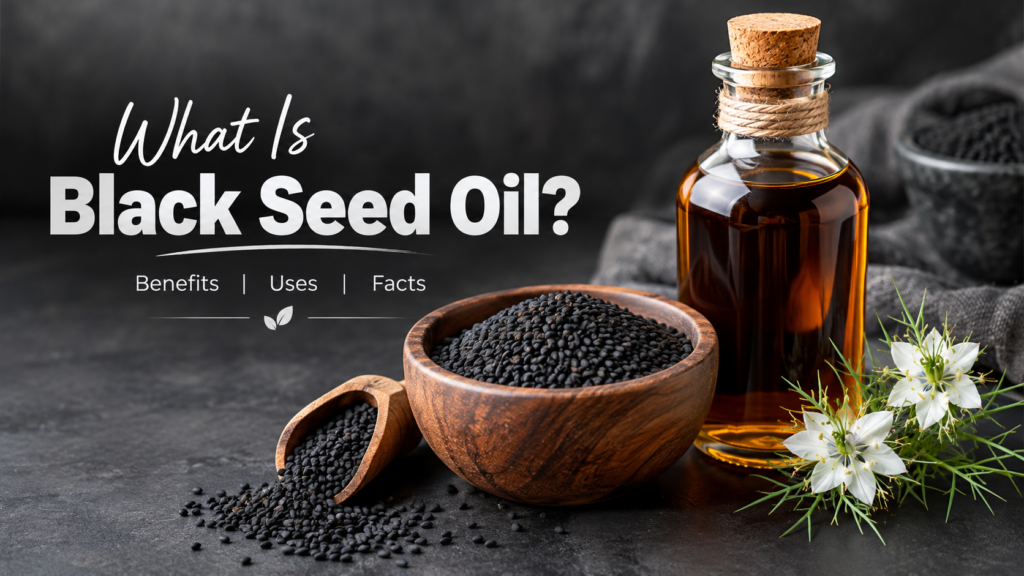
Black seed oil comes from the seeds of Nigella sativa, a small flowering plant native to parts of Southwest Asia, the Middle East, and North Africa. You may also see it sold as black cumin seed oil, kalonji oil, or Nigella sativa oil. These names usually refer to the same thing. The oil is typically cold pressed from the tiny black seeds.
People have used the seeds in cooking and traditional home remedies for a very long time. In recent years, the oil has become a popular ingredient in shampoos, scalp serums, and pre-wash treatments.
The oil contains several plant compounds. The best known is thymoquinone, which researchers often study for its antioxidant and soothing properties. It also contains fatty acids such as linoleic acid and oleic acid. These fats are common in many plant oils and help condition skin and hair.
Most research on thymoquinone looks at the compound itself or at lab and animal models. That is different from proving that the oil on your scalp will regrow hair. Keep that difference in mind as you read on.
Black Seed Oil Benefits for Hair: What the Evidence Says
When people search for black seed oil benefits for hair, they usually want to know two things. What can the oil realistically do, and how strong is the proof?
The honest answer is that the evidence is promising but limited. A few small human studies have looked at Nigella sativa products for hair shedding. Their results were encouraging, but the studies were small and short. Larger, well-designed trials are still needed.
Most of the commonly claimed benefits come from three sources:
- The oil’s fatty acid content, which conditions hair
- Its antioxidant and soothing compounds, which may help the scalp
- Traditional use and personal experience, which are interesting but not scientific proof
So the fair way to view these benefits is as possible support for scalp and hair quality. They are not guaranteed fixes for thinning hair.
Is Black Seed Oil Good for Hair?
For many people, yes. It works well as a conditioning treatment, and it may help keep the scalp comfortable. The oil may suit you well if you:
- Have a dry or tight-feeling scalp
- Notice dull, rough, or frizzy strands
- Want a simple pre-wash treatment
- Enjoy scalp massage as part of self-care
It may be less helpful if you have a very oily scalp, since heavy oils can feel greasy and build up. It may also be a poor fit if you have sensitive skin, because some people react to it.
What Does Black Seed Oil Do for Hair?
In practical terms, think of it as a conditioning and scalp-care oil with some extra plant compounds. On the strands, the oil coats the hair shaft. This can reduce friction, smooth the surface, and add a soft finish. On the scalp, massaging the oil in may help loosen flakes and relieve dryness, as long as your skin tolerates it.
When it comes to black seed oil for hair growth, the claims go further. Some people hope it will wake up dormant follicles. Research has not confirmed that. What it may do is support a healthier scalp environment, and a healthy scalp is a better foundation for hair that grows normally.
Most of the benefits you see on product labels refer to shine, softness, and scalp comfort. Those are real, visible effects. Dramatic regrowth is not something you should expect.
Potential Benefits of Black Seed Oil for Hair
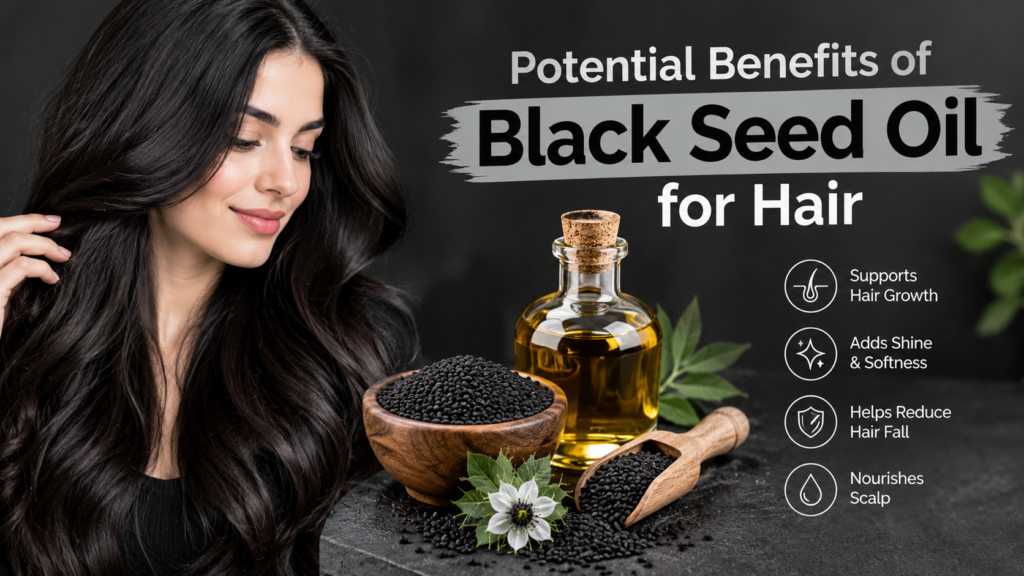
Supports Scalp Comfort and Balance
Thymoquinone has been studied for its soothing and antimicrobial properties. In everyday terms, that suggests the oil may help calm an irritated or dry scalp. Many people use it for the tight, itchy feeling that can show up in cold, dry weather.
An itchy, flaky scalp can have many causes, including dandruff, seborrheic dermatitis, product buildup, and allergies. Black seed oil may ease mild dryness, but it is not a treatment for a skin condition. If flaking or redness is severe or lasting, see a healthcare provider.
Improves Hair Feel, Shine, and Manageability
This is the benefit most people notice first. The fatty acids in the oil soften the hair and add a glossy finish. It can make detangling easier, which may reduce breakage during brushing.
Less breakage matters for length. Hair that snaps off before it grows long can look like slow growth. By protecting your strands, a conditioning oil can help you keep the length you already have.
May Support Hair Shedding and Density
A small number of studies have looked at Nigella sativa products in people with shedding, including a type called telogen effluvium. Some reported improvements in hair density or reduced shedding.
However, the studies were small, and many used specific lotions with set concentrations, not a random bottle of oil from a store. Treat the findings as a reason for cautious optimism, not a promise. Your results may differ.
Helps Create a Healthier Scalp Environment
Hair grows from follicles in your scalp. When the scalp is clean, balanced, and free of heavy irritation, follicles have better conditions to work in. Gentle massage with oil may also feel relaxing.
Scalp massage itself has some small studies suggesting it may support hair thickness over time. It is not clear how much of that benefit comes from the oil and how much from the massage. Both likely play a part.
What Black Seed Oil Is Not Proven to Do
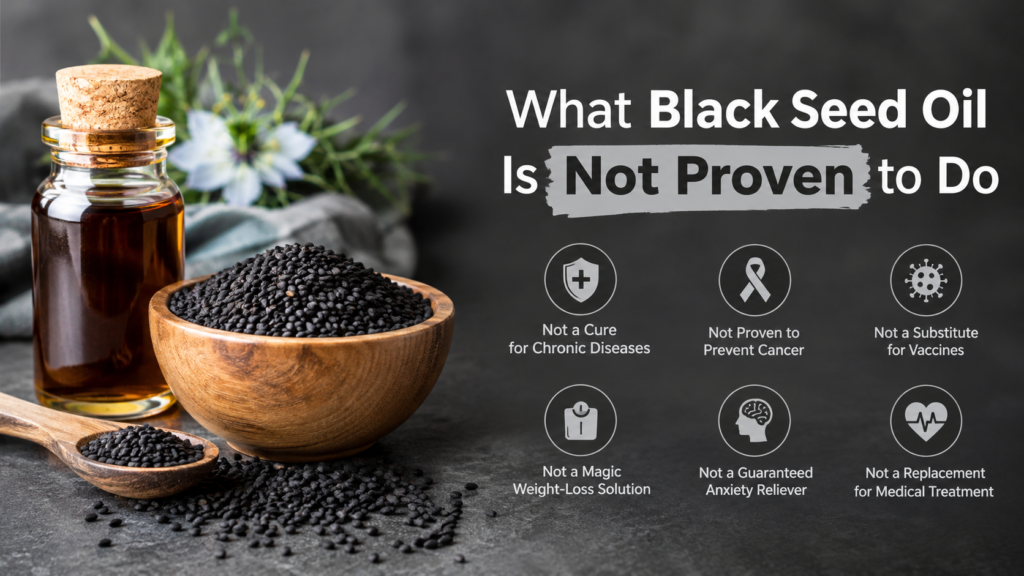
Many online posts overpromise, so here is a reality check. Black seed oil has not been proven to:
- Regrow hair on completely bald areas
- Reverse genetic pattern hair loss (androgenetic alopecia)
- Cure alopecia areata or other medical hair conditions
- Work as well as FDA-approved treatments such as topical minoxidil
- Turn gray hair back to its original color
- Make hair grow faster by a set amount
Hair loss can come from genetics, hormones, thyroid problems, low iron, stress, illness, medications, and more. Oils do not address those root causes.
If your hair loss is sudden, patchy, or heavy, talk to a dermatologist. A professional can find the cause and suggest treatments with stronger evidence. You can still use black seed oil as a gentle extra, but it should not replace real medical care.
See More: Castor Oil vs Jojoba Oil: Hair, Skin & Benefits (2026)
Black Seed Oil for Different Hair Types and Textures
Texture, thickness, and scalp type all matter. Use this table as a starting point.
| Hair Type | How to Use It | Watch Out For |
| Fine or straight hair | A few drops mixed into a light carrier oil, applied mostly to the scalp | Easily weighed down and greasy |
| Wavy hair | Apply to the scalp, then smooth a tiny amount on the ends | Too much oil can flatten waves |
| Curly hair | Pre-wash treatment or a sealing oil on damp ends | Buildup if you do not cleanse well |
| Coily or thick hair | Section the hair, massage into the scalp, seal ends lightly | Dryness if you skip moisture first |
| Oily scalp | Use rarely and wash out within an hour | Clogged feeling and extra grease |
| Dry scalp | Use as a pre-wash treatment more often | Irritation if the oil is undiluted |
Long hair can use a little more product on the ends, where it is oldest and driest. Short hair needs much less. If your hair is color-treated or chemically straightened, test the oil on a small section first.
How to Use Black Seed Oil for Hair
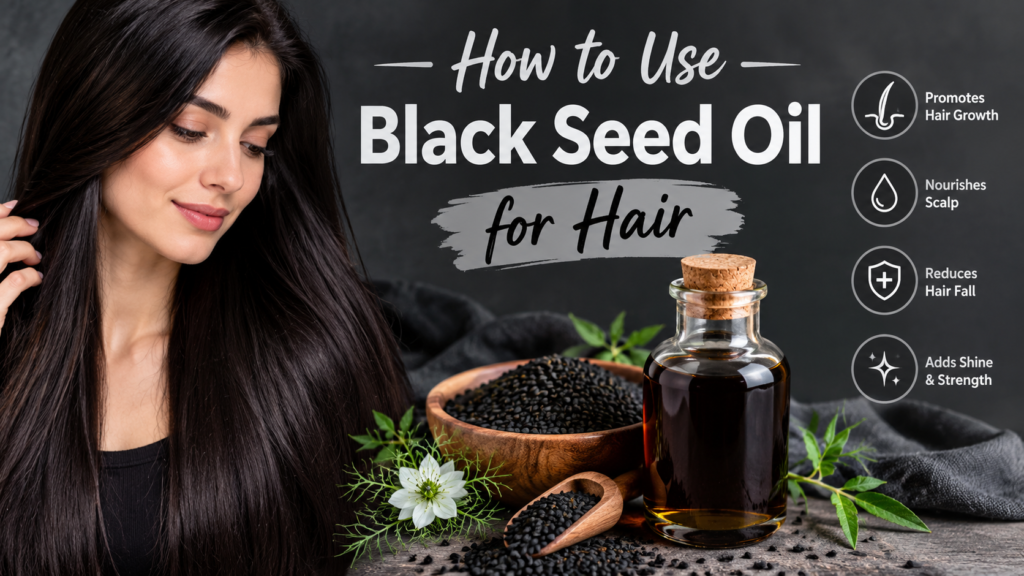
You do not need special tools. Start with a small amount and adjust.
As a Pre-Wash Scalp Treatment
This is the most popular method and a good place to start.
- Mix the oil: Blend 1 to 2 teaspoons of black seed oil with 1 to 2 tablespoons of a carrier oil such as jojoba, coconut, olive, or sweet almond oil. Diluting lowers the chance of irritation.
- Warm it slightly: Rub the oil between your palms. Do not heat it until it is hot.
- Part your hair: Work in small sections so the oil reaches the scalp.
- Massage for 3 to 5 minutes: Use your fingertips, not your nails, in slow circles.
- Wait: Leave it on for 30 to 60 minutes. Longer is not always better.
- Shampoo thoroughly: You may need to shampoo twice to remove the oil fully.
As a Light Finishing Oil
Use one or two drops of diluted oil on dry ends. Rub it between your palms first, then glide it over the lengths. This can tame flyaways and add shine. Skip the roots if your hair gets oily quickly.
In Hair Products
Shampoos, conditioners, and scalp serums with black seed oil are easier to use because the concentration is already balanced. Check the ingredient list, and look for simple formulas without heavy fragrance if your skin is sensitive.
How Often Should You Use It?
Consistency matters more than quantity. For most people, once or twice a week is plenty. If your scalp is oily, once every one to two weeks may be enough.
Hair grows about half an inch per month on average, so you will need to wait at least three to six months before judging results. Take a photo of your hairline and part every month to compare honestly. Stop using the oil if you notice itching, redness, burning, or new bumps.
How to Choose a Good Black Seed Oil Product
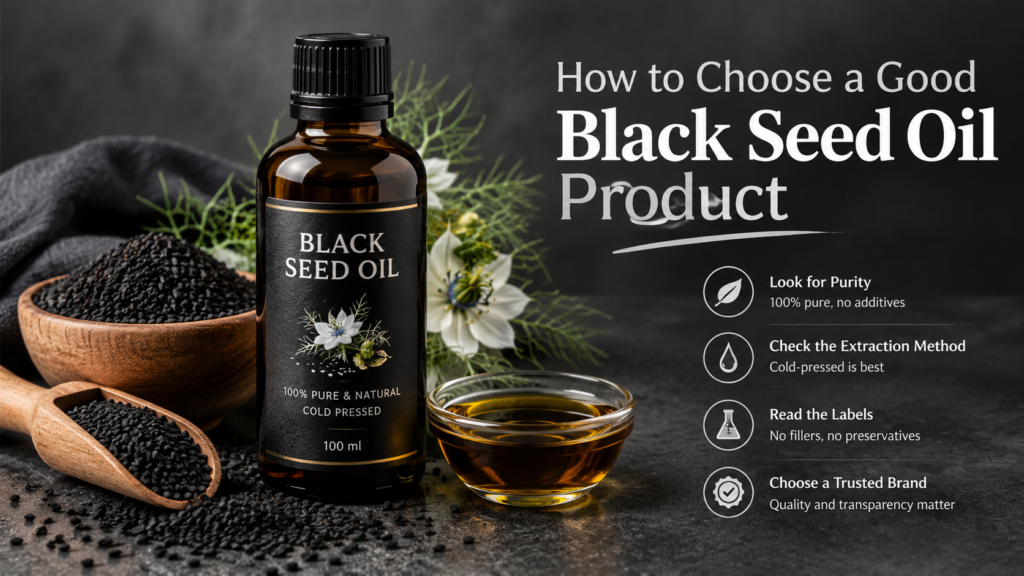
Quality varies, so shop with care. Look for these features:
- Cold pressed: This method is gentler on the oil’s natural compounds.
- 100 percent pure Nigella sativa oil: Avoid products padded with cheap fillers.
- Dark glass bottle: Light can break down plant oils.
- Clear labeling: The label should list the botanical name and ingredients.
- A fresh smell: The oil has a strong, spicy, slightly bitter scent. If it smells rancid or sour, it may have gone bad.
Store the bottle in a cool, dark place, and avoid huge bottles unless you will use them within a few months. Be wary of any brand that guarantees regrowth. That is a red flag.
Common Mistakes to Avoid
- Skipping the patch test: This is the most common and most avoidable mistake.
- Using it undiluted: Pure drops on the scalp can irritate.
- Applying too much: A heavy hand leads to greasy hair and clogged-feeling follicles.
- Not washing it out well: Leftover oil attracts dirt and may cause flaking.
- Expecting overnight results: Hair needs months, not days.
- Ignoring the root cause: Oils will not fix nutritional gaps, hormonal changes, or medical hair loss.
- Changing everything at once: Change one thing at a time so you know what is working.
Safety and Patch Testing
Natural does not always mean harmless. Black seed oil can cause allergic contact dermatitis in some people. Signs include redness, itching, swelling, or a rash.
Do a patch test before your first full use:
- Mix a small amount of diluted oil.
- Dab it on your inner forearm or behind your ear.
- Wait 24 hours.
- If you see redness, itching, or swelling, do not use it on your scalp.
Keep the oil away from your eyes. If it gets in, rinse with clean water. Use extra care if you have eczema, psoriasis, very sensitive skin, or known plant allergies. If you are pregnant, nursing, or taking medication, check with your healthcare provider before using any new product. This article covers topical use only, and swallowing the oil carries separate risks you should discuss with a professional.
If you notice worsening hair loss, scalp pain, or lasting irritation, stop using the oil and get advice from a dermatologist.
Frequently Asked Questions
Does black seed oil for hair growth really work?
It may help scalp health and hair quality, and small studies show some promise for shedding. Strong proof of real regrowth is still missing, so results vary.
Can I leave black seed oil on my hair overnight?
Most people do not need to. Thirty to 60 minutes is usually enough, and longer wear can raise the risk of irritation and buildup.
Is black seed oil safe for all hair types?
Mostly yes when diluted, but people with sensitive skin or plant allergies may react. Fine hair and oily scalps need lighter use.
How long does it take to see results?
Give it at least three to six months of regular use. Softness and shine may show up within a few weeks.
Can black seed oil replace minoxidil or medical treatment?
No. It has not been shown to match proven treatments. Talk with a dermatologist if you have ongoing or heavy hair loss.
Conclusion
Black seed oil can be a pleasant, low-cost addition to a hair routine. It may help your scalp feel balanced and your strands look softer and shinier. The evidence for hair growth is still limited, so keep your expectations realistic. Patch test first, dilute the oil, and stay consistent for a few months. If shedding feels sudden or heavy, see a dermatologist. Used wisely, black seed oil for hair growth can support a healthy routine, even if it is not a miracle fix.





1 thought on “Black Seed Oil for Hair Growth: Benefits & Uses (2026 Tips)”