
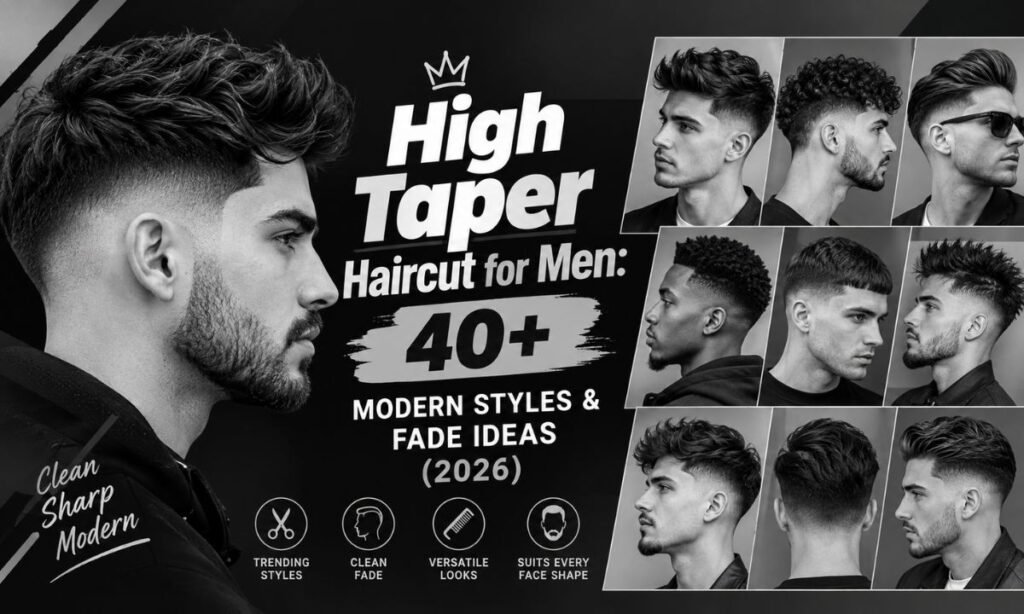
A high taper haircut gives you sharp sides, a clean neckline, and plenty of room to style the top. It works on almost any hair type, which is why it is one of the most requested men’s cuts right now.
This guide explains what the cut is, how it differs from other fades, 35 styles worth trying, and how to ask your barber for it. You will also learn how to style, maintain, and product-match your cut.
What Is a High Taper Haircut, and Who Is It Best For?
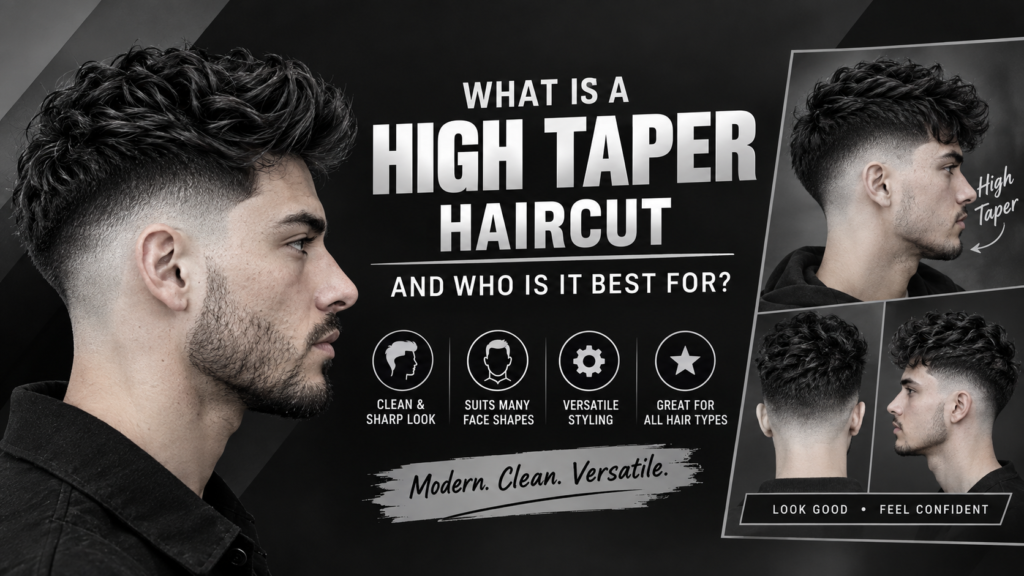
A high taper haircut shortens the hair gradually. It starts high on the head, near the temples, and blends down to very short hair around the ears and nape. The change in length is smooth, so there is no harsh line.
The word “taper” simply means the hair gets shorter in steps. Your barber uses different clipper guards or scissor-over-comb work to move from longer hair to shorter hair. The result looks neat, planned, and balanced from every angle.
What makes the “high” version special is where the blend begins. Instead of starting low near the ear, the shortening begins up near the temple. This creates more contrast between the sides and the top, and it makes the top style look fuller.
The cut has roots in classic barbering. Tapered sides have been part of formal men’s grooming for decades. Today’s version is sharper and more precise, and it pairs well with modern textures, curls, waves, and longer tops.
It suits you if you:
- Want a clean, modern look that still reads professional
- Have thick or medium-density hair
- Like contrast between short sides and longer texture on top
- Prefer a barber-fresh finish without a full skin fade
If you work in an office, a high taper keeps you looking sharp without appearing too edgy. If you work in a creative field, the same cut can carry a bold top style with no problem. It adapts to your lifestyle rather than forcing you to adapt to it.
Thick hair is the biggest winner here. Dense hair holds the shape of the taper and creates a strong, visible contrast. Medium hair also works well, and it usually needs only a small amount of product to look finished.
People who want a fresh look but fear commitment often choose this cut. Because it keeps some length on the sides, it feels safer than a skin fade. It also grows out in a fairly tidy way.
Fine or thin hair can still work with this cut, but it needs some planning. A lower starting point or a shorter top can help the hair look fuller. Your barber can guide you based on your density and hairline.
Age is rarely a limit. Teenagers, professionals, and older men all wear tapers successfully. The trick is choosing the right top style and keeping the edges clean, so the cut looks intentional at any age.
High Taper Haircut vs High Taper Fade: What’s the Difference?
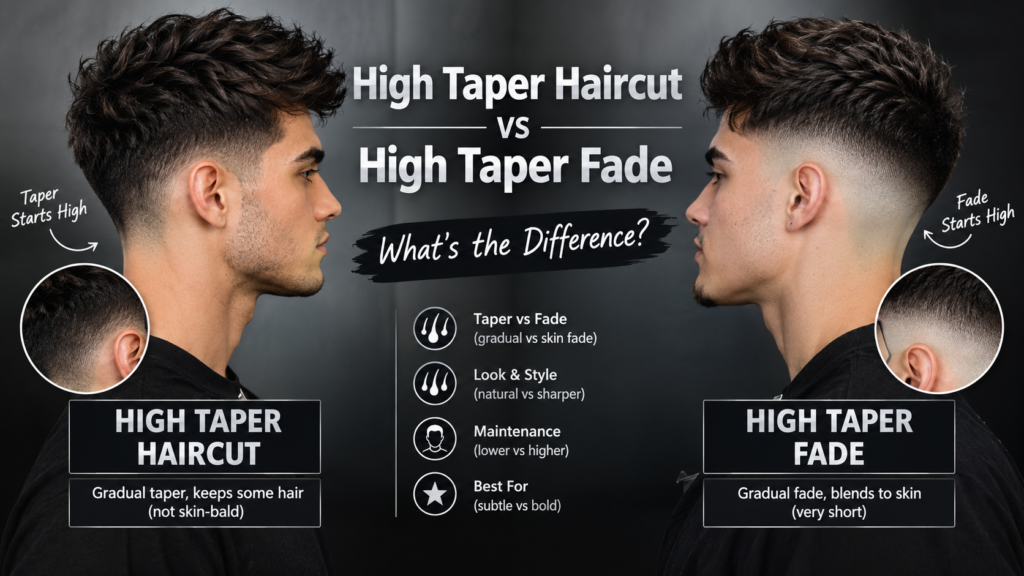
People use both terms for the same cut, but there is a small difference. Most barbers understand what you mean either way, yet knowing the difference helps you get exactly what you want. It also saves you from surprises in the chair.
| Feature | High Taper Haircut | High Taper Fade |
| Blend | Softer, leaves some length | Tighter, often to skin |
| Look | Classic, neat | Bold, high-contrast |
| Neckline | Natural | Cleaned up with a shadow or skin finish |
Blend
A high taper haircut keeps a little length at the shortest point. The blend is soft and gentle, and you can still see hair on the sides and nape. It never goes fully bare.
A high taper fade goes tighter. The shortest area often reaches the skin, and the blend looks smoother and more dramatic. The eye sees a clear gradient from skin to hair.
Look
The haircut version looks classic and neat. It is the kind of style that fits a business meeting, a wedding, or a family dinner. It looks polished but never loud.
The fade version looks bold and high-contrast. It draws attention to the top style and makes the head shape stand out. It is a popular choice for men who want a strong, modern statement.
Neckline
With the haircut version, the neckline stays natural. Your barber may soften it slightly, but the hairline follows your own growth pattern. This gives a relaxed and easy look.
With the fade version, the neckline is cleaned up with a shadow or a skin finish. The edge looks crisp and sharp. This takes more upkeep, but it looks very fresh right after a cut.
Which One Should You Choose?
Choose the haircut version if you prefer low maintenance and a soft look. It grows out gracefully and does not need constant visits. It is also kinder to sensitive skin.
Choose the fade version if you love sharp contrast and do not mind frequent trims. It looks striking, but it fades out of shape faster. Either way, a reference photo will help your barber deliver the result you want.
Understanding High Taper Placement: Sides, Back & All Around
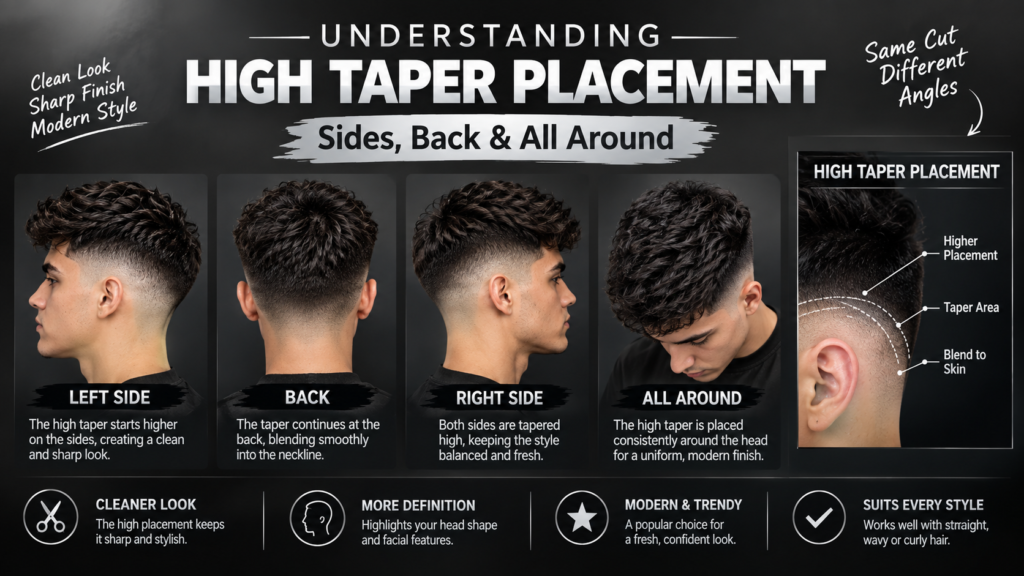
Placement is where a high taper becomes personal. The same cut can look different depending on where the blend starts and stops. Understanding placement helps you describe your ideal look.
A high taper can be done on the sides, on the back, or all the way around. Each choice changes the shape of your head and the balance of your style. Your barber can also combine them.
Think of your head as a canvas with three zones. The sides include the temples and the area above the ears. The back includes the nape and the lower skull.
Your barber decides how high or low the blend begins in each zone. Small changes of even half an inch can shift the look. That is why clear communication matters so much.
See More: Types of Taper Fade: 20 Best Styles Every Man Should See (2026)
What Does “High Taper on the Sides” Mean?
The taper starts above the ears and temples. Only the sideburn and temple area shorten dramatically, so the top keeps its shape. This is the most common placement.
The hair on the upper sides stays longer and blends into the top. Below that, the length drops quickly toward the ears. The result is a clean frame around the face.
This placement suits men who want to keep volume on top. It also works for those who want a defined look without losing too much hair. The sides look tidy, and the top looks fuller by contrast.
A high taper on the sides also helps shape the face. It can slim a round face by drawing the eye upward. It can also highlight the jawline and cheekbones.
Sideburns play a key role here. Your barber can leave them short, medium, or long. Short sideburns give a modern feel, while longer ones add a classic touch.
Be sure to mention how you feel about your temples. If you have a receding hairline, the taper should be planned carefully. A softer blend can keep the area looking natural.
What Does “High Taper Back” Look Like?
The nape narrows into a clean, tight finish. From behind, the hair looks sculpted and lifted, and a tapered nape suits most head shapes. It gives the back of your head a neat, finished look.
The blend at the back begins higher on the skull and gets shorter toward the neck. This removes bulk and creates a smooth line. It is especially helpful for men with thick hair.
Your barber may finish the neckline in one of three ways. A rounded neckline follows the natural curve of the head. A squared neckline gives a strong, blocky edge.
A natural or tapered neckline fades out with no hard line at all. This option grows out best and looks relaxed. It is a smart pick if you do not visit your barber often.
Many men forget how their haircut looks from behind. Others see the back more than you do, so it deserves attention. A clean nape makes the entire cut feel finished.
A tapered back also pairs well with longer styles. If you have a mullet, a man bun, or long locs, the taper keeps the back from looking heavy. It adds structure to loose hair.
High Taper All Around
An all-around taper blends the sides and back in one smooth motion. There are no breaks or uneven sections. The cut flows from ear to ear and around the entire head.
This is the most balanced option. It works with nearly every top style and suits most face shapes. If you are unsure what to pick, this is a safe and stylish choice.
Consistency is the key. The height of the blend should match on both sides and at the back. A skilled barber checks this from several angles and adjusts as needed.
High Taper vs Other Taper Fades: Complete Comparison
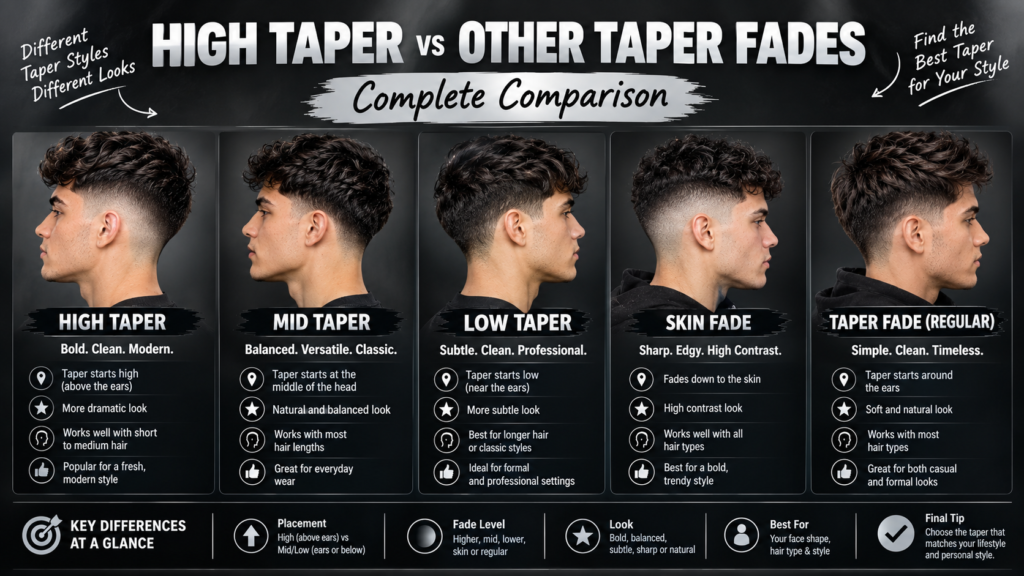
Taper fades come in several heights. The main difference is where the blend begins on the head. That starting point controls how much contrast you see and how bold the cut feels.
| Cut | Starts At | Contrast | Best For |
| Low taper | Just above the ear | Subtle | Office, conservative looks |
| Mid taper | Mid-temple | Balanced | Everyday wear |
| High taper | Upper temple | Strong | Bold, modern styles |
| High skin fade | High on the head, to skin | Maximum | Statement looks |
How to Read the Table
The lower the starting point, the softer the look. A low taper barely changes your outline. A high skin fade changes it completely.
Contrast is the visual gap between the sides and the top. More contrast makes your top style pop. Less contrast keeps everything blended and quiet.
Think about where you spend your days. A courtroom, a classroom, and a nightclub all call for different levels of boldness. Your cut should match your world.
Low Taper
The low taper begins just above the ear. It shortens only the sideburn area and the nape. The rest of the hair stays full and natural.
This is the gentlest option. It suits men who want a tidy look without a big change. It is also very forgiving as it grows out.
Mid Taper
The mid taper starts around the middle of the temple. It offers a balanced blend that is neither too soft nor too strong. Many barbers call it the “safe middle”.
It works well for daily wear. You can dress it up for work or down for the weekend. It is a great starting point if you are trying tapers for the first time.
High Taper
The high taper starts at the upper temple. It leaves a smaller section of full-length hair, so the contrast is strong. The top style becomes the star of the show.
This cut suits men who like a modern, confident look. It also works well with textured tops, curls, and waves. It does need more regular trims to stay sharp.
High Skin Fade
The high skin fade begins high on the head and goes all the way down to bare skin. It has the most contrast of all four options. The look is clean, dramatic, and very current.
It also demands the most upkeep. The skin area shows new growth within days. If you love a razor-sharp finish, this is your cut.
High Taper vs Low Taper Fade
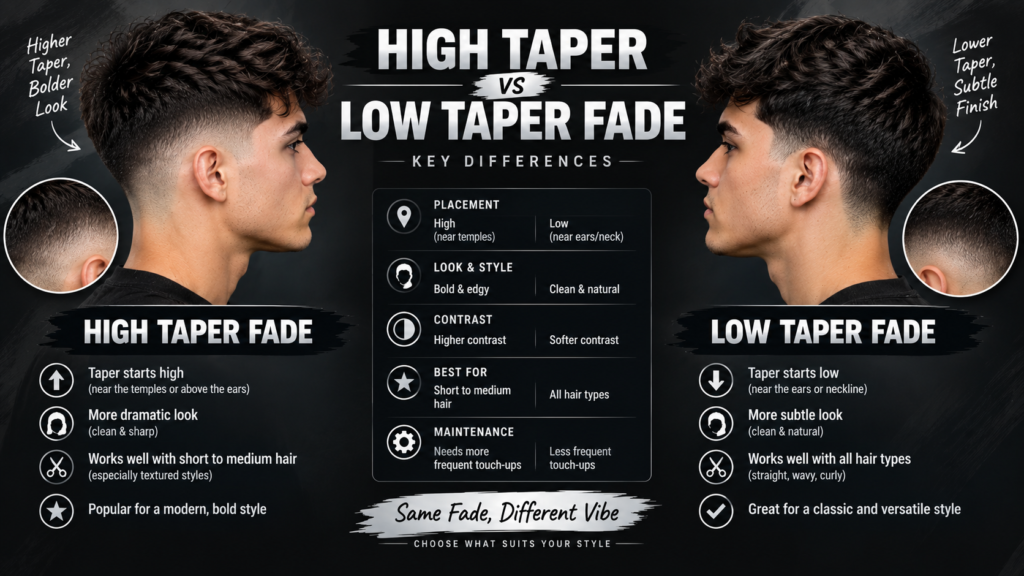
A low taper stays close to the ears and looks understated. A high taper climbs higher and gives a sharper, more dramatic shape. Both are clean, but they send different messages.
The low taper is the quiet professional. It blends into any setting and rarely draws comment. It is ideal for conservative offices and formal events.
The high taper is the confident stylist. It brings out the top of your hair and defines your head shape. It suits men who want to be noticed for the right reasons.
Grow-Out and Upkeep
A low taper grows out slowly and softly. You can stretch your visits to four or even five weeks. The change is hard to notice day by day.
A high taper shows growth sooner. Because the contrast is stronger, even a little length changes the look. Plan visits every two to four weeks for the best results.
Which Suits You?
Choose a low taper if you want simplicity and ease. Choose a high taper if you want a defined, modern shape. If you are undecided, start low and go higher next time.
Your hair type matters too. Fine hair often looks better with a lower taper, while thick hair can handle a higher one. A short chat with your barber will settle the question.
High Taper vs Mid Taper Fade
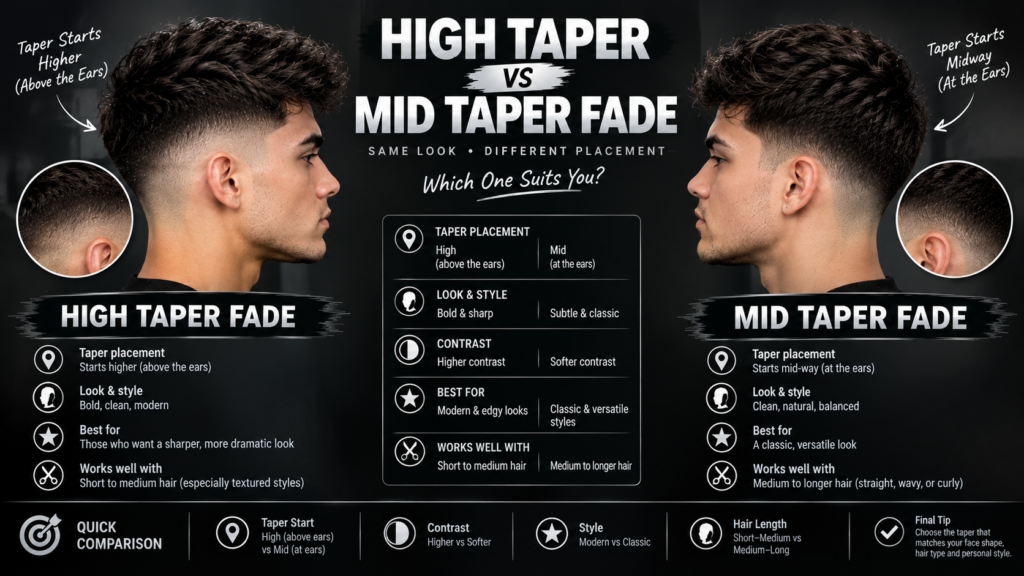
The mid taper is the middle option. Pick the high taper if you want your top style to stand out more. Pick the mid taper if you want balance and flexibility.
A mid taper begins around the middle of the temple. It gives a clear shape but does not shout. It suits men who want a polished look for every occasion.
A high taper begins near the upper temple. The added height creates more drama. It works especially well with pompadours, quiffs, curls, and high tops.
Face and Head Shape
A mid taper flatters most head shapes without much thought. It is a safe choice for oval, square, and round faces. It rarely looks out of place.
A high taper is more sensitive to head shape. It shows every curve of the skull. If you have a well-shaped head, this can be a big advantage.
Style Compatibility
Both cuts work with slick backs, side parts, and textured crops. The high taper adds extra edge to each of these looks. The mid taper keeps them more classic.
If your top is long and voluminous, the high taper gives better balance. The tight sides prevent the hair from looking heavy. This is why many long-haired men prefer it.
High Taper vs High Fade (Skin Fade)
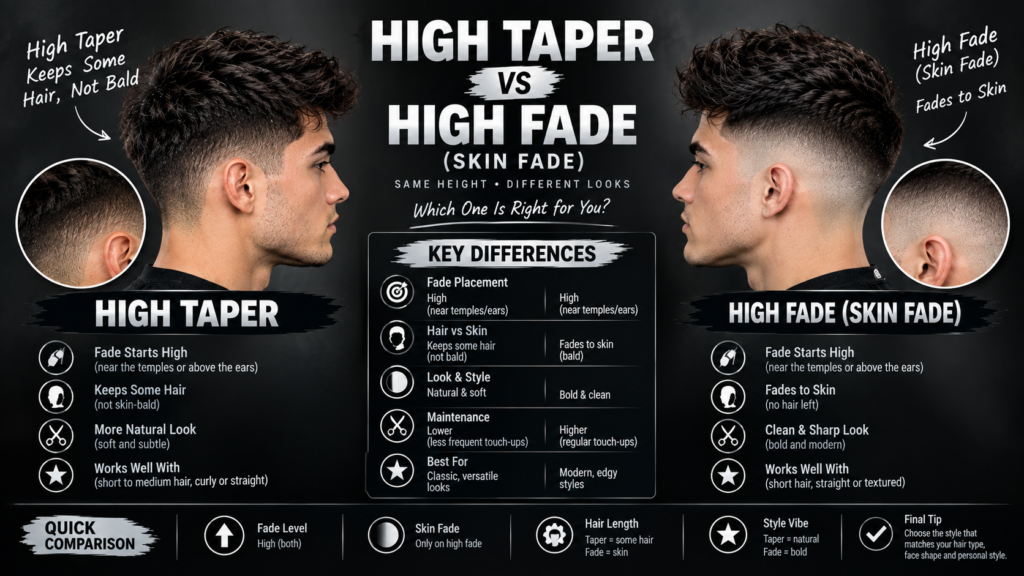
A skin fade goes down to bare skin. A high taper keeps a little length, so it grows out more gracefully and needs less upkeep. That single difference affects your budget, your time, and your comfort.
The skin fade looks crisp on the day of the cut. However, the bare skin area starts to show stubble within a few days. By week two, the sharp effect has softened.
The taper handles this better. Since some hair remains, the growth is less noticeable. The overall shape stays neat for longer.
Skin Sensitivity
A skin fade uses a foil shaver or a very close blade. This can irritate sensitive skin. Razor bumps and redness are common for some men.
A taper avoids most of that risk. The clippers stay slightly longer and gentler on the skin. This makes it a smart pick for men with sensitive or curly-hair-prone skin.
Cost and Time
Skin fades often take longer in the chair. They also call for more frequent visits, which adds up over a year. Tapers are usually quicker and easier on the wallet.
If you enjoy the ritual of a regular barber visit, a skin fade is a fun choice. If you prefer a low-fuss routine, the taper wins. Both can look excellent when done well.
40 Best High Taper Haircut Styles for Men (2026)
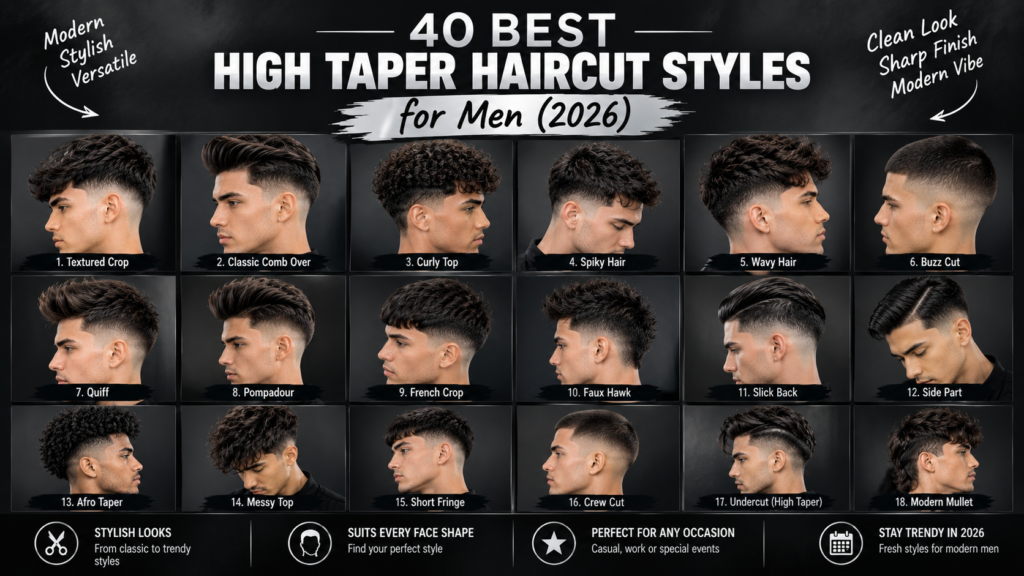
Below are 35 styles grouped by hair type and mood. Each one pairs the high taper with a different top. Pick the group that matches your hair, then choose the look that fits your personality.
High Taper Styles for Curly & Coily Hair
Curly and coily hair loves a high taper. The tight sides make the natural texture on top look fuller and more defined. Here are eight styles to consider.
1. Curly Top
Defined curls sit on top of tight, tapered sides. The contrast makes every curl stand out. It is a fresh look that feels natural and easy.
Keep the top about three to four inches long so the curls can form. Use a curl cream on damp hair and let it air-dry or diffuse it. Avoid brushing dry curls, as this causes frizz.
2. Afro
A rounded, full shape framed by a crisp taper. The clean sides make the afro look intentional and sculpted. It is bold, classic, and full of personality.
Use a wide-tooth pick to lift the hair evenly. Moisturise daily to prevent dryness and breakage. Ask your barber to keep the outline round and balanced.
3. Waves
Brush the top into 360 waves and keep the sides of the razor clean. The taper adds a sharp frame that highlights the wave pattern. It takes patience but the result is striking.
Brush your hair daily with a medium or hard brush. Wear a durag at night to lock in the pattern. Regular moisture helps the waves stay deep and shiny.
4. Blowout
Blow-dried volume on top gives a soft, full finish. The high taper keeps the sides neat, so the volume looks controlled. It is a trendy choice for medium-length curls.
Apply a heat protectant before drying. Use a comb attachment and lift the hair upward. Finish with a light-hold spray to keep the shape all day.
5. Dreads
Locs on top with a tapered perimeter keep things tidy. The clean sides stop the style from looking heavy. It is a strong look for men who love their locs.
Keep the roots retwisted every few weeks. Ask your barber to taper around the ears and nape only. This helps the locs stand out as the main feature.
6. Fluffy Hair
Airy, soft texture on top with sharp sides. The look feels light, youthful, and easy to wear. It is popular with men who want volume without effort.
Use a sea salt spray or a light mousse for lift. Blow-dry the roots upward and scrunch the ends. Skip heavy waxes, as they weigh the hair down.
7. Textured Fringe
A curly fringe falls over the forehead. The high taper keeps the sides slim, so the fringe becomes the focal point. It suits oval and square faces best.
Trim the fringe every few weeks so it stays off the eyes. Use a light curl cream to keep the curls soft. A small amount of product goes a long way.
8. Classic Black Male Cut
Short waves or a low crop with a crisp line-up. This is a timeless style that never goes out of fashion. It looks clean at work and at play.
The line-up is the star here, so book a touch-up often. Keep the hairline sharp and the temples even. A tidy edge makes the whole cut look fresh.
High Taper Styles for Straight & Fine Hair
Straight and fine hair shows every line clearly. That makes the taper look neat and precise. These seven styles work best when the top has some texture or direction.
9. Straight Hair
Keep the top slightly longer for movement. Straight hair can look flat when cut too short. A little length lets it fall and move naturally.
Use a light texture spray to add grip. Comb it to one side or push it forward with your fingers. The tight taper keeps the look sharp and clean.
10. Side Part
A defined part gives a polished, office-ready look. The high taper adds a modern twist to a classic style. It is a favourite for interviews and meetings.
Ask your barber to shave or cut in the part line. Use a light pomade and a fine comb to set the shape. The look holds well throughout the day.
11. Slick Back
Use a light pomade for a shiny, combed finish. The hair sweeps back from the forehead in one smooth motion. With a taper, the style looks sleek and confident.
Comb the hair while it is slightly damp. A blow dryer helps set the direction before you add a product. Avoid too much gel, which can look stiff.
12. Comb Over
A hard part plus a taper gives instant structure. The top is swept to one side in a neat, sharp shape. It has a retro feel with a modern finish.
Use a strong-hold pomade for lasting control. Cut the part deep and clean for the best contrast. This style looks great with a short, tidy beard.
13. Buzz Cut
A super short top makes this an easy, low-maintenance cut. The taper adds shape so the buzz does not look flat. It is ideal for hot weather and busy lives.
Choose a guard length that flatters your head shape. A number two or three works well for most men. Moisturise your scalp to keep the skin healthy.
14. Straight Fringe
A blunt, forward fringe suits fine hair well. The line of the fringe creates the illusion of thicker hair. Combined with a taper, it looks fashion-forward.
Ask for a slightly curved or straight edge across the forehead. Keep the length above the eyebrows for comfort. Use a light paste to keep the fringe in place.
15. Blonde
Bleached or highlighted tops stand out against short sides. The colour contrast makes the taper even more visible. It is a bold way to refresh your look.
Bleaching can dry the hair, so use a deep conditioner weekly. A purple shampoo keeps yellow tones away. Get the colour done before the cut for a cleaner finish.
High Taper Styles with Bold Statements
These ten styles are made to be noticed. The high taper gives each one a clean base, so the statement piece on top looks deliberate. Choose one if you want your haircut to speak for you.
16. Mohawk
A narrow strip of longer hair runs down the centre. The high taper cleans up both sides and makes the strip look sharp. It is a loud style with a modern edge.
Use a strong-hold product to keep the strip upright or textured. Ask your barber to keep the sides very short. Maintain it often, because the shape blurs quickly.
17. Mullet
A modern take with a tapered, neat back. Unlike the old version, this mullet is cleaner and more controlled. The taper stops it from looking messy.
Keep the top textured and the back tidy. A sea salt spray gives an effortless feel. Trim the back every month to hold the shape.
18. Pompadour
High volume swept up and back. The taper trims the sides close, so the height of the pompadour becomes the main feature. It is a classic with lasting appeal.
Blow-dry the hair upward with a round brush. Set the shape with a firm pomade and a comb. Leave at least three to four inches on top for proper lift.
19. Quiff
Textured height at the front with a relaxed finish. The quiff is slightly softer than the pompadour and easier to style. The taper keeps it neat and modern.
Use matte clay for a natural look. Push the front upward and slightly back with your fingers. It works well for casual and semi-formal settings.
20. Edgar
Blunt fringe, sharp edges, and a very clean taper. The style is bold, geometric, and heavily line-focused. It is popular among younger men who like strong shapes.
The fringe is cut straight across and sits close to the forehead. Keep the edges crisp with regular line-ups. A clear reference photo helps your barber get the details right.
21. With Design
Shaved lines or patterns in the tapered area. Designs turn the haircut into a personal signature. Simple lines, arcs, and small shapes are popular choices.
Pick an experienced barber for design work. Keep the pattern small if you want a subtle look. Touch-ups are needed often, as the design fades with hair growth.
22. Asian Hair
Thick, straight hair holds a high taper especially well. The strong hair shaft keeps the shape and the sharp lines. It is a low-fuss, stylish choice.
Keep the top medium in length for weight and movement. Use a light clay for a natural finish. Avoid heavy products that flatten the hair.
23. With Beard
The beard blends into the taper for a balanced face. A smooth transition from sideburn to beard looks intentional and polished. It is a strong pairing for men with fuller facial hair.
Ask your barber to match the fade level of the beard with the taper. Keep the beard line clean along the cheek and neck. Use beard oil to keep the hair soft.
24. High Top
Flat or rounded height on top with tight sides. The style has a retro charm with a fresh finish. The taper sharpens the outline of the top.
Use a pick to lift the hair evenly. Keep the top shape level and the edges neat. Moisturise regularly to protect the hair from dryness.
25. Long Hair
Length on top, taper on the sides, and a lot of contrast. The style gives you the freedom of long hair with the neatness of a fade. It is popular with men who want the best of both.
Condition your long hair regularly to keep it healthy. Tie it up when needed or wear it loose for a relaxed look. Trim the ends every eight to ten weeks.
High Taper Styles with Texture & Detail
The last ten styles focus on texture and small details. They are easy to wear and easy to personalise. Most of them need only a few minutes of styling each morning.
26. Textured Taper
Choppy layers on top for a lived-in feel. The high taper keeps the sides tidy while the top looks relaxed. It is a great everyday look.
Ask your barber to point-cut the top for natural movement. Use a matte paste and rough-dry your hair. The style looks better with a little mess.
27. Short Taper
Neat, quick to style, and good for busy weeks. The short top means less product and less time. It is perfect for men on the move.
A short taper grows out well, but keeps visits regular. Use a small amount of wax for a soft finish. It is a reliable pick for gym-goers and professionals alike.
28. Classic High Taper
The standard, no-frills version. The sides are tapered, and the top is kept simple and combed. It never feels out of place.
This is the best option for a first taper. Ask for a natural neckline and a soft blend. Once you feel comfortable, you can experiment with tops and colours.
29. Crop
A short, textured top pushed forward. The crop is modern, sharp, and easy to manage. The taper adds definition to the sides.
Use a matte clay and push the hair forward. Keep the fringe short and slightly uneven. It flatters most face shapes and hair types.
30. With Braids
Cornrows or box braids with a crisp taper. The neat sides highlight the pattern of the braids. It is a bold, artistic, and well-organised look.
Keep the parts clean and even. Moisturise the scalp between styling sessions. Protect the braids at night with a satin scarf.
31. Man Bun
Tie the top up and let the tapered sides do the work. The bun looks neat rather than messy. It is a good option for growing out your hair.
Grow the top to about five or six inches. Use a soft hair tie to avoid breakage. Ask your barber to keep the sides short and clean.
32. With Textured Fringe
Messy bangs against a tight perimeter. The contrast between soft fringe and sharp sides creates a stylish balance. It has a youthful, relaxed feel.
Use a sea salt spray for extra grip. Let the fringe fall naturally across the forehead. Trim it often to keep it out of your eyes.
33. Spiked
Upward texture set with a strong-hold product. The style is energetic and full of attitude. The taper keeps the base neat and modern.
Use a firm wax or clay and work it through with your fingertips. Point the strands upward and slightly forward. Rinse the product out every night to protect your scalp.
34. Brushed Forward
A low-effort style that hides a receding hairline. The hair is combed forward and slightly tousled. The taper adds shape without drawing attention to the temples.
Keep the top at medium length so it covers the hairline. Use a light paste for natural texture. This style is simple, clean, and confident.
35. Business Professional
A short top, a side part, and a soft blend. The look is polished, calm, and ready for any meeting. It shows care without trying too hard.
Ask for a softer taper with a natural neckline. Use a light pomade for a subtle shine. Keep the hair neat with a trim every three weeks.
36. Caesar Cut
A short, horizontal fringe combed straight across the forehead. The high taper keeps the sides tight, so the fringe stands out. It is simple, sharp, and easy to maintain.
Keep the top about one to two inches long. Use a light matte paste and comb the hair forward. Ask your barber to keep the fringe edge straight and even.
37. French Crop
A short, textured top with a blunt fringe, paired with a tight taper. The look is neat but still modern and slightly messy. It works well on straight and wavy hair.
Use a matte clay and push the hair forward with your fingers. Keep the fringe short and just above the eyebrows. Trim every three to four weeks to hold the shape.
38. Faux Hawk
A softer version of the mohawk, with the centre swept upward and the sides kept tight. The taper blends the sides smoothly, so the style looks bold without being extreme. It suits both casual and evening looks.
Use a firm wax and pinch the centre strands upward. Keep the sides short and blended. It works best on medium-thick hair with a bit of natural texture.
39. Slicked-Back Curls
Curls combed back with a bit of shine, over a crisp high taper. The style looks polished and confident. It is a good choice if you want curls without the messy look.
Apply a curl cream or light gel on damp hair. Comb the curls back and let them set. Avoid heavy pomades, which can weigh the curls down.
40. Salt-and-Pepper Taper
Natural grey or silver tones on top, with a clean taper on the sides. The taper keeps the grey looking intentional and distinguished. It is a great option for men who want to embrace their natural colour.
Use a purple or silver shampoo once a week to keep the grey bright. Keep the top short to medium and neatly styled. A soft blend and a tidy neckline make the look feel sharp and professional.
How to Choose the Right High Taper Haircut for You
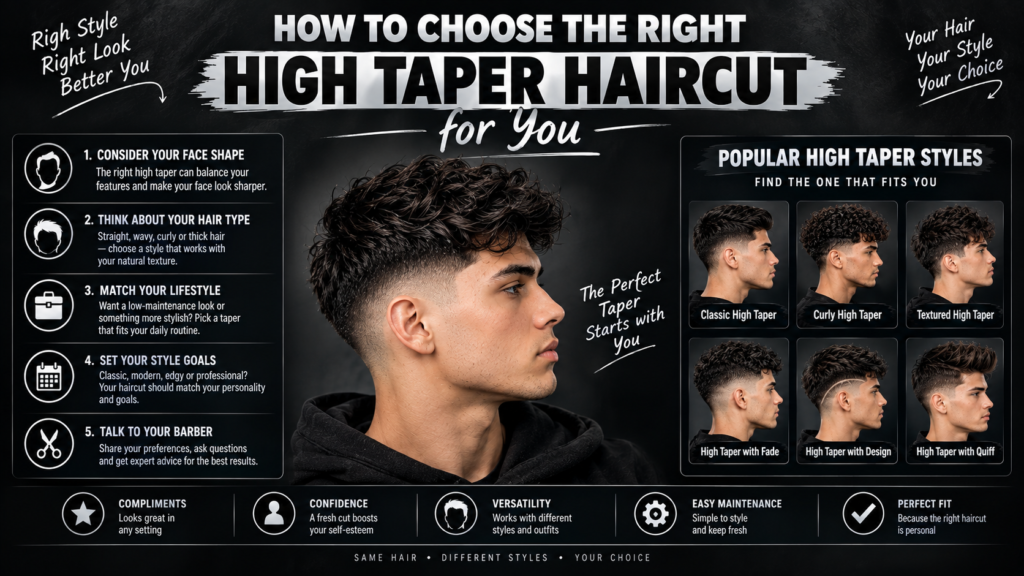
Start with your face shape, then look at your hair type and daily routine. These three factors decide how a high taper will look on you. A cut that works for a friend may not work for you, and that is perfectly normal.
Think about your lifestyle as well. If you have only five minutes each morning, choose a short, low-fuss top. If you enjoy styling, a pompadour or a quiff may be worth the effort.
Your hairline and head shape also matter. A receding hairline, a flat back of the head, or a strong forehead can all guide your choice. A good barber will notice these details and adjust the cut for you.
Which Face Shape Suits a High Taper Best?
Oval and square faces suit almost any high taper. The other shapes need small adjustments. With the right top style, every face shape can carry this cut well.
| Face Shape | Best High Taper Approach |
| Round | Add height on top to lengthen the face |
| Oval | Almost any style works |
| Square | Keep the top soft to balance strong angles |
| Heart-shaped | Use a textured fringe to balance a wider forehead |
| Diamond | Add fullness on top and keep the sides tight |
| Rectangular/Oblong | Keep the top shorter and avoid extra height |
Round Face
A round face has soft curves and similar width and length. The goal is to make the face look longer and more defined. Height on top does exactly that.
Try a quiff, a pompadour, or a textured crop with lift. Tight tapered sides slim the face further. Avoid heavy fringes that make the face look wider.
Oval Face
An oval face is balanced and versatile. Almost any high taper style works, from a slick back to a curly top. You can focus on hair type and lifestyle.
This is the best face shape for experimenting. Try different tops without worrying about balance. Even bold styles like mohawks and high tops look natural.
Square Face
A square face has a strong jaw and firm angles. A soft top helps balance these features. Textured crops and gentle side parts work well.
Avoid very sharp, boxy styles that repeat the angles of the face. Add a little movement on top instead. This creates a friendly and approachable look.
Heart-Shaped Face
A heart-shaped face is wider at the forehead and narrower at the chin. A textured fringe softens the forehead and brings balance. Brushed-forward styles also work nicely.
Keep the sides tapered but not too tight near the temples. Too much contrast can make the forehead look even wider. A soft blend is the best choice here.
Diamond Face
A diamond face has wide cheekbones and a narrower forehead and jaw. Fullness on top helps balance the shape. Keep the sides tight to avoid adding width at the cheekbones.
Quiffs and textured tops are strong options. A beard can also help fill the jawline. Ask your barber to keep the taper neat and close.
Rectangular or Oblong Face
A rectangular face is long with a straight cheek line. The top should stay short or medium to avoid making the face look longer. Fringes and crops are helpful.
Avoid tall pompadours and very high tops. Instead, choose a forward-swept or side-parted style. A softer taper also keeps the proportions balanced.
High Taper for Different Hair Types
Your hair type controls how the cut behaves each day. Straight, curly, thick, and fine hair all react differently to a taper. Knowing your hair helps you pick the right style and the right products.
- Straight hair: Sharp lines show up clearly, so use light texture.
- Curly hair: Keep enough length on top to let curls form.
- Coily hair (Type 4): Pair with a crisp line-up and a moisturised twist-out or afro.
- Thick hair: Thick hair holds the contrast best and needs regular trims.
- Fine or thin hair: Choose a shorter top or a lower taper to avoid a flat look.
Straight Hair
Straight hair shows the taper very clearly. Every line and blend is visible, so precision matters. Choose an experienced barber for the cleanest result.
Add light texture with a spray or clay to prevent a flat look. A slightly longer top gives the hair room to move. Avoid heavy gels that make the hair look greasy.
Curly Hair
Curly hair needs length to form its natural pattern. If the top is too short, the curls may not show. Aim for three to four inches.
Use a curl cream and avoid over-brushing. Let the curls dry naturally or use a diffuser. The taper on the sides keeps the curls looking tidy and intentional.
Coily Hair (Type 4)
Coily hair has tight, springy curls with a lot of volume. A high taper frames this texture beautifully. Pair it with a sharp line-up for the cleanest finish.
Moisture is essential for Type 4 hair. Use a leave-in conditioner and seal it with a light oil. A twist-out or a rounded afro shows off the pattern well.
Thick Hair
Thick hair is the best canvas for a high taper. The strong hair holds the shape and creates deep contrast. It also gives you more styling options.
However, thick hair grows quickly. The taper loses its edge in about two weeks. Plan regular trims to keep the sides neat.
Fine or Thin Hair
Fine hair can look flat if the cut is too heavy at the sides. A shorter top or a lower taper adds a sense of fullness. It also reduces the contrast that can make thin hair look sparse.
Use volumising products like sea salt spray or light mousse. Avoid heavy waxes and oils. A textured crop is often the most flattering style.
How to Ask Your Barber for a High Taper Haircut
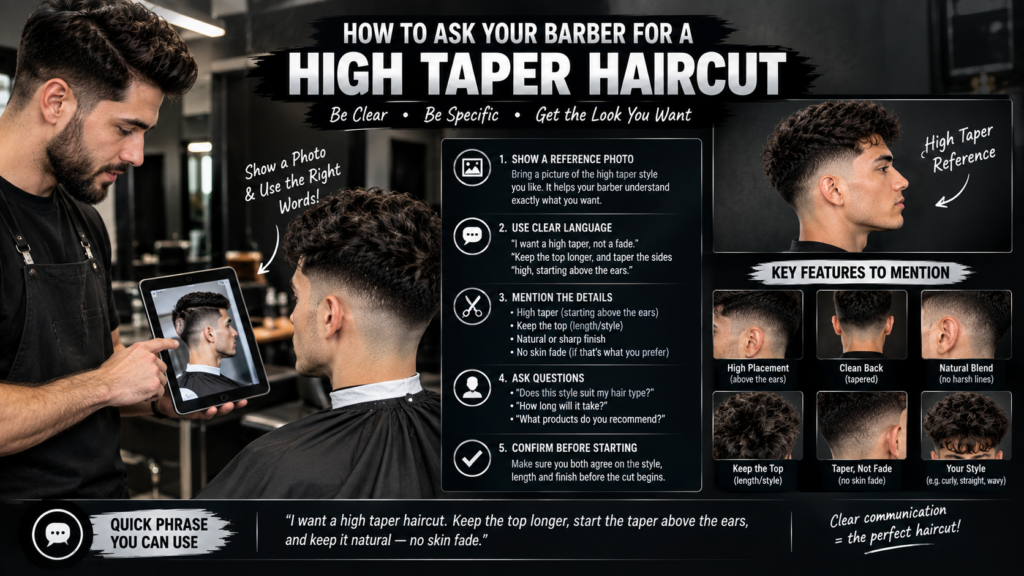
Good communication is the secret to a great haircut. Barbers are skilled, but they cannot read your mind. A few clear details make a big difference.
Before you go, decide what you want on top and on the sides. Think about your neckline and how often you can visit. Then explain everything calmly and confidently.
The Golden Rule of Barber Communication
Show a photo, and say which parts you want short and how long the top should be. Then confirm the neckline: rounded, squared, or natural. This simple routine avoids most haircut mistakes.
Photos are powerful because they remove guesswork. Choose an image of someone with similar hair type and head shape. Show the front, side, and back if you can.
Use simple words to describe length. Say “keep about three inches on top” instead of “a little off”. Numbers and clear references make the job easier.
Ask questions if you are unsure. A good barber enjoys explaining the plan. If something feels off, speak up before the clippers start.
Also mention your daily routine. If you rarely style your hair, say so. Your barber can choose a cut that looks good with minimal effort.
Finally, agree on how high the taper starts. Point to the exact spot on your head. Small differences in height change the whole look.
Clipper Guard Numbers Explained: High Taper Edition
| Guard | Length | Where It’s Used |
| #0 or bald | 0–0.5 mm | Around the ears and nape |
| #1 | 3 mm | Lower blend area |
| #2 | 6 mm | Upper blend area |
| #3–#4 | 10–13 mm | Just below the top |
Your barber can adjust these numbers to suit your hair, so treat them as a starting point.
How the Guards Work Together
A taper is built in layers. The shortest guard is used at the bottom, near the ears and nape. Each higher guard blends into the next.
The #0 or bald setting creates the tightest finish. It sits around the ears and along the neckline. The #1 and #2 guards form the soft transition above it.
The #3 and #4 guards blend the taper into the longer hair on top. This final step is what makes the cut look smooth. Without it, the line between sides and top would look harsh.
Why Your Barber May Change the Numbers
Every head is different. Thick hair may need a lower guard to keep the blend clean. Fine hair may need a higher guard to avoid a see-through look.
Curly and coily hair also react differently to guards. The natural spring of the hair can make the same guard look longer. A skilled barber will adjust as they work.
Use the table as a shared language, not a strict rule. It helps you talk about the cut in clear terms. Trust your barber’s eye for the final result.
How to Style a High Taper Haircut at Home
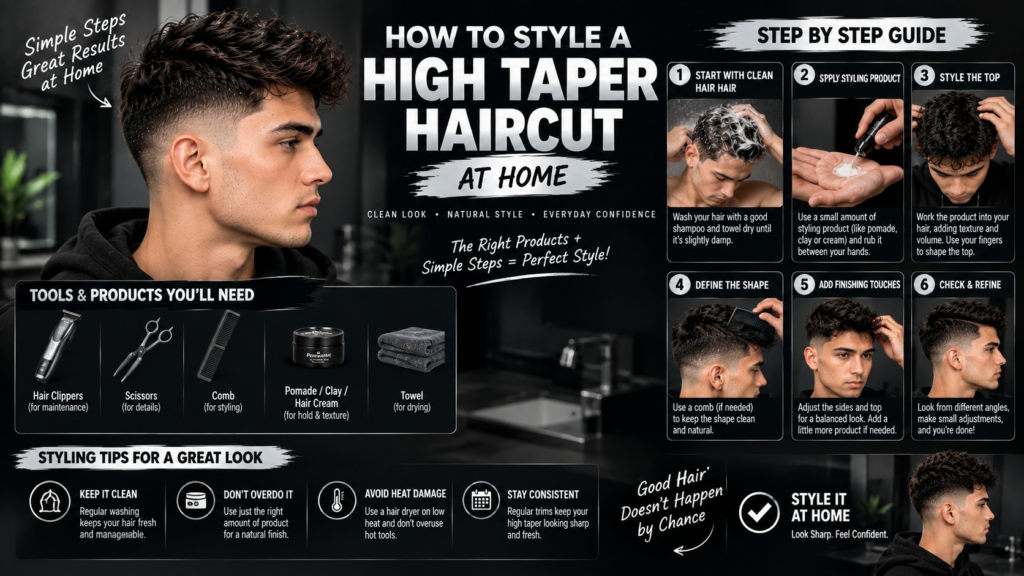
Styling a high taper at home is simple once you know the steps. The tapered sides need almost no work, so all your effort goes into the top. With a little practice, you can get a barber-fresh look in minutes.
The right tools make the job easier. You need a towel, a comb or brush, a hair dryer, and one or two products. Keep the routine short so you can repeat it every day.
Remember that the best style depends on your hair type. Straight hair needs light texture, while curls need moisture. Adjust the steps below to suit your own hair.
4-Step Daily Styling Process
- Wash and towel-dry your hair until it is damp.
- Apply a sea salt spray or a pre-styler for volume.
- Add a small amount of clay, paste, or pomade.
- Shape with a comb or your fingers, then finish with a light-hold spray.
Step 1: Wash and Towel-Dry
Start with clean hair. Wash with a gentle shampoo and rinse well. Pat your hair with a towel instead of rubbing, which causes frizz and damage.
Stop when the hair is damp, not dripping. Damp hair takes product evenly and holds a better shape. It also saves time if you plan to blow-dry.
Step 2: Apply a Pre-Styler
A pre-styler builds the base for your style. Sea salt spray adds grip and volume, especially on fine or straight hair. For curls, use a curl cream instead.
Spray or apply evenly from root to tip. Work it through with your fingers. If you use a blow dryer, this is the moment to dry and lift the roots.
Step 3: Add Your Styling Product
Take a small amount of product, about the size of a coin. Warm it between your palms until it becomes soft. Applying too much is the most common mistake.
Use clay or paste for texture and a matte look. Choose pomade for shine and control. Start at the back and move to the front so the top gets the finishing touch.
Step 4: Shape and Finish
Shape the hair with a comb or your fingers. Push it up for a quiff, back for a slick back, or forward for a fringe. Look in the mirror from several angles.
Finish with a light-hold spray to keep everything in place. Avoid strong sprays that make the hair stiff. A soft hold keeps the style natural and comfortable.
Quick Styling Tips
Style your hair in good light so you can see the shape clearly. Do not touch it too often during the day. Constant touching adds oil and ruins the finish.
Wash out heavy products at night. Leaving them in can clog the scalp and cause itching. A clean scalp keeps your hair healthy and strong.
How to Maintain a High Taper Haircut
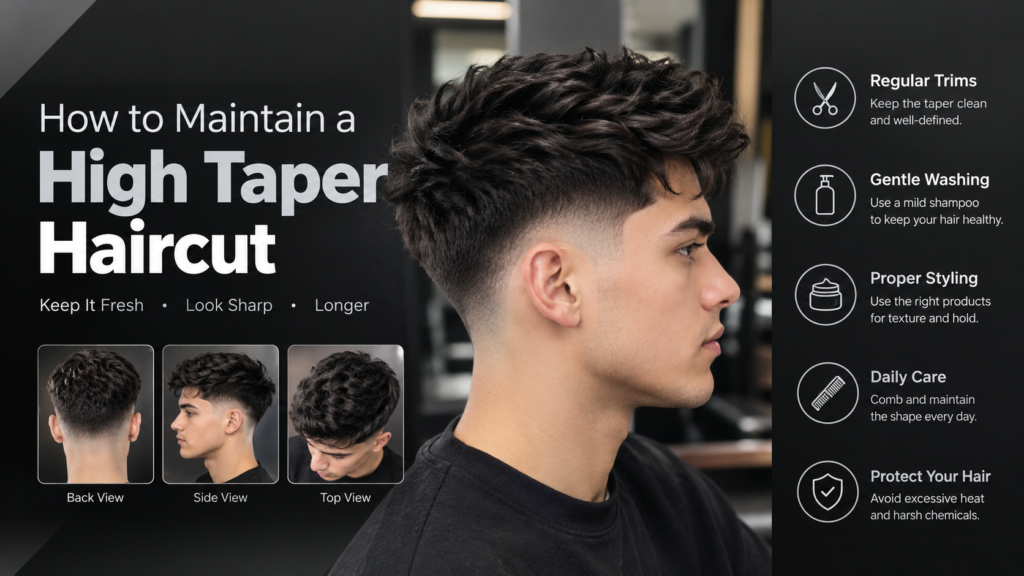
A high taper looks best when it is fresh. The contrast between the sides and the top is what makes the cut special. Once the sides grow, that contrast fades.
Maintenance does not have to be hard. A regular barber visit, a few home habits, and the right products are enough. Build a small routine and stick to it.
Barber Visit Frequency
Visit your barber every 2 to 4 weeks. A high taper loses its sharp contrast quickly as the sides grow. The exact timing depends on your hair speed and how sharp you like the finish.
If you love a crisp look, aim for every two weeks. If you are happy with a softer blend, three to four weeks is fine. Book your next visit before you leave the chair.
Some barbers offer quick appointments for edge-ups only. These are cheaper and faster than full cuts. They are a smart way to stay sharp between visits.
Key Facts
- Sides look messy again after about two weeks.
- Line-ups keep the edges crisp between full cuts.
- Thicker hair grows out faster and needs more frequent visits.
These facts explain why the cut needs upkeep. The sides are the shortest part, so any growth shows immediately. A short trim restores the shape at once.
Line-ups are a useful trick. They clean the hairline, temples, and neckline without touching the top. They take only a few minutes and make a big difference.
Thick hair grows fast and shows growth quickly. If you have dense hair, plan for the shorter end of the schedule. Fine hair can often wait a little longer.
At-Home Maintenance Between Cuts
- Trim stray hairs around the neckline with a small trimmer.
- Wash with a gentle shampoo and moisturise curls or coils.
- Sleep on a satin pillowcase or wear a durag to protect waves.
Neckline Care
A small trimmer helps you remove stray hairs at the neck. Move slowly and follow the natural line your barber created. Do not cut into the shape, or you may create an uneven edge.
If you are not confident, use the trimmer only on the loose hairs below the line. It is better to leave a little extra than to remove too much. Your barber can fix small gaps at your next visit.
Washing and Moisture
Choose a gentle shampoo that does not strip the hair. Harsh formulas dry out the scalp and make the hair rough. Curly and coily hair needs extra moisture after every wash.
Use a light conditioner or a leave-in cream. Apply it from mid-length to the ends. Healthy hair holds a style better and looks shinier.
Night-Time Protection
A satin pillowcase reduces friction and frizz. Cotton pulls moisture from the hair and can flatten waves. Satin keeps the hair smooth while you sleep.
A durag or satin cap works even better for waves and short curls. It holds the pattern in place and protects the edges. Wear it every night for the best results.
What to Do If Your Taper Grows Out
Book a quick clean-up instead of waiting for a full cut. Ask for a “neck and sides tidy”. If you like the grown-out look, try a slightly longer top to match.
A grown-out taper is not a disaster. The blend usually softens and looks more relaxed. Many men enjoy this in-between phase.
If you want to keep the style but not the upkeep, move to a lower taper. The change is subtle, and it grows out more gently. It is a good compromise for busy months.
You can also let the top grow to balance the longer sides. A slightly longer top makes the whole cut look planned. Ask your barber how to shape it as it grows.
Best Hair Products for High Taper Haircuts
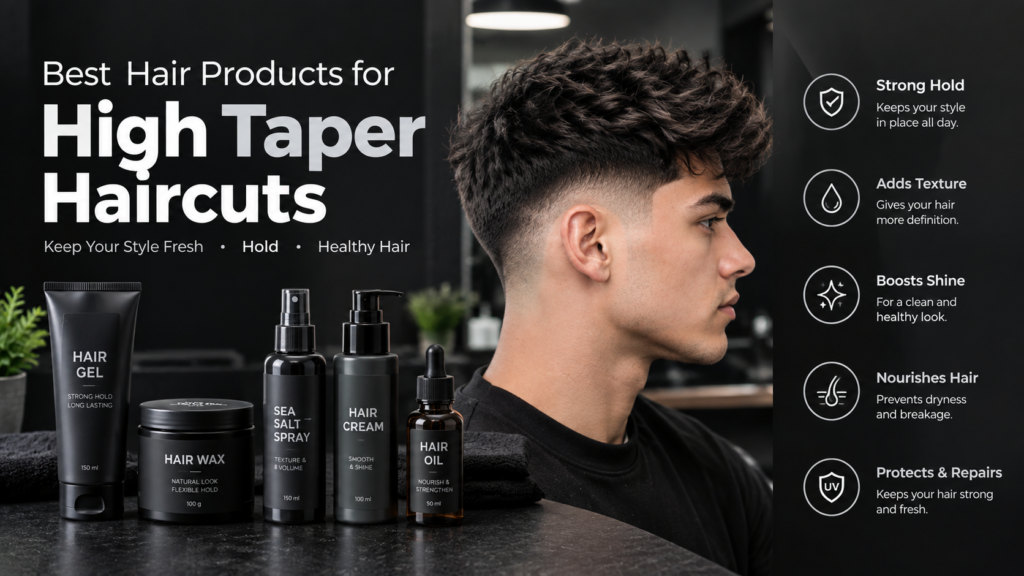
The right products make styling faster and keep your hair healthy. You do not need a long list. A few good items can handle most tasks.
Choose products based on your hair type and the finish you like. Matte finishes look natural, while shiny ones look polished. Start with small amounts and adjust as you learn.
Styling Products
- Matte clay: Gives texture and a natural finish.
- Pomade: Adds shine and hold for slick backs and side parts.
- Sea salt spray: Builds volume on fine hair.
- Curl cream: Defines waves and curls without frizz.
Matte Clay
Matte clay is the go-to for textured tops. It gives a strong hold without shine. It works well on crops, quiffs, and textured tapers.
Rub a small amount between your palms and work it through dry or slightly damp hair. Build up slowly. It washes out easily with shampoo.
Pomade
Pomade suits classic looks like slick backs and side parts. It adds shine and control while keeping the hair flexible. Water-based versions wash out more easily.
Use it on damp hair for a sleek finish or on dry hair for a lighter effect. Comb it through to spread it evenly. A little goes a long way.
Sea Salt Spray
Sea salt spray adds grip and volume to fine or straight hair. It creates a beachy, lived-in texture. It also works as a base before clay or paste.
Spray it on damp hair and scrunch or blow-dry. Avoid overuse, as salt can dry the hair. Pair it with a conditioner for balance.
Curl Cream
Curl cream defines waves and curls while fighting frizz. It adds moisture and keeps the pattern soft. It is a must for curly and coily hair.
Apply it to damp hair and smooth it from root to tip. Let the hair dry naturally for the best definition. Avoid touching the curls while they dry.
Hair Care Products
- Sulfate-free shampoo
- Lightweight conditioner
- Leave-in moisturiser for curls and coils
- Scalp oil to keep the skin healthy under short sides
Why Hair Care Matters
Styling products make the cut look good, but hair care keeps it healthy. A short taper exposes more scalp than a long cut. That makes scalp care especially important.
A sulfate-free shampoo cleans gently without stripping natural oils. A lightweight conditioner adds softness without weight. A leave-in moisturiser helps curls and coils stay hydrated.
Scalp oil protects the skin under the short sides. It reduces dryness, flaking, and irritation. Use a few drops after washing and massage gently.
How to Choose Products That Fit Your Routine
Start with one styling product and one care product. Add more only when you see a clear need. Too many products make the routine long and can weigh the hair down.
Read the label before you buy. Look for words like “matte”, “medium hold”, or “water-based”. These tell you how the product will look and how easily it will wash out.
Test a new product on a normal day, not before a big event. Watch how your hair feels after a few hours. If it turns greasy, stiff, or itchy, try a lighter option.
Match Products to Hair Type
Straight and fine hair does best with light products such as sea salt spray and small amounts of clay. Heavy pomades can make thin hair look flat. Keep the touch light and build slowly.
Thick and coarse hair can handle stronger holds. Clay, paste, and firm pomades keep the shape under control. A little conditioner helps soften the hair and makes styling easier.
Curly and coily hair needs moisture first and hold second. Creams, butters, and leave-in conditioners are the base of your routine. Add a light gel only if you want extra definition.
Common Product Mistakes to Avoid
Using too much product is the number one mistake. It makes the hair look dull, heavy, and dirty. Start with a pea-sized amount and add more only if needed.
Applying product to soaking wet hair dilutes it and reduces the hold. Damp hair is the ideal starting point. Dry hair works best for textured, matte looks.
Skipping the wash after styling is another problem. Leftover product builds up on the scalp and can cause flaking. Rinse it out at night with a gentle shampoo.
Build a Simple Starter Kit
A good starter kit has four items. You need a gentle shampoo, a light conditioner, one styling product, and a fine-tooth comb. This covers the basics for most men.
As you get comfortable, add a sea salt spray or a curl cream. You can also add scalp oil for dry skin. Each new item should solve one clear problem.
Keep your tools clean too. Wash combs and brushes once a week to remove oil and product. Clean tools help your hair look fresher and healthier.
Frequently Asked Questions
What is the best high taper haircut for Black men?
A high taper fade with waves, a curly top, or a short afro looks sharp on Black hair. Pair it with a crisp line-up and keep the hair moisturised.
The taper frames the natural texture beautifully. It also keeps the sides tidy while the top shows off the curl pattern. Regular barber visits keep the edges clean and even.
Protect your hair at night with a satin cap or durag. This helps waves stay defined and curls stay soft. Healthy, moisturised hair always looks its best.
What is a high taper fade for men?
It is a cut where the sides and back gradually shorten from high on the head, with longer hair left on top. It suits most men.
The style is popular because it is clean and flexible. You can wear it with a quiff, a crop, a slick back, or curls. It works in both casual and professional settings.
Ask your barber where you want the blend to start and how short it should go. A reference photo helps a lot. Keep up with regular trims for the sharpest finish.
What is the difference between a low taper and a high taper haircut for men?
You probably mean a low or high taper. A low taper starts near the ears and is subtle, while a high taper starts near the temples and gives more contrast.
If you want a quiet, professional look, choose the low taper. If you want a bold, modern shape, go for the high taper. Both look neat when done well.
Not sure which one to pick? Start with a low taper and move higher at your next visit. This lets you test the look with less risk.
What is a mid taper fade?
A mid taper fade starts halfway up the sides. It offers a balanced look that is neither too subtle nor too bold.
It is a great choice for everyday wear. It looks good at work, at home, and at events. It also grows out gracefully.
Many men choose the mid taper as their first fade. It gives a clear shape without a big commitment. You can always go higher or lower later.
Is a high taper haircut good for men with straight hair?
Straight hair shows the fade clearly. Leave 2–4 inches on top and use light texture products for movement.
Sharp lines look great on straight hair, so ask for a clean blend. Add a little sea salt spray or matte clay for grip. This stops the top from looking flat.
Try a side part, a textured crop, or a slick back. Each style works well with a high taper. Choose the one that suits your face shape and routine.
Can men with long hair get a high taper haircut?
Keep the length on top and taper only the sides and back. You can tie it into a man bun or slick it back for contrast.
This combination gives you the best of both worlds. The taper keeps the cut neat, while the length adds personality. It works for straight, wavy, curly, and coily hair.
Condition your long hair often to keep it healthy. Trim the ends every couple of months. Ask your barber to keep the taper sharp so the top stands out.
Conclusion
The high taper haircut is easy to wear, easy to personalise, and easy to keep looking sharp. It works on nearly every hair type and pairs with dozens of top styles. From curls to slick backs, there is a version for you.
Match the style to your face shape and hair type, and take a reference photo to your barber. Clear communication about height, length, and neckline leads to a better result. Small details make a big difference.
With regular trims and the right products, it will look fresh well into 2026. Build a simple routine and enjoy the confidence a clean cut brings. Your next great haircut starts with one good conversation in the barber’s chair.




