
Walking into a barbershop without a plan is risky. One wrong word and you leave with a cut you didn’t want. Many men have sat in that chair, watched the clippers move, and realized too late that the result was not what they pictured.
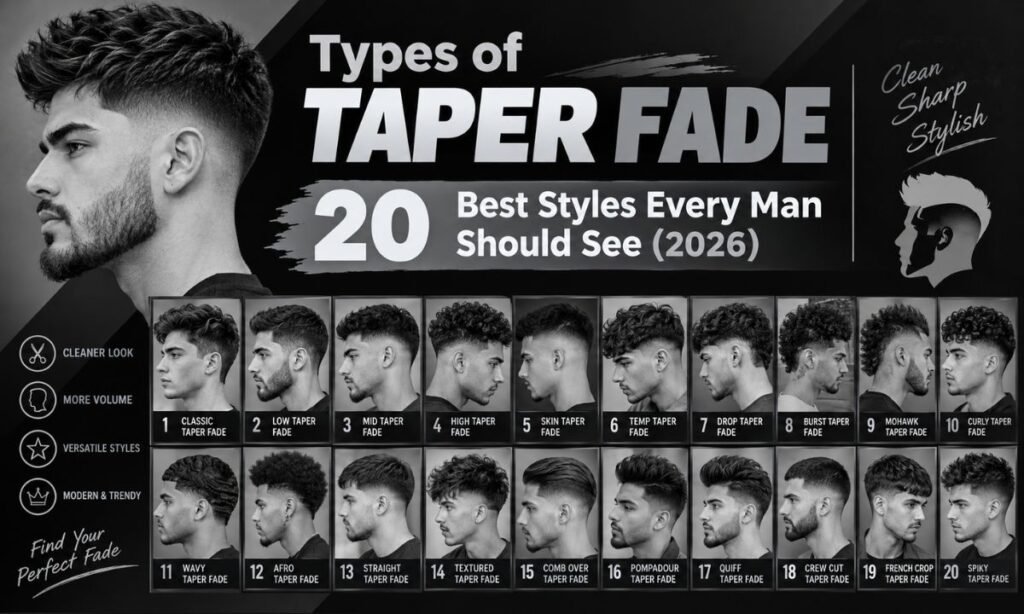
The taper fade is one of the most requested men’s haircuts today. It is clean, flexible, and works for almost every hair type. But there are many types of taper fade, and each one gives a different look, a different level of contrast, and a different maintenance routine.
This guide breaks down every major style in plain language. You will learn what each type looks like, who it suits, and how to ask for it. You will also find out which style matches your hair texture, face shape, and lifestyle.
By the end, you will know the right words to say to your barber. You will also have a list of 20 proven looks to save on your phone. Let’s start with the basics.
What Are the Main Types of Taper Fade?
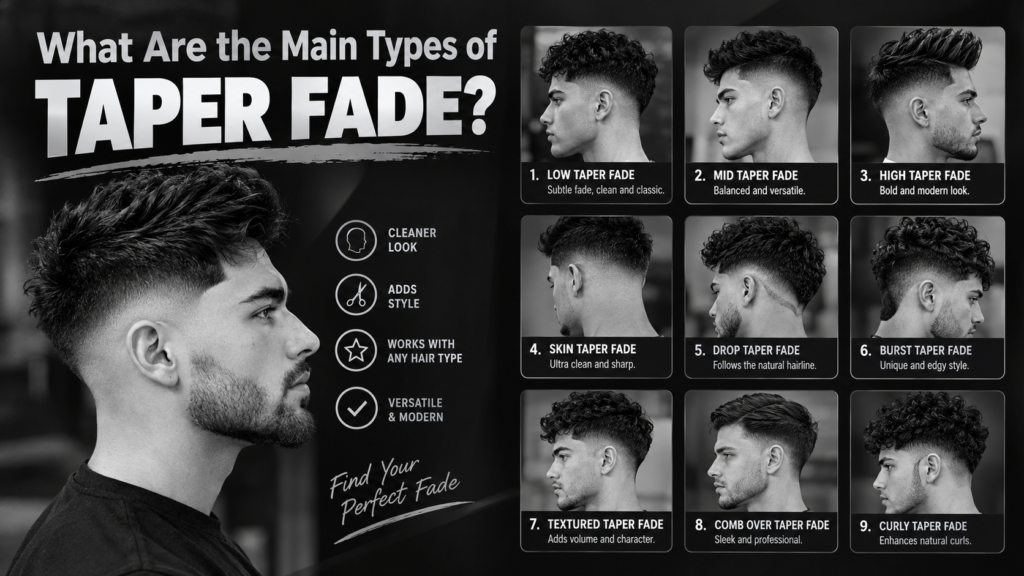
The main types of taper fade are the low taper, mid taper, and high taper. The height of the fade decides how bold the haircut looks. A low fade is quiet and subtle, while a high fade is sharp and eye-catching.
Advanced variants add more detail on top of these three heights. These include the skin taper, burst taper, drop taper, shadow taper, and temple fade. Each one changes the shape of the blend rather than its height.
Think of it as a two-step choice. First, you pick the height: low, mid, or high. Second, you pick the technique: skin, burst, drop, shadow, or temple. Together, these two choices create your final look.
The top of the hair is a third choice. You can pair any taper with a crop, quiff, pompadour, curls, twists, or a slick-back. That is why the taper fade feels endless in its options.
Quick Navigation: Types of Taper Fade at a Glance
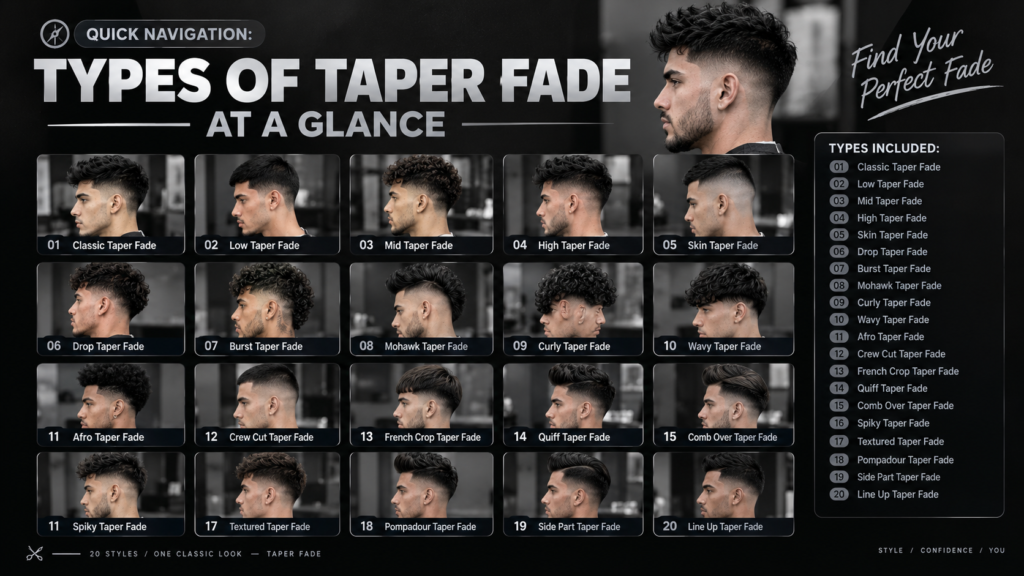
Use this table as a fast reference before you read the full breakdown. It shows where each fade starts, the overall look, and how much upkeep to expect.
| Style | Fade Starts | Look | Maintenance |
| Low Taper | Near the ear and nape | Subtle, professional | Low |
| Mid Taper | Around the temples | Balanced, versatile | Medium |
| High Taper | Above the temples | Bold, sharp | High |
| Skin/Bald Taper | Down to bare skin | Ultra-clean | High |
| Burst Taper | Curves around the ear | Modern, stylish | Medium |
| Drop Taper | Drops behind the ear | Curved, unique | Medium |
| Shadow Taper | Soft, blurred transition | Smooth, natural | Low–Medium |
| Temple Fade | Temples and sideburns only | Neat, minimal | Low |
If you want a low-effort cut, look at the low taper, shadow taper, or temple fade. These grow out slowly and stay tidy for weeks. If you enjoy a crisp, high-contrast look, the high taper and skin taper are better fits.
Keep in mind that maintenance also depends on your hair growth speed. Some men see a fade soften in two weeks, while others can stretch it to five. Your barber can tell you what to expect after the first cut.
What Is a Taper Fade?
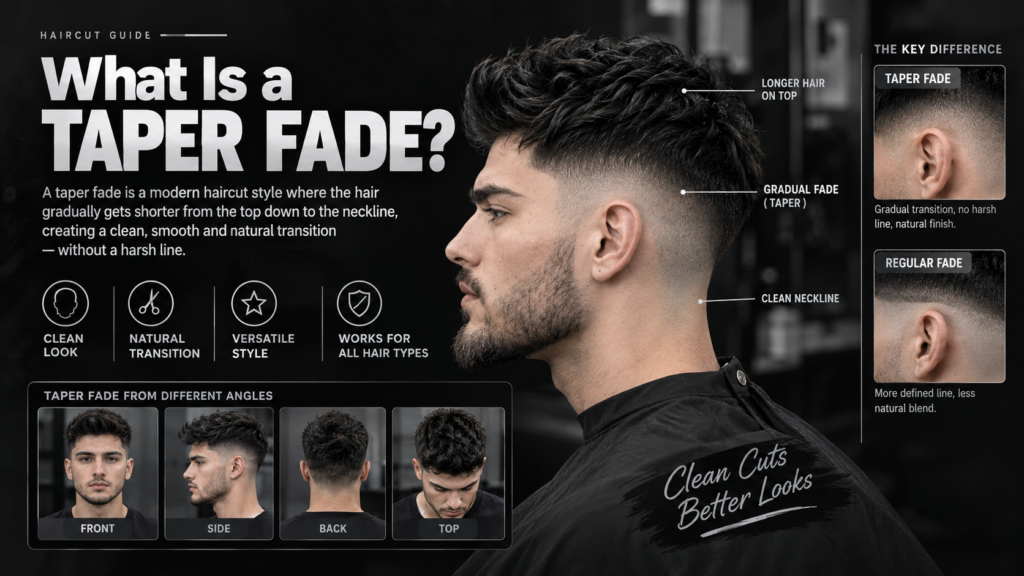
A taper fade is a haircut where the hair gets gradually shorter toward the neckline and sideburns. The top stays longer. The sides and back blend down smoothly, without a hard step or line.
The result is a neat, polished shape that looks planned but not harsh. This is why the taper fade works in offices, at weddings, in gyms, and on the street. It adapts to the setting.
Barbers create this blend using clippers with guards of different lengths. They start with a longer guard at the top of the fade zone and move to shorter guards near the bottom. Scissors and shears then smooth the transition.
The gradual change in length is the key idea. Your eye does not catch a clear line, only a soft shift from longer to shorter hair. That soft shift is what gives the taper fade its clean signature look.
Taper vs. Fade: What’s the Difference?
People mix these terms up all the time, and even some barbershop menus use them loosely. Here is the simple version.
- Taper: A gentle length change, mostly at the neckline and sideburns. The hair stays visible and never goes to bare skin.
- Fade: A bigger change that often goes down to the skin and covers more of the head.
In short, a taper is subtle, and a fade is dramatic. A taper fade combines both ideas. It gives you a clean blend with more hair left on the sides.
A classic taper is what you see on a traditional businessman’s haircut. The sides are short, but the hair around the ears and neck simply gets neater as it goes down. There is no bald section at all.
A fade, on the other hand, is the look you see on a modern skin fade. The hair disappears into the skin, and the contrast with the top is strong. The taper fade sits between the two, and that is why it is so popular.
When you talk to your barber, use both words clearly. Say “taper fade” and then name the height. This avoids the common mistake of getting a much shorter cut than you wanted.
See More: Classic Taper Haircut: 70+ Styles, Types, Barber Tips & Expert Guide (2026)
The 3 Foundation Types of Taper Fade
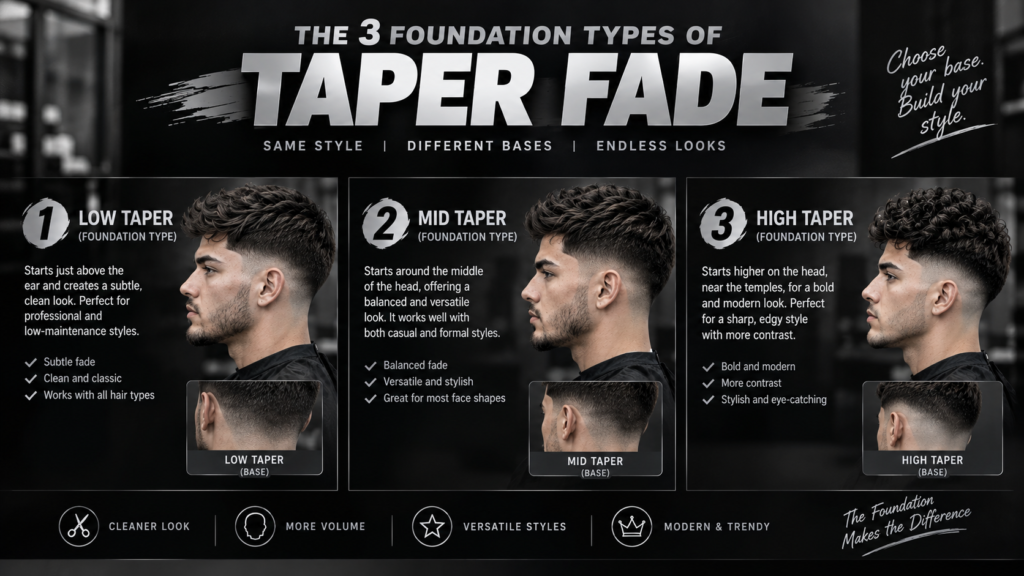
Every taper fade starts with one of these three. The only difference is where the fade begins. Once you understand the height, everything else becomes easier to choose.
A useful way to picture this is to imagine a line running around your head. A low fade puts that line near your ear. A mid fade puts it near the temple. A high fade puts it higher still, close to the crown of the sides.
The higher the line, the more skin or short hair you show. This also means more contrast, more attention, and more upkeep. The lower the line, the softer and more traditional the result.
Low Taper Fade
The fade begins just above the ear and follows the natural hairline around the nape. Most of the sides keep their length, so the cut looks soft and classic. It is the most conservative of the three heights.
Because the change is small, this cut fits almost any environment. You can wear it to a job interview, a business meeting, or a family dinner without a second thought.
- Best for: office jobs, first-time fade wearers, longer face shapes
- Pairs with: side parts, textured quiffs, classic comb-overs
- Bonus: it grows out neatly, so you can wait 4–6 weeks between cuts
The low taper is also a smart way to test the fade trend. If you like it, you can go higher next time. If you don’t, the hair grows back into a normal shape very quickly.
One tip is to ask your barber to keep the nape clean but natural. A blocked, straight neckline can look harsh, while a tapered neckline blends better as it grows.
How to ask for it: Say “low taper fade” and point to the spot just above your ear. Then describe the top length. This tells your barber exactly where the blend should start and how the finished shape should look.
The low taper also works well for men with sensitive skin. Because there is little bare skin exposed, there is less razor irritation around the neck and ears. It is a gentle option for daily wear.
Mid Taper Fade
The fade starts around the middle of the ear or the temple area. It is the “safe but stylish” choice. It shows more shape than a low taper, but it is not as bold as a high one.
This is the height most barbers recommend when a client is unsure. It gives a visible fade, keeps a balanced outline, and looks good with almost any top style.
- Best for: oval and heart-shaped faces
- Pairs with: crops, quiffs, French crops, short waves
- Bonus: it works for both formal and casual settings
The mid taper also helps balance the head shape. If your top is medium length, the fade adds clean structure to the sides without making the head look narrow.
For upkeep, plan a visit every three to four weeks. The fade will still look decent after that, but the lines around the ear and neck begin to soften.
How to ask for it: Say “mid taper fade” and show the height on your head with a finger. Mention whether you want a visible skin blend or a soft, hairy one. That small detail changes the whole feel of the cut.
This height is also easy to adjust. If it looks too low the first time, your barber can raise it at your next visit. Many men use it as a starting point and then move up or down.
High Taper Fade
The fade starts high on the sides, near the temple line. It creates strong contrast with the top. The sides look very short, and the top looks fuller and taller by comparison.
This is the boldest of the three heights. It draws attention to the top of the head and gives the whole haircut a sharp, athletic feel.
- Best for: round faces, since it adds height
- Pairs with: pompadours, high-volume curls, spiky textures
- Watch out: it looks messy quickly, so plan a trim every 2–3 weeks
Because the contrast is so strong, regrowth shows fast. A fresh high taper looks excellent, but the same cut after three weeks can look uneven. Regular visits are part of the deal.
If you like the shape but not the upkeep, ask for a “high-mid” taper. It sits slightly lower than a full high fade, and it keeps most of the sharpness with less frequent maintenance.
How to ask for it: Say “high taper fade” and be clear about the bottom. Ask whether it should stop at short stubble or go to skin. Both are possible, and each gives a different level of contrast.
If you like the bold shape, consider pairing it with a sharp line-up. The clean forehead line and the high fade work together to frame the face. Together they create a very crisp, confident look.
Advanced Technique Variants: Beyond Basic Height
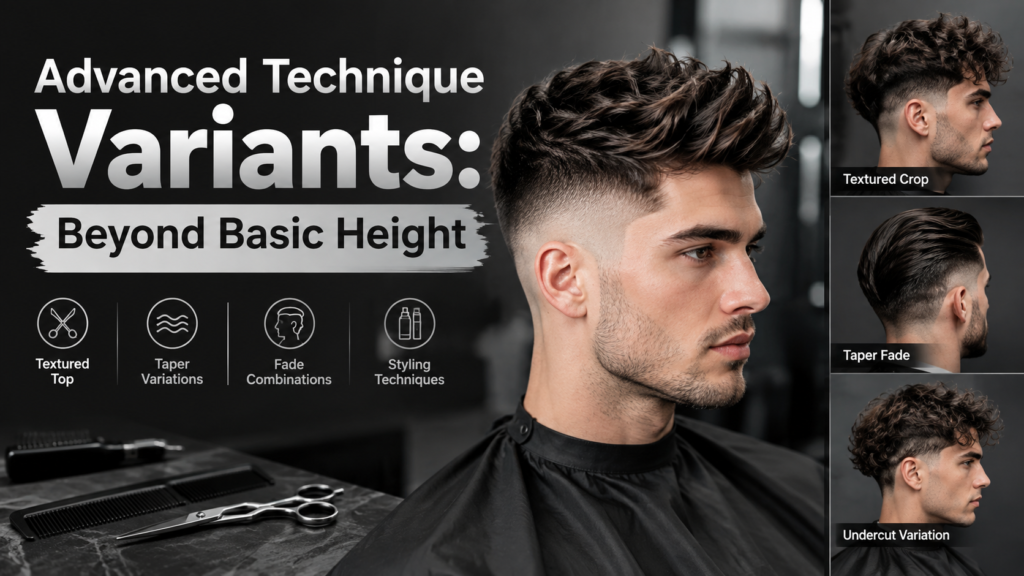
Once you know the three heights, you can add technique variations. These change how the blend looks, not how high it starts. A technique variant can make a simple cut feel custom.
Each variant below can be combined with a low, mid, or high starting point. For example, you can ask for a “mid burst taper” or a “low drop taper.” This is how barbers build a look that is unique to you.
Skin Fade / Bald Fade Taper
The hair blends all the way down to bare skin. It gives the sharpest contrast of any taper. The look is crisp, clean, and very modern.
The bottom of the fade shows the scalp, so the blend must be smooth. A skilled barber uses a foil shaver or a zero guard to finish this area cleanly.
The trade-off is upkeep. Skin fades lose their sharpness fast because even a few days of regrowth softens the bare section. Most men book a visit every two to three weeks.
This style suits men who like a bold, tidy appearance. It also works well for thinning hair on the sides, since the short blend looks intentional and neat.
To keep a skin fade looking fresh, moisturize the exposed scalp and avoid harsh scrubs. Bare skin can dry out or feel irritated after a close shave. A light lotion or aftershave balm helps a lot.
Also pay attention to the sun. Exposed scalp burns easily in summer, so use sunscreen or wear a hat. A little care keeps the skin healthy and the fade looking clean.
Burst Taper Fade
The fade curves around the ear and fans outward, like a small burst. It follows the shape of the ear instead of running in a straight line across the side of the head.
The back can stay longer, which suits mohawks, mullets, and curly tops. This gives the cut a strong, expressive shape that stands out from a standard taper.
A burst taper is a good choice if you want a modern look without shaving the entire side. The curved shape adds style, and the longer back keeps the cut feeling relaxed.
When you visit the barber, say “burst fade” and show a photo. The exact shape of the curve can vary, so a picture prevents confusion.
The burst taper is especially popular with men who have curly or wavy hair on top. The curve around the ear echoes the shape of the curls and makes the whole cut feel connected.
It also works when you want to grow the back longer over time. The sides stay neat while the back grows into a mullet or a longer, layered shape. That makes it a smart long-term style.
Drop Fade Taper
The fade line “drops” behind the ear and follows the curve of your skull. Instead of staying level, it arcs downward toward the nape. This creates a flowing, rounded outline.
It adds shape and suits people who want something a little different from the standard cut. The drop makes the back of the head look fuller and more structured.
This variant works well with longer tops, such as waves, slick-backs, and curly hair. The downward curve balances the volume on top and gives the profile a natural flow.
Maintenance is medium. The curve is easy to see, so it needs a refresh every three weeks to keep the line crisp behind the ear.
One tip is to ask for a slightly higher drop if you have a round head. The curve then adds length and shape at the back. For narrower heads, a lower drop can add balance.
A drop taper also looks very good with a beard. The curve blends into the jawline and gives the face a strong, framed look. It is a small change that adds a lot of style.
Shadow Taper Fade
The hair gets shorter in soft, blurred steps instead of a sharp line. The transition looks smooth, almost like a shadow moving across the sides. There is no bald section and no hard edge.
It is a good pick if you want a natural look with no hard edges. Because the change is gradual, the haircut looks polished but relaxed.
This style is very forgiving as it grows out. The soft blend hides regrowth well, so you can stretch your visits to four or five weeks.
It suits men in conservative workplaces who still want a fresh, modern cut. It also pairs nicely with textured crops and natural waves.
Shadow tapers are a favorite among barbers who use scissors and comb work, because the soft blend needs careful hand skill. If your barber does this well, the result looks almost seamless.
This style is also a good bridge for men switching from a traditional cut to a modern one. It feels familiar but looks fresher. You can always go higher on the next visit.
Temple Fade (Brooklyn Fade)
Only the temples and sideburns are tapered. The rest of the sides stay full. It is a clean, minimal choice that is popular with men who have thick beards and want a smooth finish.
The temple fade is the lightest technique on this list. It cleans up the front hairline and sideburns without changing the overall length of the sides.
For bearded men, the sideburn taper is very useful. It connects the hair to the beard in a gentle blend, so the face looks sharp and there is no sudden jump in length.
Upkeep is low. Because most of the hair stays long, only the temple area needs regular attention, and that can wait four to five weeks.
The temple fade is often called the “Brooklyn fade” because it became popular in New York barbershops. It has since spread worldwide and is now a standard option on most barbershop menus.
If you want a clean finish for a special event, this is a quick fix. A temple fade and a fresh line-up can take just a few minutes, yet the change in your look is clear.
Taper Fade Styles by Hair Type & Texture
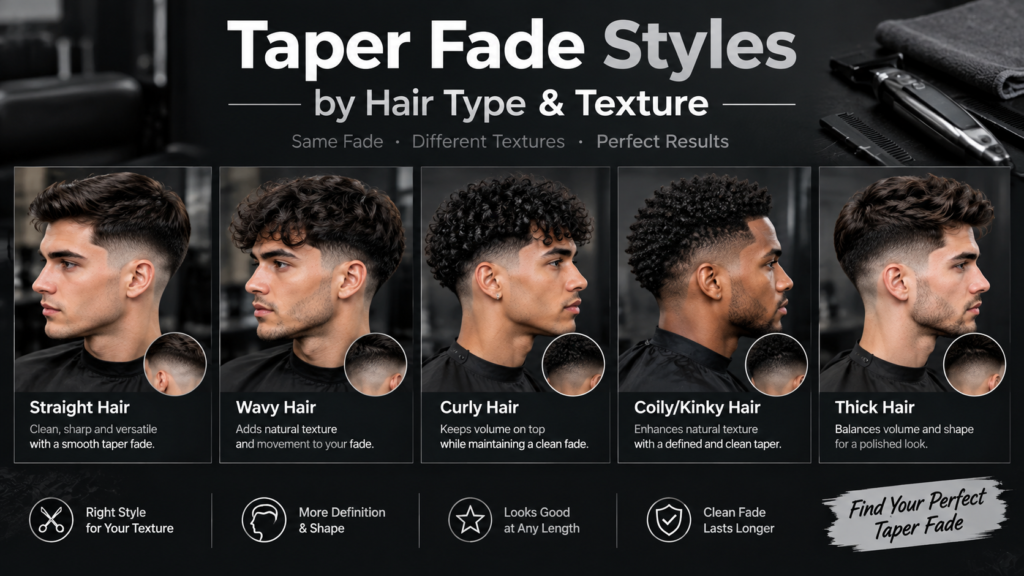
Your hair texture changes how a taper fade looks and how it grows out. Match the style to your texture for the best result. A cut that looks perfect on straight hair may need changes for curls or coils.
Texture also affects the products you use. Heavy gels, light creams, and matte clays each behave differently on different hair. The right product keeps the top sharp and the fade clean.
Taper Fade for Curly Hair
Curls and tapers go well together. The tight sides show off the volume on top. The contrast makes the curls look fuller and more defined.
- Keep 2–4 inches on top to show curl definition
- Try a mid taper with a curly fringe or a twist-out
- Use a leave-in cream to control frizz
Curly hair needs moisture. Apply cream to damp hair, and let it air dry or use a diffuser. Avoid brushing dry curls, which can create frizz and break the pattern.
Ask your barber to cut the top while the hair is dry if possible. This lets them see the true curl shape and avoid cutting too short.
Curly hair grows outward, not down, so the sides can look wide within weeks. A regular taper keeps the shape neat and stops the hair from spreading too far.
If you want a bolder look, add a high taper with a shaped top. If you prefer something calm, a low taper with natural curls looks soft and friendly.
Taper Fade for Straight Hair
Straight hair shows every line, so the blend needs to be clean. Small mistakes are easy to see, which means a skilled barber matters more here.
- A low or mid taper with a textured crop works well
- Add matte clay for a natural, lived-in finish
- Avoid very heavy gel, which can look flat
Straight hair can look thin on top if it is cut too evenly. Ask for texture on the top, using point cutting or a razor, so the hair has movement and volume.
A little sea salt spray or powder can add grip. These products help straight hair hold its shape without looking stiff or shiny.
Straight hair also reacts strongly to the weather. Humidity can make it flat or frizzy, so a light hairspray or a sea salt spray can help keep its shape through the day.
Blow-drying the top upward and back gives instant volume. A short session with the dryer, followed by a small amount of clay, is enough for most straight-haired men.
Taper Fade for Afro Hair
Afro-textured hair holds a sharp shape very well. That makes it ideal for detailed tapers. Fine lines, clean curves, and crisp edges stay in place for days.
- Popular choices: high taper with a twist top, sponge-twists, or a shaped-up hairline
- A crisp line-up (edge-up) makes the fade stand out
- Moisturize often, because dry hair breaks and looks dull
The line-up is a major part of the finished look. It frames the forehead and sharpens the temples, which makes the whole cut look fresh.
Moisture is the foundation of healthy coily hair. Use a water-based moisturizer and seal it with a light oil. Healthy hair also fades cleaner and grows back more evenly.
Afro hair also benefits from regular shape-ups. A line-up every two weeks keeps the edges crisp and the fade looking new. Your barber can use a trimmer or a razor for the sharpest lines.
If you wear waves, brush the hair in the same direction each day. Combine this with a durag at night. Over time, the waves become deeper and the fade looks cleaner.
Taper Fade for Asian Hair
Asian hair is often thick and straight, so it can stand up on the sides. A good taper keeps it flat and tidy. Without one, the sides can look bulky within a couple of weeks.
- A low taper with a side-swept fringe is a classic pick
- Ask your barber to remove bulk with thinning shears
- A light texturizing spray adds movement
Thick straight hair grows in a strong direction. A skilled barber cuts with that growth pattern so the sides lie flat and the fade looks even.
On top, a soft fringe or a two-block style with a taper looks clean. A small amount of paste or clay holds the shape without making it look heavy.
Asian hair also grows quickly, so a taper may need a refresh every three weeks. Regular trims stop the sides from puffing out and keep the shape crisp and tidy.
If you prefer a natural finish, ask for scissor-over-comb work instead of heavy clipper blending. This keeps the fade soft and helps the hair lie flat without looking too short.
20 Best Taper Fade Styles to Show Your Barber
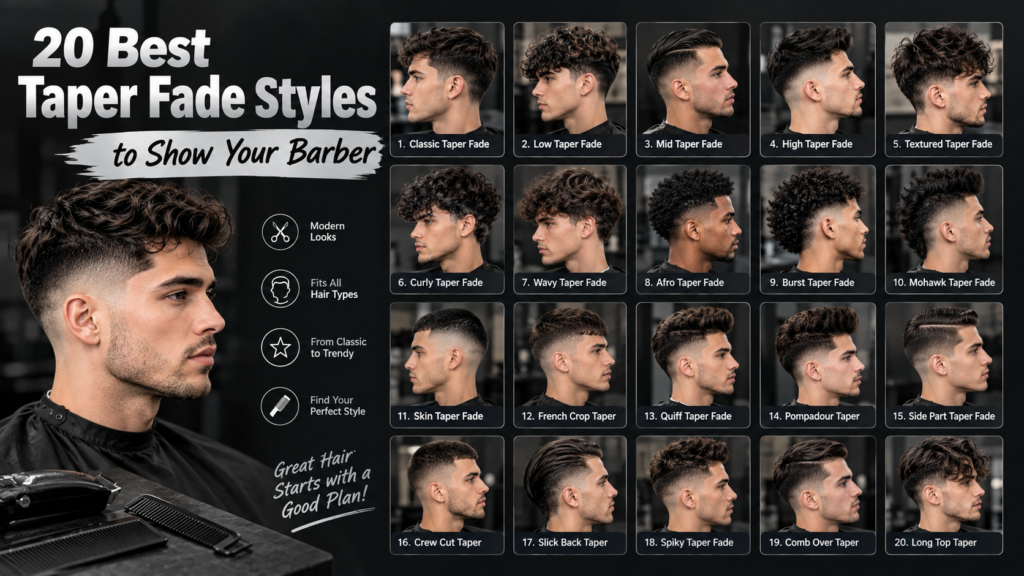
Here is a quick list of the top looks for 2026. Save this for your next visit. Each style below includes a short description, who it suits, and a simple tip for asking your barber.
The list is grouped by fade type, so it is easy to compare. Read through all twenty, then pick the two or three that match your hair, your face, and your daily routine.
1. Low Taper with a Classic Side Part
This is the timeless gentleman’s cut. The sides are tapered softly near the ear and neck, while the top is combed neatly to one side. A clean part line adds sharpness.
It works best for office settings and formal events. Medium-length straight or wavy hair holds a side part well.
Ask your barber for a low taper with a natural or hard part. Finish with a light pomade for a neat, slightly shiny look.
Maintenance: Low. Visit every four to six weeks, and comb the part daily so the line stays clear. This is one of the easiest cuts to keep looking professional through a busy work week.
2. Low Taper with a Textured Quiff
The quiff lifts the front hair upward and back, while the low taper keeps the sides tidy. The mix of volume and softness looks relaxed but stylish.
It suits men with medium to thick hair. It also works well for oval and long face shapes, since the height is modest.
Use matte clay and blow-dry the front upward for shape. Ask your barber to add texture on top so the quiff looks natural.
Maintenance: Low to medium. Trim every four weeks, and refresh the top texture at each visit. The quiff keeps its shape better when the sides stay short, so do not skip appointments.
3. Low Taper with a Beard
A low taper blends smoothly into a beard, especially at the sideburns and neckline. The hair and the beard look like one connected shape instead of two separate parts.
This style is ideal for men who want a groomed, mature look. It works with short, medium, or full beards.
Ask your barber to fade the beard into the taper at the sideburns. Keep the beard neckline clean, and trim it regularly to avoid a messy outline.
Maintenance: Low to medium. Trim the beard weekly at home, and see the barber every four weeks. Keeping the cheek line clean makes the blend look sharper and more deliberate.
4. Mid Taper with a French Crop
The French crop has a short, textured top with a straight fringe. Paired with a mid taper, it becomes a clean, low-effort style that looks sharp every day.
It suits thick, straight, or wavy hair. It also hides a receding hairline well, since the fringe covers the forehead.
Ask for a mid taper with a short, choppy fringe. Use a small amount of paste and push the hair forward.
Maintenance: Medium. Visit every three weeks, and use a small amount of paste each morning. The fringe should stay just above the eyebrows so it does not fall into your eyes.
5. Mid Taper with a Short Pompadour
A short pompadour lifts the front upward and sweeps it back. With a mid taper, the shape looks polished and confident without being over the top.
It works well for men who want a retro feel with a modern finish. Medium to thick hair gives the best volume.
Use a blow-dryer and a strong-hold pomade. Ask your barber to keep the top about three to four inches long at the front.
Maintenance: Medium. A fresh cut every three to four weeks keeps the pompadour shape strong. Wash the pomade out at night to protect the scalp and keep the hair healthy.
6. Mid Taper with Curly Top
Curls on top and a mid taper on the sides create a balanced, eye-catching shape. The tight sides make the curls look bigger and more defined.
It suits natural curls of all types, from loose waves to tight coils. The style also needs very little product when the curls are healthy.
Ask your barber to shape the top so the curls sit evenly. Use a curl cream and avoid brushing the hair when dry.
Maintenance: Medium. Moisturize the curls daily and trim the sides every three to four weeks. Refreshing the curls with a water spray in the morning brings back their bounce.
7. Mid Taper with a Comb-Over
The comb-over sweeps the top to one side with a clear part. Combined with a mid taper, it feels modern and professional instead of old-fashioned.
It works for men with straight or slightly wavy hair. It is also a smart choice for anyone who wants a neat look at work.
Ask for a mid taper with a shaved or defined part. Use a light pomade to keep the top smooth and controlled.
Maintenance: Medium. Keep the part sharp with regular trims and use a fine comb daily. A neat comb-over depends on good hair health, so avoid heat damage from styling tools.
8. High Taper with a Pompadour
This is a bold, high-contrast look. The high taper makes the sides very short, and the pompadour rises tall and full on top.
It suits round faces and men who want to stand out. It needs regular trims and daily styling.
Use a blow-dryer, a round brush, and a firm pomade. Ask your barber to leave enough length on top to build real height.
Maintenance: High. Plan a visit every two to three weeks, and style the top each morning. The shape only looks its best when both the volume and the fade are fresh.
9. High Taper with Twists
Twists on top, paired with a high taper, show off texture and sharp contrast. The tight sides frame the twists and make them look neat.
This style suits coily and Afro-textured hair. It looks great with a crisp line-up and a clean hairline.
Ask for a high taper with a shaped-up front. Keep the twists moisturized, and re-twist regularly to avoid frizz.
Maintenance: High. Re-twist the top on a regular schedule, and refresh the line-up every two weeks. Sleep with a scarf or bonnet to protect the twists and keep the fade crisp.
10. High Taper with a Fringe
A short fringe over the forehead, combined with a high taper, gives a youthful, fashion-forward feel. The shape is simple and easy to wear.
It suits straight and thick hair. It is popular with younger men who want a modern look with low styling time.
Ask for a high taper with a soft, textured fringe. A little clay or paste keeps the fringe in place.
Maintenance: Medium to high. Trim every two to three weeks so the sides stay short and even. A fresh fringe cut keeps the front looking neat and stops it from getting heavy.
11. Skin Taper with a Buzz Cut
A skin taper on the sides and a short buzz on top make one of the cleanest cuts possible. There is almost no styling needed.
It suits men who want a very low-effort haircut that still looks sharp. It also shows off head shape, so it works best when you like your profile.
Ask for a skin taper with a number two or three on top. Keep the lines fresh with regular visits.
Maintenance: High. Skin fades soften fast, so plan a visit every two weeks. The buzz cut on top grows evenly, and this keeps the whole shape looking clean and smooth.
12. Skin Taper with a Long Top
This style pairs bare-skin sides with a longer top, such as a slick-back or a swept quiff. The contrast between the two lengths is dramatic and stylish.
It suits men with thick hair who enjoy daily styling. It looks especially good with a slightly messy, textured finish.
Ask for a skin taper and tell your barber how long you want the top. Use a strong wax or clay to control the length.
Maintenance: High. Book every two to three weeks, and wash and condition the long top regularly. Healthy hair on top makes the contrast with the bare sides look even stronger.
13. Burst Taper with a Mohawk
The burst taper curves around the ear and leaves the back longer. When paired with a mohawk, the whole shape looks bold and creative.
It suits men who like an edgy, artistic look. Thick hair holds a mohawk best.
Ask for a burst fade with a faux-hawk or a short mohawk. Use a strong gel or paste to keep the center standing.
Maintenance: Medium. Visit every three weeks to keep the curve around the ear clean. Style the top daily with a strong-hold product so the mohawk stays upright and sharp.
14. Burst Taper with a Mullet
The modern mullet is short on top, longer at the back, and shaped with a burst taper. The curve around the ear keeps it neat and intentional.
It suits men with wavy or straight hair who want a trendy, confident style. It works well with a small amount of texture spray.
Ask for a burst taper with a textured mullet. Trim the back every six weeks to keep the shape balanced.
Maintenance: Medium. Trim the back every six weeks, and refresh the sides every three. This keeps the mullet balanced and prevents it from looking overgrown or messy.
15. Drop Taper with a Wavy Top
A drop taper follows the curve of the skull behind the ear. With natural waves on top, the cut looks smooth, flowing, and full of shape.
It suits men with wavy hair who want movement and structure. A light cream keeps the waves soft.
Ask for a drop taper and let the waves sit naturally. A sea salt spray can add extra texture.
Maintenance: Medium. The drop curve needs a refresh every three weeks. Moisturize the waves daily, and brush them gently in one direction to keep the pattern smooth.
16. Drop Taper with a Slick-Back
The slick-back pulls the top hair straight back, and the drop taper follows the head’s curve. Together, they give a sleek, refined look.
It suits straight or slightly wavy hair. It also fits formal settings and evening events.
Ask for a drop taper and a longer top. Use a medium-hold pomade and comb the hair back neatly.
Maintenance: Medium. Every three to four weeks, tidy the curve behind the ear. Wash and condition the top regularly, since a slick-back shows dryness and frizz very quickly.
17. Shadow Taper with a Messy Crop
The shadow taper blends softly, and a messy crop adds a relaxed, lived-in top. The result is casual and easy to wear.
It suits men who want a low-effort haircut that still looks styled. It works well for thick, straight, or wavy hair.
Ask for a shadow taper with a short, textured crop. Use a small amount of clay and tousle the top with your fingers.
Maintenance: Low to medium. This cut hides regrowth well, so four to five weeks between visits is fine. Try not to overuse product, which can weigh the messy crop down.
18. Shadow Taper with a Natural Afro
The shadow taper creates a soft edge around a full, natural afro. It frames the hair without cutting into its volume.
It suits men who love their natural texture and want a clean shape. The soft blend also grows out beautifully.
Ask your barber to shape the afro and taper the sides gently. Keep the hair moisturized and pick it out to maintain fullness.
Maintenance: Low to medium. Detangle and moisturize the afro daily, and see the barber every four to five weeks. A gentle shape-up keeps the outline neat without much effort.
19. Temple Fade with a Line-Up
The temple fade cleans the sideburns and temples, and a line-up sharpens the front hairline. It is a small change that makes a big difference.
It suits almost any hair type. It is a good pick for men who want a fresh look with very little change in length.
Ask for a temple fade with a crisp line-up. Refresh it every three to four weeks to keep the edges sharp.
Maintenance: Low. Refresh the line-up every three to four weeks. This is one of the cheapest and quickest upgrades, and it suits men who want a tidy look with minimal fuss.
20. Temple Fade with a Full Beard
A temple fade connects neatly with a full beard at the sideburns. The face looks balanced, and the beard seems part of the haircut.
It suits men with thick beards who want a smooth, natural finish. It works with short, medium, and long hair.
Ask your barber to blend the beard into the temple fade. Use beard oil to keep the beard soft and healthy.
Maintenance: Low to medium. Visit every four weeks and trim the beard edges at home in between. A clean beard line is what makes this temple fade look complete and refined.
How to Choose the Right Taper Fade
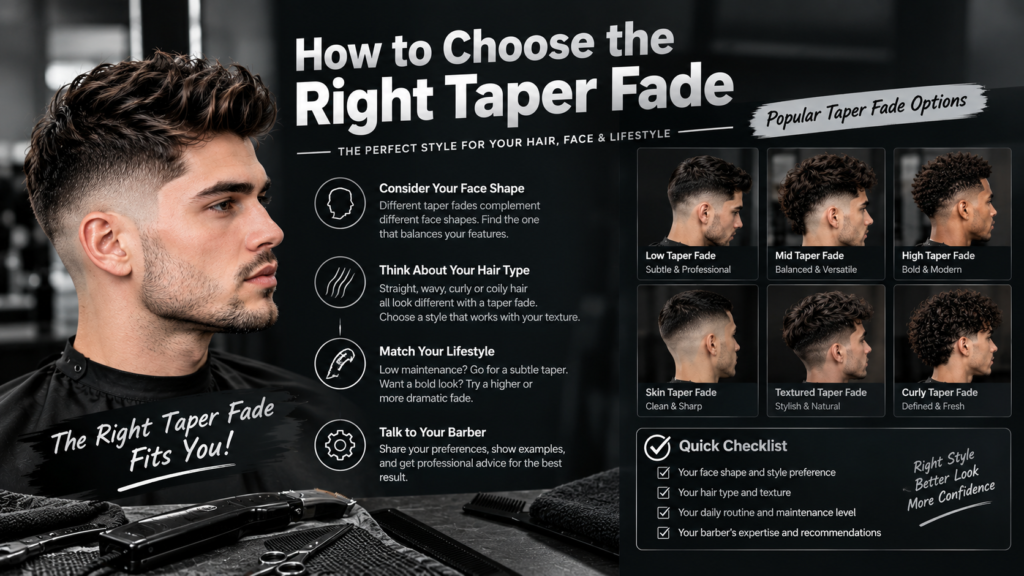
Ask yourself these three questions before you sit in the barber’s chair. The answers will narrow your options quickly. They also stop you from choosing a style that looks good online but does not suit your daily life.
Take a few minutes to think about each one honestly. A great haircut is not only about looks. It is also about how much time, money, and effort you are willing to spend on it.
What’s My Face Shape?
Round faces suit high tapers. The extra height on top and the short sides make the face look longer and more defined. Pair a high taper with a pompadour or a quiff for the best effect.
Long faces suit low tapers. A low fade keeps width on the sides, which balances a longer face. Avoid very tall tops, since they add even more length.
Oval faces are the most flexible. Almost any height works, but a mid taper is a safe starting point. Square faces look strong with a mid or high taper and a textured top.
Heart-shaped faces suit a mid taper with a fringe or side-swept top. This softens the forehead and balances the narrower chin.
How Much Time Do I Have?
Low tapers need less upkeep than high or skin tapers. If your schedule is busy, a low or shadow taper is the smartest pick. You can stretch visits to five or six weeks.
High and skin tapers need a fresh cut every two to three weeks. If you enjoy the barbershop routine, this is not a problem. If not, it can become expensive and tiring.
Daily styling time matters too. A buzz cut takes almost no effort, while a pompadour or a curly top needs a blow-dryer and product. Choose a top style that fits your morning routine.
What’s My Dress Code?
Office settings usually suit low or mid tapers. These cuts look neat, professional, and calm. A side part or a comb-over adds a formal touch.
Creative jobs and casual settings allow bolder choices. A high taper, a burst fade, or a skin fade with a textured top can show personality without causing problems.
If you work in a strict or uniformed environment, check the grooming rules first. A subtle taper is nearly always accepted, while dramatic fades may not be.
A Simple Face Shape Guide
Not sure about your face shape? Look in the mirror with your hair pushed back. Compare the width of your forehead, cheekbones, and jaw. The widest point tells you the shape.
If your forehead and jaw are similar, and your face is not very long, you likely have an oval or round shape. If your jaw is wider than your forehead, you may have a square shape.
Once you know the shape, choose the fade height that adds balance. Height on top and short sides make the face look longer. Fuller sides make it look wider.
Remember that these are guidelines, not rules. Many men break them and still look great. Your confidence in the cut matters as much as the shape.
How to Talk to Your Barber
Clear communication is the best way to avoid a bad haircut. Bring two or three photos of the style you want. Pictures remove guesswork and give your barber a shared target.
Use exact words. Say “mid taper fade” instead of “short on the sides.” Then describe the top length in inches or with a simple hand gesture.
Tell your barber about your daily routine. If you do not style your hair, say so. A good barber will adjust the cut so it looks good with minimal effort.
Finally, ask questions during the cut. If the fade looks too high or too low, speak up early. Most barbers appreciate a client who is clear and engaged.
Styling and Aftercare Tips
A great fade lasts longer with the right care. Wash your hair two or three times a week with a gentle shampoo. Over-washing can dry the scalp and make the hair look dull.
Use products that match your texture. Clay and paste suit short, textured tops. Pomade suits slick-backs and side parts. Creams suit curls and waves.
Protect the fade at night. A soft pillowcase or a durag helps hold the shape and reduces frizz. This is especially useful for waves, twists, and coily hair.
Book your next appointment before you leave the shop. A regular schedule keeps the taper sharp and prevents last-minute panic before an event.
Frequently Asked Questions
What Is a Mid Taper Fade?
A mid taper fade starts blending around the middle of the ear or temple. It sits between a subtle low taper and a bold high taper. This makes it the most balanced and versatile choice.
It works with many top styles, including crops, quiffs, and curls. It also suits both work and casual settings. Most men need a trim every three to four weeks.
What Is a High Taper Fade?
A high taper fade begins high on the sides, near the temples. It gives a sharp, bold contrast with the longer hair on top. The look is clean, modern, and full of attitude.
It needs regular maintenance, usually every two to three weeks. It suits round faces and men who like a strong, confident style.
What Is a Taper Fade Haircut for Black Men?
It is a haircut where coily or curly hair is shaped short at the sides and nape and stays fuller on top. It is often finished with a crisp line-up.
The cut shows off natural texture and creates a clean outline. It can be styled with twists, waves, sponge curls, or a natural afro.
What Is a Low Taper Fade?
A low taper fade starts just above the ear and follows the natural hairline. It is the most subtle and easiest to maintain of all the taper types.
It is a great first fade for beginners. It also suits formal settings, since the change in length is small and neat.
What Are the Different Types of Taper Fades for Black Men?
Popular options include the low, mid, and high taper, the temple fade, and the drop fade. Each one gives a different level of contrast and detail.
They often pair with twists, waves, sponge curls, or a natural afro. A sharp line-up and a clean neckline complete the look.
What Is the Difference Between a Haircut Taper and a Fade?
A taper shortens hair gently at the neckline and sideburns. A fade blends much shorter, often down to the skin, across more of the head.
A taper is subtle and classic, while a fade is bold and modern. A taper fade combines both, giving you a clean blend with more hair left on the sides.
Conclusion
The taper fade is popular because it adapts to you. Choose a low taper for a soft, professional finish, a mid taper for balance, or a high taper for something bold. Each height gives a different mood, and each one can be customized with the technique variants in this guide.
The best haircut is the one that fits your hair, your face, and your routine. Think about upkeep before you decide. A cut that looks great but needs constant visits may not suit a busy life.
Take a photo to your barber, name the height and the technique, and describe your top length. That gives them a clear plan. Pick one from the list above and try it at your next appointment.





1 thought on “Types of Taper Fade: 20 Best Styles Every Man Should See (2026)”