
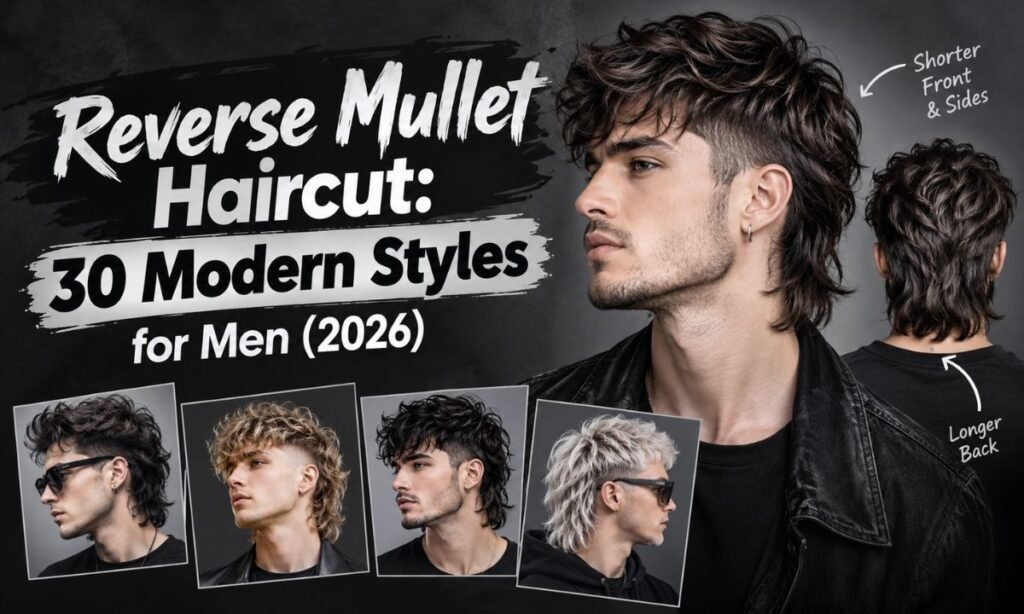
The classic mullet puts the length at the back. The reverse mullet haircut flips that idea completely. You keep the length, volume, and attitude on top and at the front. The back and sides stay short, tight, or faded.
It is bold, but it is also easier to wear than most people expect. A good barber can make it sharp for the office or wild for a night out.
This guide covers everything you need before booking your next appointment. You will learn what the cut is, why it is trending, and which of the 30 modern reverse mullet styles for men fits your hair type. You will also get styling steps, a barber script, and quick answers to the most common questions.
What Is a Reverse Mullet?
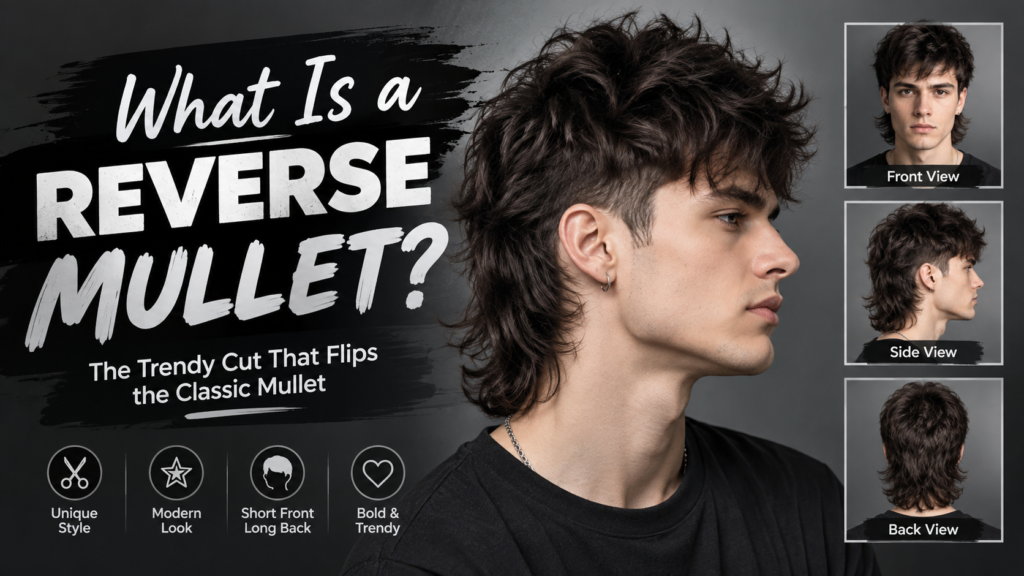
A reverse mullet is a haircut with longer hair on the top and front, and short hair at the back and sides. It is the opposite of the traditional “business in the front, party in the back” mullet.
Think of it as a tall, textured top paired with a clean, tapered nape. The contrast between the two lengths is what gives the style its look.
Here are the core features:
- Longer crown and fringe: Hair on top is left long enough to style, sweep, or tousle.
- Short or faded back: The nape is cut close, often with a taper or skin fade.
- Visible contrast: The transition between long and short sections is the signature of the cut.
- Flexible styling: You can wear it messy, slicked, curly, or layered.
Some barbers also call it a “reverse fade mullet” when a fade is used to blend the sides and back. The words change, but the shape stays the same: long on top, short behind.
Reverse Mullet vs. Classic Mullet
| Feature | Classic Mullet | Reverse Mullet |
| Top and front | Short | Long |
| Back | Long | Short or faded |
| Sides | Short or tapered | Short, tapered, or faded |
| Overall vibe | Retro, rebellious | Modern, fashion-forward |
| Best for | Men who want length at the neck | Men who want volume and styling room on top |
| Maintenance | Moderate | Moderate to high (clean nape needs upkeep) |
Why Is the Reverse Mullet Trending in 2026?
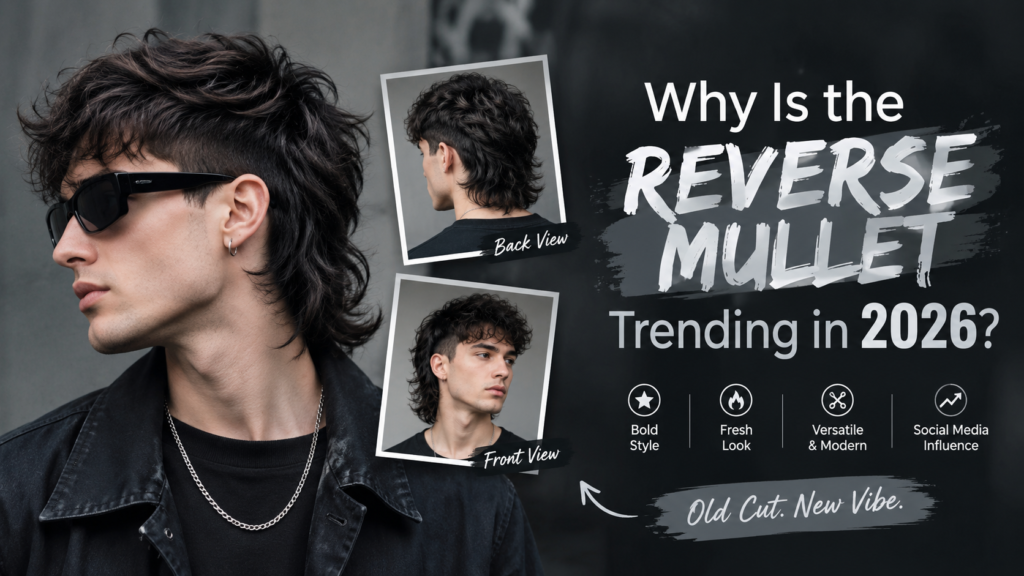
Three things are pushing this haircut forward.
1. The mullet revival created a gap: After years of classic and modern mullets, men wanted something different. The reverse version feels fresh without being unrecognizable.
2. Fades and texture are everywhere: Barbers have spent the last few years perfecting tapers, drop fades, and textured crops. The reverse mullet uses all of those skills in one cut.
3. Social media rewards contrast: A tall, textured top above a sharp fade looks great on camera from the front, side, and back. That makes it easy to share and easy to copy.
There is also a cultural shift. Men are moving away from strict “one safe haircut” rules. Many now choose styles that show personality, and this one does exactly that.
Key Benefits of a Reverse Mullet
Is this cut worth it? Here is what you gain:
- Styling freedom: Long top hair can be pushed up, back, forward, or to the side.
- Cooler neck in hot weather: A short back keeps heat and sweat down.
- Works with many textures: Straight, wavy, curly, thick, and even fine hair can work with the right layering.
- Face-shape flexibility: Volume on top can lengthen a round face, and a soft fringe can balance a long one.
- Easy to tone down: Ask for a shorter top and a soft fade for a more office-friendly version.
- Strong first impression: It looks deliberate, not accidental.
One honest note: the short back needs frequent cleanup. Plan on a trim every 3 to 5 weeks.
See More: 40 Best Buzz Mullet Haircuts – Modern Men’s Styles (2026)
30 Reverse Mullet Haircut Styles for Men
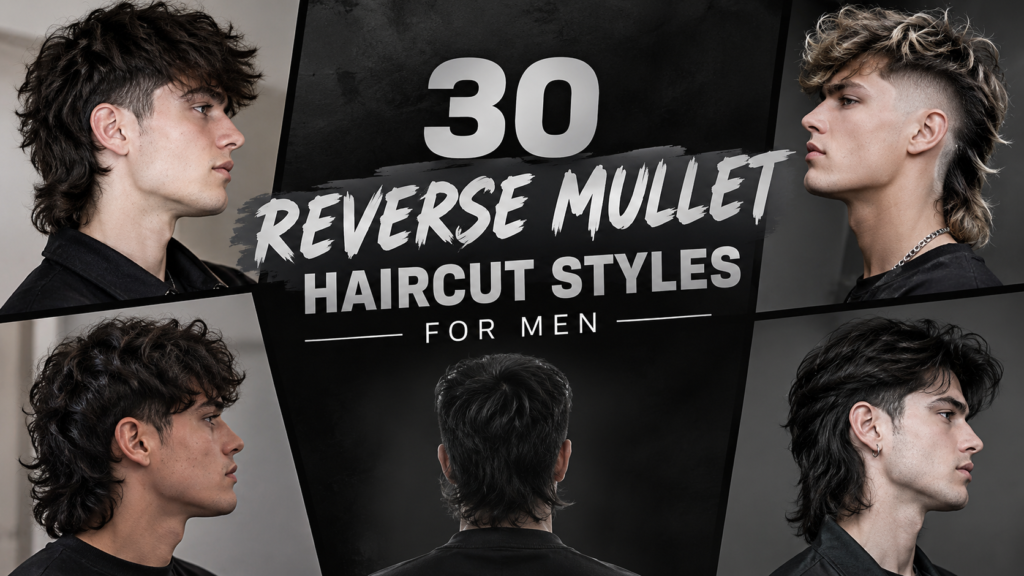
Use this section like a menu. Each style includes a short description, who it suits, and a quick styling tip.
1. Classic Reverse Mullet
This is the original version. The top is medium to long, the sides are short, and the back is tapered cleanly into the neck.
Best for: Men new to the cut who want a balanced look.
Quick tip: Ask for a gentle taper so the change in length looks natural.
2. Textured Reverse Mullet
Here, the barber uses point cutting or a razor to add movement to the top. The result looks lived-in rather than neat.
Best for: Men with straight or slightly wavy hair who want a casual feel.
Quick tip: Add a matte paste and scrunch it into the roots.
3. Reverse Mullet Fade
The sides and back are blended using a fade, from skin to a few millimeters. The long top sits above the clean transition.
Best for: Men who like sharp, modern lines.
Quick tip: A mid fade keeps the cut wearable. A high fade is more dramatic.
4. Curly Reverse Mullet
Natural curls on top get room to bounce, while the back is tightened. This style shows off the curl pattern beautifully.
Best for: Men with 2C to 3B curls.
Quick tip: Cut curls dry or ask the barber to check shape while they are dry.
5. Trendy Reverse Mullet for Men 2026
This version mixes a soft fringe, light layers, and a low taper. It feels current without being extreme.
Best for: Men who follow trends but want an everyday look.
Quick tip: Keep the length at about 3 to 4 inches on top.
6. Long Reverse Mullet
The top falls to the cheekbones or jawline. The back stays short, which creates a strong, almost cinematic contrast.
Best for: Men with healthy, thick hair and patience for styling.
Quick tip: Use a leave-in conditioner to control frizz.
7. Short Reverse Mullet
A compact version with a top about 2 to 3 inches long. Think of it as a textured crop with a slightly longer front.
Best for: Men who want a subtle entry point.
Quick tip: Use a light clay for a clean, workday finish.
8. Wavy Reverse Mullet
Waves add a natural body to the longer top section. The tight back keeps the shape from looking heavy.
Best for: Men with wavy hair who dislike heavy products.
Quick tip: Apply sea salt spray on damp hair and let it air dry.
9. Shaggy Reverse Mullet
Choppy layers and uneven ends give this cut a relaxed, rock-inspired look. The sides stay short to keep it from feeling messy overall.
Best for: Men who like a laid-back, creative style.
Quick tip: Skip the comb. Use your fingers and a bit of texture powder.
10. Reverse Mullet with Bangs
A full fringe sits across the forehead while the back stays tight. It frames the eyes and gives the cut a bold, graphic shape.
Best for: Men with a larger forehead or strong eyebrows.
Quick tip: Ask for the bangs to be cut slightly textured, not blunt.
11. Undercut Reverse Mullet
The sides and back are shaved or clipped very short, with a clear disconnect from the long top. This is the most dramatic contrast of all.
Best for: Men with confident style and thick hair.
Quick tip: Slick the top back for a sharp evening look.
12. Modern Reverse Mullet
This version blends everything: a soft fade, light layers, and a movable fringe. It is the “safe but stylish” choice.
Best for: Men who want a cut that suits many occasions.
Quick tip: Use sea salt spray for texture and a light cream for control.
13. Layered Reverse Mullet
Layers throughout the top add lift and shape. Instead of one flat length, the hair moves in steps.
Best for: Men with thick or heavy hair that feels bulky.
Quick tip: Ask for internal layers to remove weight without losing length.
14. Reverse Mullet for Straight Hair
Straight hair can look flat, so the barber builds shape with layers and texture. The short back also helps the top look fuller.
Best for: Men with medium to coarse straight hair.
Quick tip: Blow-dry upward at the roots for lift.
15. Reverse Mullet for Thick Hair
Thick hair holds shape well, which makes this cut look intentional. The barber thins out bulk while keeping length.
Best for: Men with dense hair who want volume without puffiness.
Quick tip: Use a strong-hold clay and avoid over-applying.
16. Reverse Mullet for Fine Hair
Fine hair needs a smart approach. Keep the top slightly shorter and use blunt ends to create the illusion of thickness.
Best for: Men with thin strands or a lower hair count.
Quick tip: Use a volumizing powder rather than a heavy wax.
17. Reverse Mullet with Taper Fade
A taper fade only blends the hair near the ears and neckline. It is subtle and clean.
Best for: Men who want a professional look.
Quick tip: Ask for a “low taper” to keep the sides soft.
18. Punk Reverse Mullet
This one is loud. The top is spiked, jagged, or pushed forward, and the sides are cropped tight.
Best for: Men who love alternative or music-driven style.
Quick tip: Use a strong gel or hairspray for structure.
19. Messy Reverse Mullet
The messy version looks like you just woke up, but in a good way. The top is pushed in different directions.
Best for: Men who want low effort and a relaxed feel.
Quick tip: Rough-dry your hair with a towel, then add paste.
20. Reverse Mullet with Highlights
Lighter streaks on the longer top section show off the texture. The dark short back adds extra contrast.
Best for: Men who want color without a full dye job.
Quick tip: Ask for face-framing highlights near the fringe.
21. Asian Reverse Mullet
Straight, dense hair is common in many Asian hair types, and it takes this cut very well. A layered top with a faded back creates clean movement.
Best for: Men with thick, straight black hair.
Quick tip: Ask for layers and texture to stop the top from sitting flat.
22. Reverse Mullet Wolf Cut
The wolf cut brings heavy layering and a shaggy shape to the top. With a short back, it becomes a hybrid of two trends.
Best for: Men with thick or wavy hair.
Quick tip: Use a texturizing spray and let the layers fall naturally.
23. Reverse Mullet with Curtain Bangs
The fringe is parted in the middle and sweeps to each side. It gives a softer, 90s-inspired frame around the face.
Best for: Men with oval or heart-shaped faces.
Quick tip: Use a round brush while blow-drying to shape the sweep.
24. Edgy Reverse Mullet
This cut uses sharp angles, a hard fade, and a slightly disconnected top. It looks strong and a little aggressive.
Best for: Men who want a statement cut.
Quick tip: Ask for a razor finish on the neckline.
25. Colored Reverse Mullet
Blue, silver, ash blonde, or even burgundy can turn this cut into a fashion piece. The long top shows off the color well.
Best for: Men who enjoy experimenting.
Quick tip: Use color-safe shampoo and a weekly mask.
26. Reverse Mullet with Soft Layers
Soft layers keep the top flowing instead of choppy. It feels smoother and more polished than the shaggy version.
Best for: Men who want a gentle, modern shape.
Quick tip: Use a light cream to avoid greasy-looking strands.
27. Skin Fade Reverse Mullet
The sides and back fade down to bare skin. It makes the long top look even taller and cleaner.
Best for: Men who like a crisp, high-contrast finish.
Quick tip: Book a touch-up every 2 to 3 weeks to keep the skin fade fresh.
28. Drop Fade Reverse Mullet
A drop fade curves down behind the ear, following the head’s shape. It adds a stylish arc to the back.
Best for: Men with a rounder skull shape.
Quick tip: Ask for the curve to follow the natural line of your ear.
29. Side-Swept Reverse Mullet
The long top is combed or brushed to one side, which gives a neat, slightly vintage look.
Best for: Men who want a mix of formal and modern.
Quick tip: Use a light pomade and a fine-tooth comb for shape.
30. French Crop Reverse Mullet
A short, textured fringe is paired with a slightly longer crown and a tight taper. It is clean and easy to manage.
Best for: Men with a busy routine and straight or wavy hair.
Quick tip: Use a matte clay and push the fringe forward.
Quick Style Chooser
Not sure which of the 30 styles to pick? Use this table.
| Your Goal | Best Reverse Mullet Style |
| Office-friendly | Short, Taper Fade, French Crop |
| Maximum volume | Layered, Long, Thick Hair version |
| Low maintenance | Messy, Textured, Wavy |
| Bold statement | Punk, Edgy, Colored, Undercut |
| Curly hair | Curly, Wavy, Wolf Cut |
| Fine hair | Fine Hair version, Short, Soft Layers |
| Face framing | Bangs, Curtain Bangs, Side-Swept |
| First-timer | Classic, Modern, Trendy 2026 |
Does a Reverse Mullet Work with Curly Hair?
Yes, and often better than with straight hair. Curls add natural volume, so the long top looks full without much effort. The short back also keeps the curls from feeling heavy.
Here is how to get the best result:
- Find a barber who cuts curls: Not every barber handles curl patterns well.
- Keep enough length: Curls shrink, so leave 4 to 5 inches before the cut.
- Fade the back, not the top: This keeps the curl shape clear.
- Moisturize daily: Dry curls look frizzy and lose definition.
- Diffuse, don’t brush: A diffuser keeps curls soft and bouncy.
If you have tight coils, ask for a high-top version with a fade. It follows the same shape and looks great.
How to Style a Reverse Mullet
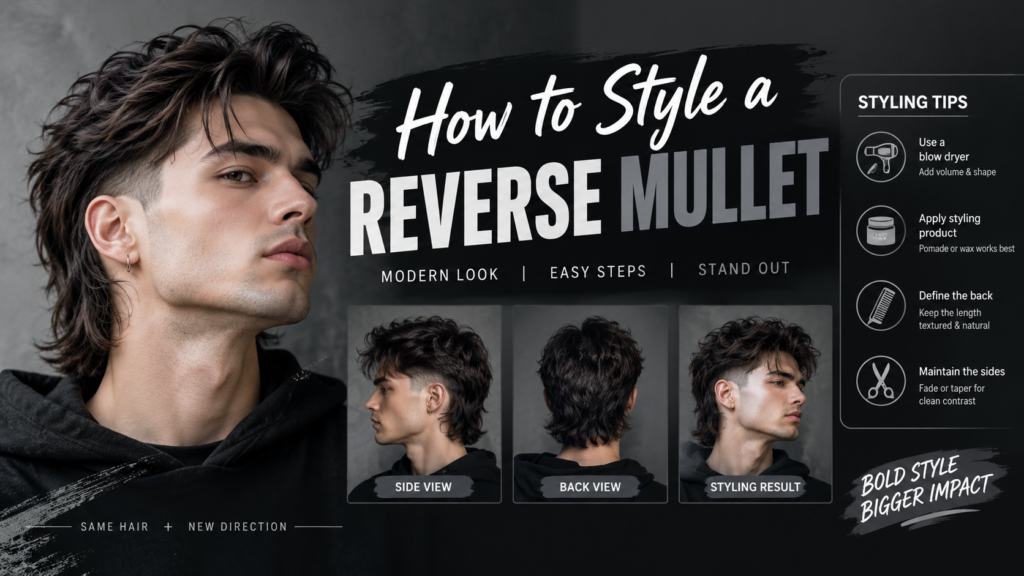
Styling is simple once you know the three main steps. Most men need only five minutes.
Use a Texturizing Product
Texture is what makes this cut look modern. Without it, the top can look flat or boring.
Pick one product based on your goal:
| Product | Best For | Finish |
| Matte clay | Thick or straight hair | Strong hold, no shine |
| Sea salt spray | Wavy or fine hair | Light, beachy texture |
| Paste | Messy, textured looks | Flexible hold |
| Pomade | Slicked or side-swept looks | Shiny, neat finish |
| Texture powder | Fine hair | Instant lift |
Start with a pea-sized amount. Rub it between your palms and work it from the roots to the ends.
Add Volume
Volume is the heart of this haircut. It balances the short back and makes the top look intentional.
Try this simple routine:
- Towel-dry your hair until it is damp.
- Spray a light volumizing mist at the roots.
- Blow-dry with your head tilted forward.
- Lift the hair with your fingers as you dry.
- Finish with a cool shot of air to set the shape.
For fine hair, a volumizing powder at the roots can make a big difference.
Maintain Regular Trims
The short back and sides lose their sharpness quickly. After two weeks, the fade begins to grow out. After four to five weeks, the contrast starts to look soft.
Use this schedule as a guide:
| Haircut Type | Trim Frequency |
| Skin fade or high fade | Every 2 to 3 weeks |
| Taper fade | Every 3 to 4 weeks |
| Longer, softer styles | Every 4 to 6 weeks |
Between visits, you can trim the neckline lightly at home. For the top, only cut it if you can see split ends.
How to Choose the Right Reverse Mullet for Your Face Shape
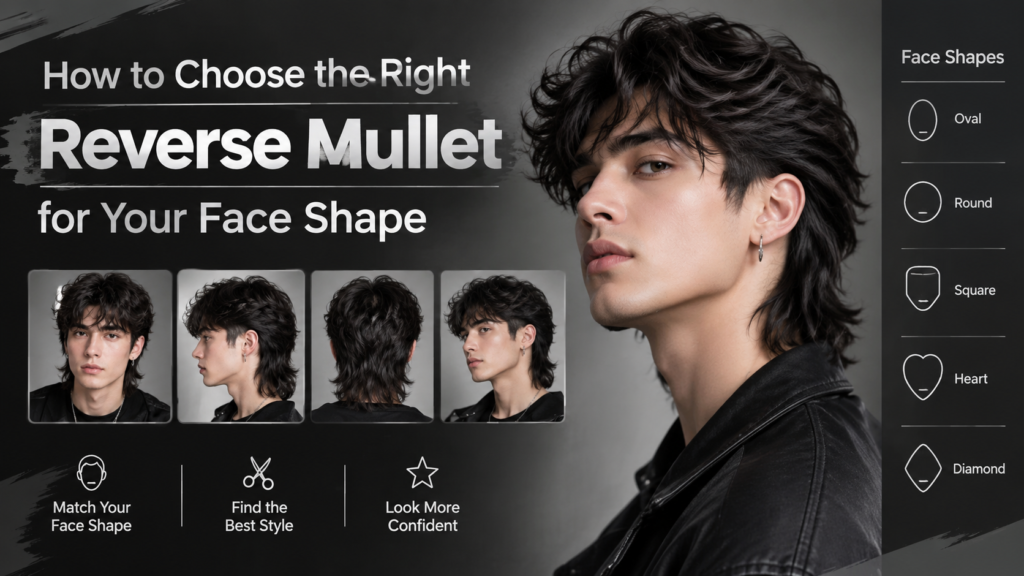
The right fringe and fade height can improve your overall look. Here is a simple guide:
| Face Shape | What Works Best |
| Oval | Almost any style, especially layered or textured versions |
| Round | Tall volume on top, high taper on sides |
| Square | Soft fringe or curtain bangs to soften the jawline |
| Heart | Side-swept or curtain bangs with a low taper |
| Long | Fringe or bangs and less height on top |
What to Tell Your Barber
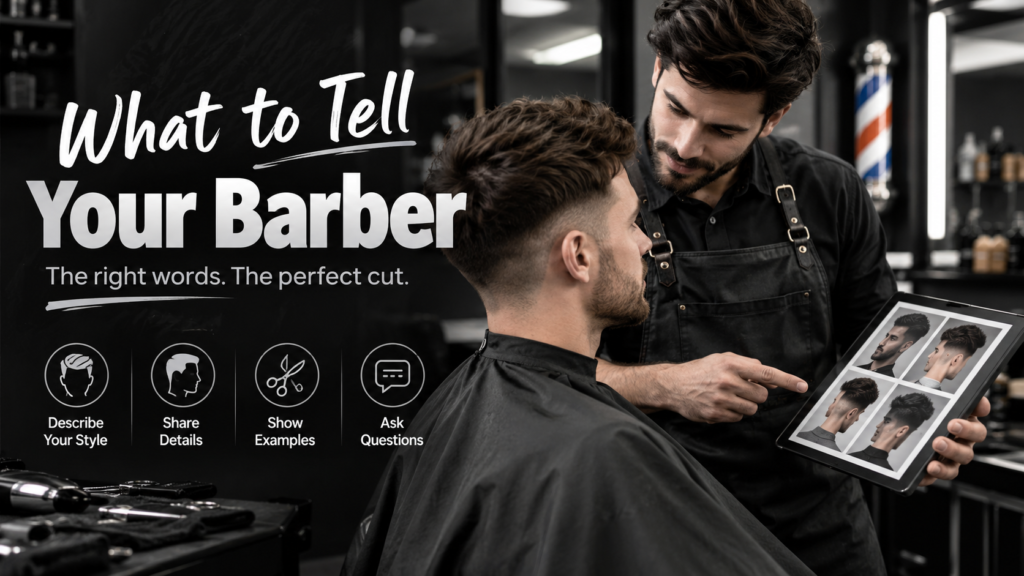
A clear request saves you from a bad haircut. Bring a photo and use these points:
- Top length: Say “3 to 4 inches” instead of “medium.”
- Fade type: Say “low taper,” “mid fade,” or “skin fade.”
- Back shape: Say “tapered nape” or “rounded neckline.”
- Fringe: Say “textured fringe” or “curtain bangs” if you want one.
- Texture: Mention if you want layers, razor cutting, or point cutting.
A quick script you can use:
“I want a reverse mullet with a mid fade on the sides and back, about 4 inches on top, and a textured fringe. Please add some layers so it moves naturally.”
Reverse Mullet Pros and Cons
Every haircut has trade-offs. Here is an honest look before you commit.
| Pros | Cons |
| Highly versatile top section | Short back needs frequent cleanup |
| Looks modern and confident | Can feel awkward during grow-out |
| Works on many hair textures | Needs a skilled barber for clean blending |
| Easy to dress up or down | Fine hair may need extra volume products |
| Cooler and lighter at the neck | Extreme versions may not suit strict dress codes |
If the cons are manageable for you, this cut is worth trying.
Who Should Get a Reverse Mullet?
This haircut suits more men than you might think. It works best if:
- You have at least 3 inches of usable length on top.
- You enjoy playing with your hair in the morning.
- You like fades and clean lines around the neck.
- You are happy to visit the barber every month.
It may not be the best fit if you prefer a “wash and go” routine with zero styling. In that case, choose a short or messy version, which needs far less effort.
Best Reverse Mullet by Hair Type
Hair texture changes how the cut sits. Use this guide to match the style to your strands.
| Hair Type | Recommended Style | Why It Works |
| Straight and thick | Layered, Undercut, Thick Hair version | Layers remove bulk and add movement |
| Straight and fine | Short, French Crop, Fine Hair version | Shorter length looks fuller |
| Wavy | Wavy, Shaggy, Wolf Cut | Natural bends add texture |
| Curly | Curly, Textured, High Fade version | Curls give instant volume |
| Coily | High-top with faded back | Shape stays defined and tidy |
| Thinning | Short, Textured, Taper Fade | Short sides draw attention away from thin areas |
Daily Hair Care Routine for a Reverse Mullet
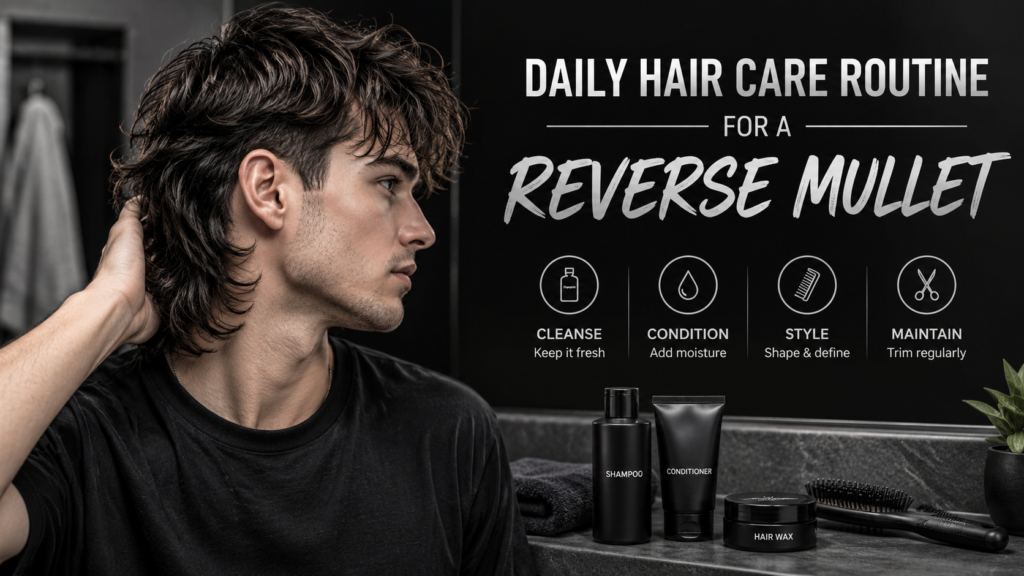
Good styling starts with healthy hair. A simple routine keeps the long top soft and the short back clean.
- Wash 2 to 3 times a week: Daily washing can dry out longer hair.
- Use a conditioner every time: Focus on the mid-lengths and ends, where hair is oldest.
- Add a leave-in product: This is especially useful for wavy and curly hair.
- Use a heat protectant: Apply it before blow-drying to prevent damage.
- Use a wide-tooth comb or your fingers: This prevents breakage and keeps the style relaxed.
- Clean the neckline weekly: A small trimmer keeps stray hairs away between haircuts.
A weekly deep conditioning mask also helps. It keeps color-treated and highlighted versions looking fresh.
First-Time Tips Before You Book
- Grow your top for 6 to 8 weeks first. More length gives your barber more to work with.
- Collect three photos. Show the front, side, and back views.
- Be honest about your routine. Tell your barber how much time you spend styling.
- Start with a taper, not a skin fade. You can always go sharper later.
- Ask for a consultation. A good barber will check your hairline, crown, and growth pattern first.
Common Mistakes to Avoid
- Cutting the top too short. You lose the contrast that defines the style.
- Using heavy wax on fine hair. It weighs the hair down.
- Skipping the neckline cleanup. A messy nape ruins the look.
- Ignoring hair texture. Straight, wavy, and curly hair need different layering.
- Overstyling. The best versions look relaxed.
Frequently Asked Questions
What Is a Reverse Mullet Haircut?
It is a haircut with longer hair on top and at the front, and short, tapered, or faded hair at the back and sides.
What Is the Difference Between a Reverse Mullet and a Mullet?
A classic mullet is short in front and long in the back. A reverse mullet flips that, with length on top and a short back.
Is the Reverse Mullet Haircut Trending in 2026?
Yes. Men are choosing it for its textured top, clean fades, and flexible styling options.
What Is the Best Reverse Mullet Fade for Men?
A mid taper fade is the most popular choice because it looks clean without being too harsh. Skin fades suit men who want stronger contrast.
Can You Get a Reverse Mullet With Curly Hair?
Yes. Curly hair adds natural volume to the top, and a faded back keeps the shape neat.
Does a Reverse Mullet Work With Straight Hair?
Yes. Ask for layers and texture on top so straight hair does not look flat.
What Face Shape Is Best for a Reverse Mullet?
Oval faces suit almost every version, but the cut can be adjusted for round, square, heart, and long faces with the right fringe and fade height.
How Do You Ask a Barber for a Reverse Mullet?
Say you want long, textured hair on top with a faded or tapered back and sides, and bring a reference photo.
How Do You Style a Reverse Mullet Haircut?
Apply a texturizing product like paste or clay to damp or dry hair, then lift the roots for volume.
How Do You Maintain a Reverse Mullet?
Trim the sides and neckline every 3 to 5 weeks and keep the top moisturized with regular conditioner.
Conclusion
The reverse mullet is more than a passing trend. It gives men a way to enjoy length and volume on top while keeping the back neat and cool. With 30 different styles, there is a version for almost every hair type, face shape, and personality.
If you are unsure, start with a classic, modern, or taper fade version. Once you feel comfortable, you can try bangs, highlights, or a bolder fade. Bring photos, explain your hair type, and choose a barber who is confident with both fades and texture.
Style it with a good product, add some volume, and keep up with regular trims. Do that, and your reverse mullet will look sharp from every angle in 2026.





1 thought on “Reverse Mullet Haircut: 30 Modern Styles for Men (2026)”