
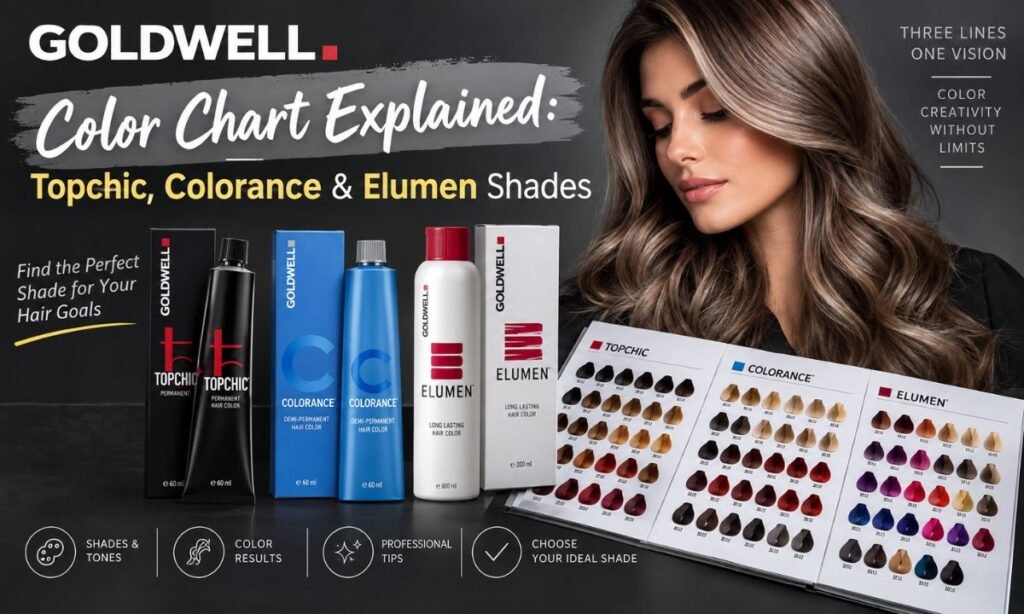
If you’ve ever stared at a Goldwell shade card and felt a little lost, you’re not alone. Goldwell runs three separate color lines Topchic, Colorance, and Elumen and each one uses its own numbering logic, developer, and finish. Understanding how these systems connect is the difference between a formula that nails the target shade and one that leaves you reformulating mid-service.
Many colorists learn one line well and then struggle when a client requests something from another. This confusion is completely normal, since each line was built for a different purpose and chemistry. Once the underlying logic clicks, though, switching between the three becomes second nature.
This guide breaks down the Goldwell color chart level by level, explains how the numbering system works, and shows how Topchic, Colorance, and Elumen shades relate to each other plus how they compare to other professional color brands. By the end, you should be able to read any Goldwell code with confidence.
What Is the Goldwell Color Chart?
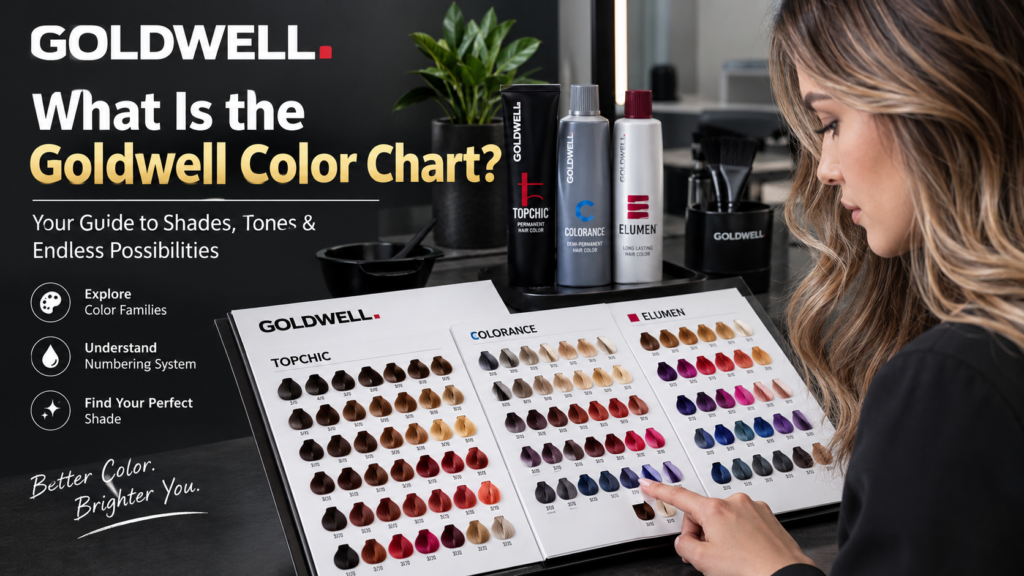
The Goldwell color chart is a reference tool that maps every shade across Goldwell’s three color lines by depth level and tonal reflect. It’s built on the standard 1–12 level system used across the professional hair color industry, where level 1 is the darkest black and level 12 is the lightest, most lifted blonde.
This shared framework is what makes the chart so useful in the first place. Instead of memorizing three unrelated systems, colorists only need to learn one depth-and-tone logic and then apply it across every line. That consistency saves time during consultations and formulation.
Each Goldwell line serves a different purpose:
Topchic permanent, oxidative color with full gray coverage and lift
Colorance ammonia-free demi-permanent gloss color for tone, shine, and gentle gray blending
Elumen oxidant-free, direct-dye color with no developer, prized for intense, long-lasting fashion shades
Because all three lines share the same depth-level framework, a colorist can read across the chart and understand roughly how a level 7 Topchic shade compares to a level 7 Colorance or Elumen shade, even though the underlying chemistry is completely different. This cross-line literacy is a genuine time-saver behind the chair.
Understanding the Goldwell Numbering System
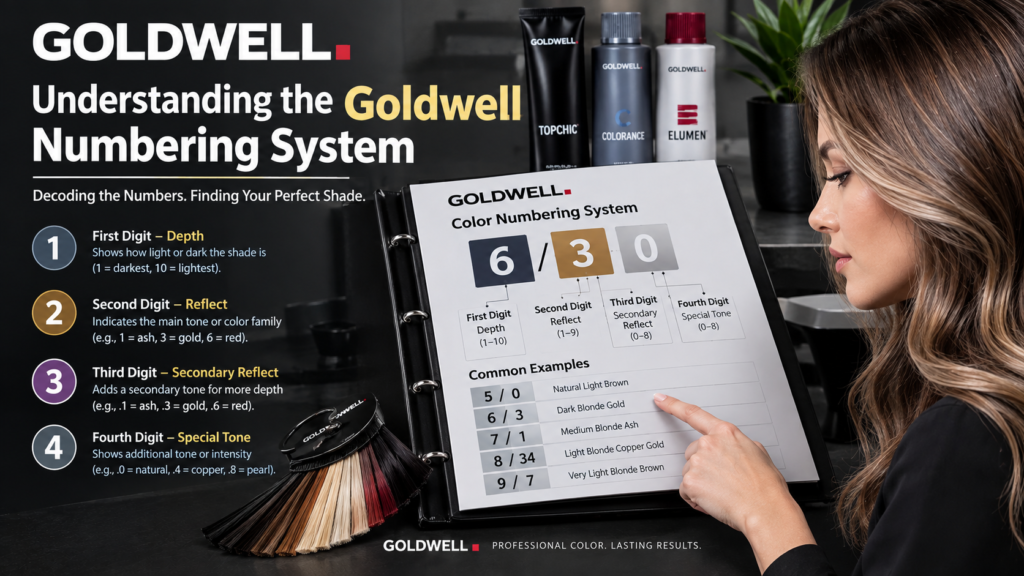
Goldwell shades are labeled using a level-and-reflect format, similar to most European color brands. A shade code typically looks like 7N or 8KG. Learning to decode this format is the single most useful skill for working confidently with the brand.
The number (1–12) indicates depth, how light or dark the shade is. The letter(s) after the number indicate tone or reflect the underlying color direction. Together, these two pieces of information tell you almost everything you need before mixing.
Common Goldwell tonal letters include:
- Letter Meaning Tone Direction
- N: Natural Balanced, neutral base
- A: Ash Cool, blue-green
- B: Brown Warm, muted
- BP: Pearl Cool, iridescent
- G: Gold Warm, golden
- K: Copper Warm-red (from the German “Kupfer”)
- R: Red Vibrant red
- RR: Intense Red Maximum red saturation
- V: Violet Cool, purple-based
- GB: Gold-Brown Warm, natural-beige
A shade like 6KG means level 6 depth with a copper-gold reflect, while 9A means level 9 depth with an ash tone. Once you understand this pattern, reading any Goldwell formula becomes far easier and it applies across Topchic and Colorance alike.
It also helps when troubleshooting unwanted results. If a finished color looks too warm or too cool, checking the reflected letter often explains why, long before you consider changing the depth level itself.
See More: AI Hair Color Changer
Goldwell Color Chart by Level
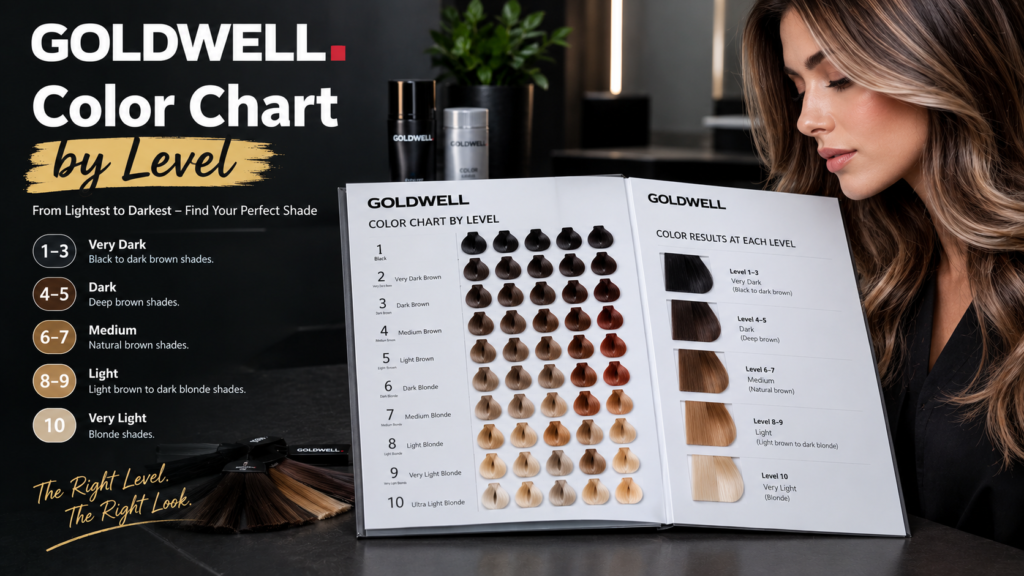
Here’s how depth levels translate into everyday hair color language across the Goldwell system. Keep in mind that undertones can shift the perceived warmth of any level, so these descriptions are general starting points rather than fixed rules.
Level 2 Very Dark Brown
Nearly black with a soft brown undertone. Used mostly for natural, low-maintenance bases and full gray coverage on very dark hair. This level suits clients who want depth with almost no upkeep between salon visits.
Level 3 Dark Brown
A rich, deep brown that still reads dark from a distance but shows warmth or cool depth up close, depending on the reflect. It’s a popular choice for clients transitioning away from black without a dramatic contrast.
Level 4 Medium Brown
One of the most requested natural bases is a true, balanced brunette that works for most skin tones. It offers enough depth to look rich while still photographing well in natural light.
Level 5 Light Brown
Sits between brunette and bronde territory. Common for low-maintenance color melts and root shadow work. This level often acts as the bridge shade in multi-tonal balayage work.
Level 6 Dark Blonde
Often called “dirty blonde” a transitional level frequently used at the root for lived-in blonde looks. It blends naturally into lighter mid-lengths, which keeps regrowth lines soft.
Level 7 Medium Blonde
A classic, wearable blonde level. Popular for balayage mid-tones and all-over color on lighter natural bases. Many clients request this level specifically because it reads as blonde without feeling overly bright.
Level 8 Light Blonde
Bright without being white-blonde. A go-to level for beachy, sun-kissed finishes. It works especially well for clients who want dimension without committing to a full high-lift service.
Level 9 Very Light Blonde
Pale, high-lift blonde that starts to require careful toning to avoid unwanted warmth. At this stage, the choice of reflection becomes just as important as the level itself.
Level 10 Extra Light Blonde
Platinum territory. Demands precise toning and healthy hair to avoid brassiness. Clients at this level usually need a strong maintenance routine to keep the tone looking fresh.
Level 11 Level 11
An ultra-high-lift shade used mainly within Goldwell’s Special Lift range for maximum brightening beyond standard lightening levels. It’s typically reserved for advanced lighting services rather than everyday formulation.
Level 12 Level 12
The lightest level in the Goldwell system, reserved for specialty high-lift formulas designed to lift multiple levels in a single application. It represents the outer edge of what the brand’s lightning technology can achieve.
Topchic Shade Chart: Permanent Color Explained
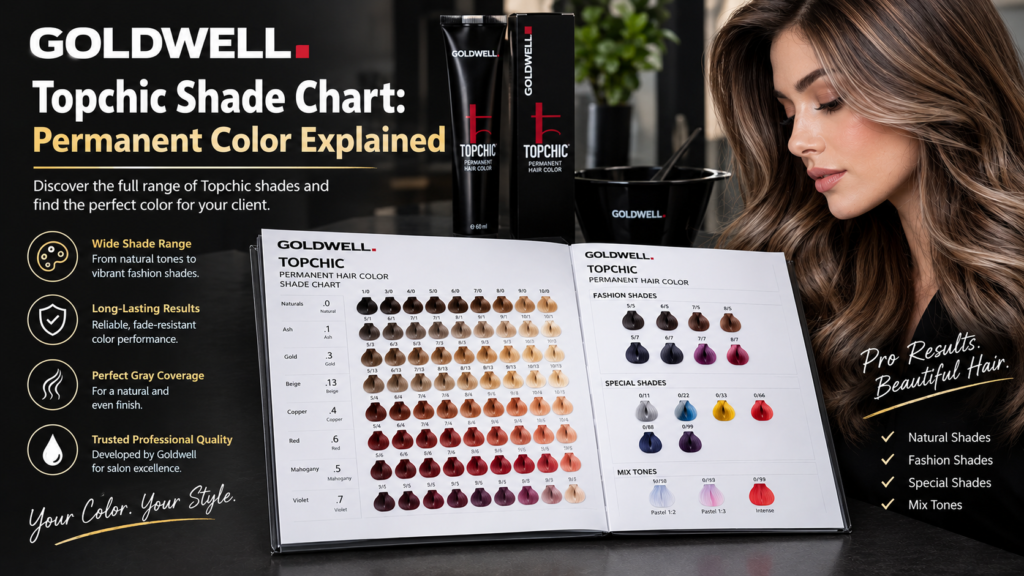
Topchic is Goldwell’s flagship permanent color line. It’s built for lift, deposit, and up to 100% gray coverage, and it uses the Cream Developer Lotion system in 6%, 9%, or 12% depending on the desired result. It remains the workhorse line for most full-color and root-touch-up services.
Quick Topchic developer guide:
3% (10 vol) tone-on-tone, no lift
6% (20 vol) 1–2 levels of lift with gray coverage
9% (30 vol) 2–3 levels of lift
12% (40 vol) maximum lift
Choosing the right developer strength depends on the client’s natural level, the amount of gray present, and how much lift the target shade requires. Getting this step right is often more important than the formula itself.
Topchic also offers @Elumenated shades, which combine standard permanent formulation with Elumen reflects for extra shine and dimension giving colorists a bridge between permanent coverage and Elumen-level brilliance. These hybrid shades are a favorite for clients who want permanent coverage with a glossier finish than standard Topchic alone provides.
Colorance: The Demi-Permanent Gloss System
Colorance is Goldwell’s ammonia-free, low-commitment color line, lasting up to roughly 25 washes. Because it doesn’t rely on ammonia, it tends to feel gentler on the hair and scalp compared to permanent alternatives.
It’s the go-to choice for:
Toning and glossing after lightening
Refreshing mid-lengths and ends
Subtle gray blending without full permanent commitment
Adding shine between full-color appointments
Colorance uses its own Cover Plus Developer Lotion and follows the same level-and-reflect logic as Topchic, which makes cross-referencing between the two lines fairly intuitive once you know one system. This shared logic is exactly why so many salons keep both lines stocked side by side, switching between them based on how much commitment a client wants.
Elumen Shades Explained
Elumen is Goldwell’s most distinct line; it contains no ammonia, no peroxide, and no PPD, relying instead on direct dye technology rather than oxidation. That means Elumen shades don’t lift natural hair; they deposit intense, long-lasting color and shine onto pre-lightened or light-enough hair.
Because there’s no developer involved, the application process feels quite different from Topchic or Colorance. Colorists working with Elumen for the first time often need a short adjustment period to get comfortable with its unique mixing and processing behavior.
Elumen shades appear on the chart in two groups:
Leveled shades (e.g., NN@9, BK@6) designed to match a specific depth level
Pure Pigments / @all shades (e.g., RR@all, Tq@all) vivid, level-independent tones that can be layered over various lightness levels for bold fashion results
Because Elumen skips oxidation entirely, it’s popular for sensitive scalps and for clients chasing saturated, statement-making colors that traditional permanent dye can’t match for vibrancy or longevity. It has become something of a signature choice for vivid, editorial-style color work.
Topchic, Colorance & Elumen: Side-by-Side Comparison
Feature Topchic Colorance Elumen
Type Permanent Demi-permanent Direct dye (no developer)
Ammonia Yes No No
Gray coverage Up to 100% Blending/light coverage Limited, level-dependent
Longevity Permanent ~25 washes Long-lasting, fades gradually
Lift capability Yes Minimal None (deposit only)
Best for Full color changes, root coverage Toning, glossing, refreshing Bold fashion color, vivid tones
This table is a useful quick-reference when deciding which line fits a client’s goals, especially during consultations where time is limited. Matching the right line to the right expectation upfront prevents disappointment later.
Topchic Equivalents in Other Brands
Because most professional lines follow a similar 1–10+ depth system, colorists switching between brands often look for approximate matches by level and reflect. For example, Goldwell’s K (copper) reflect corresponds to C (Copper) in Matrix or the .4 suffix in Wella and L’Oréal Professional systems.
These cross-brand matches are only a starting reference every brand formulates with different pigments and bases, so a strand test is always recommended before switching a client’s formula from one line to another. Treating these conversions as a rough guide rather than an exact science will save you from unexpected results.
Need This Shade in Another Brand?
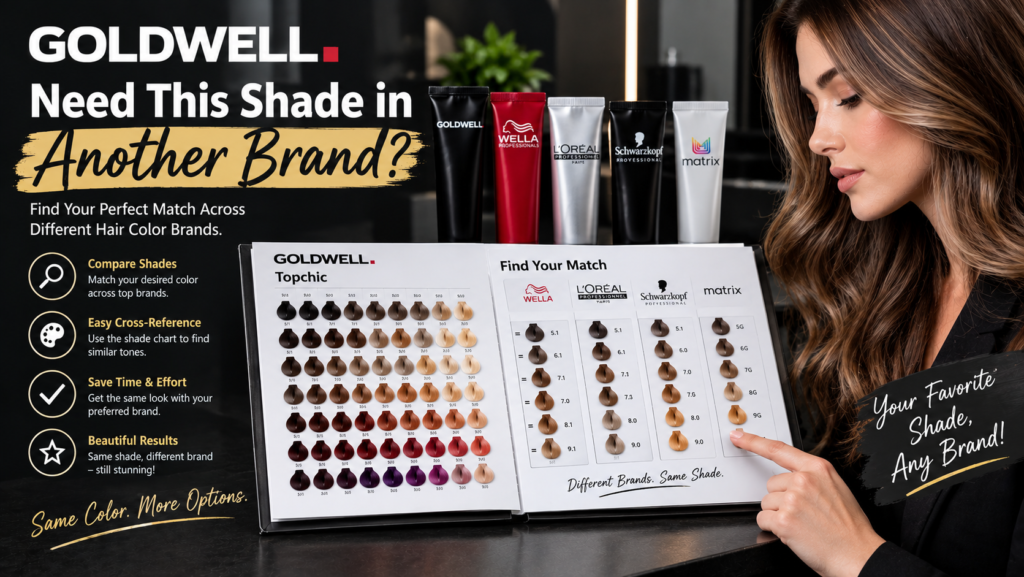
If you’re trying to translate a Goldwell formula into Wella, Matrix, L’Oréal, Redken, or another line, start by matching:
The depth level (the number)
The tonal family (ash, gold, copper, red, violet, neutral)
The developer volume used for the original result
From there, a small strand test confirms whether the match holds true, since underlying pigment concentration varies by manufacturer even at the “same” level. This three-step approach keeps conversions systematic instead of guesswork, even when you’re unfamiliar with the target brand’s exact naming conventions.
How to Read the Goldwell Color Chart in the Salon
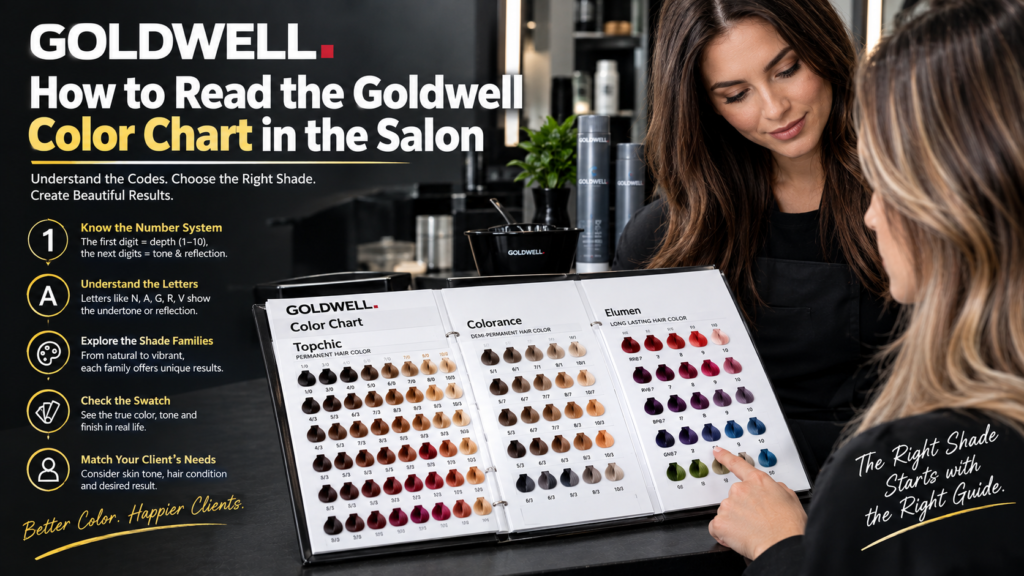
Always check whether the shade is Topchic, Colorance, or Elumen before formulating the same level code that can behave very differently across lines. Match developer strength to the desired lift, not just the shade number. Use Colorance or Elumen @Elumenated options when the client wants extra shine without extra commitment. Strand test fashion and Pure Pigment shades, since they process differently than natural-level shades.
Building these habits into your everyday workflow reduces formulation errors and keeps client expectations aligned with what each product line can actually deliver.
Frequently Asked Questions
What does the “K” mean in Goldwell shade codes?
K stands for copper, from the German word Kupfer. It’s Goldwell’s warm-red reflect designation.
What’s the difference between Topchic and Colorance?
Topchic is a permanent, ammonia-based color with full gray coverage, while Colorance is an ammonia-free demi-permanent gloss with shorter longevity.
Can Elumen lighten natural hair?
No. Elumen deposits color only and cannot lift natural pigment, so hair usually needs pre-lightening first.
What developer should I use with Topchic?
Use 3% for tone-on-tone, 6% for 1–2 levels of lift, 9% for 2–3 levels, and 12% for maximum lift, all with Goldwell’s Cream Developer Lotion.
How long does Colorance last?
Colorance typically lasts up to around 25 shampoos before fading.
Are Goldwell levels the same as other brands’ levels?
They’re similar but not identical. The 1–12 depth scale is standard, but pigment strength varies by brand, so a strand test is recommended when converting formulas.
Conclusion
The Goldwell color chart looks complex at first glance, but it follows a consistent logic once you understand the level-and-reflect system behind it. Learning this structure turns an intimidating shade card into a practical daily tool rather than a source of confusion.
Topchic delivers permanent coverage and lift, Colorance offers a gentler, glossier alternative, and Elumen brings vivid, oxidant-free color for clients chasing bold, long-lasting results. Each line has a clear role, and knowing when to reach for which one is a core part of working efficiently with the brand.
Learning to read across all three lines and how their levels compared to other professional brands makes formulating faster, more accurate, and far less guesswork-heavy. With practice, the Goldwell system becomes one of the more intuitive color charts to work with in the salon.





1 thought on “Goldwell Color Chart Explained: Topchic, Colorance & Elumen Shades”